What widespread effects does epidermal growth factor (EGF) have on the integument?
Verified step by step guidance
1
Understand that epidermal growth factor (EGF) is a protein that stimulates cell growth, proliferation, and differentiation by binding to its receptor on the cell surface.
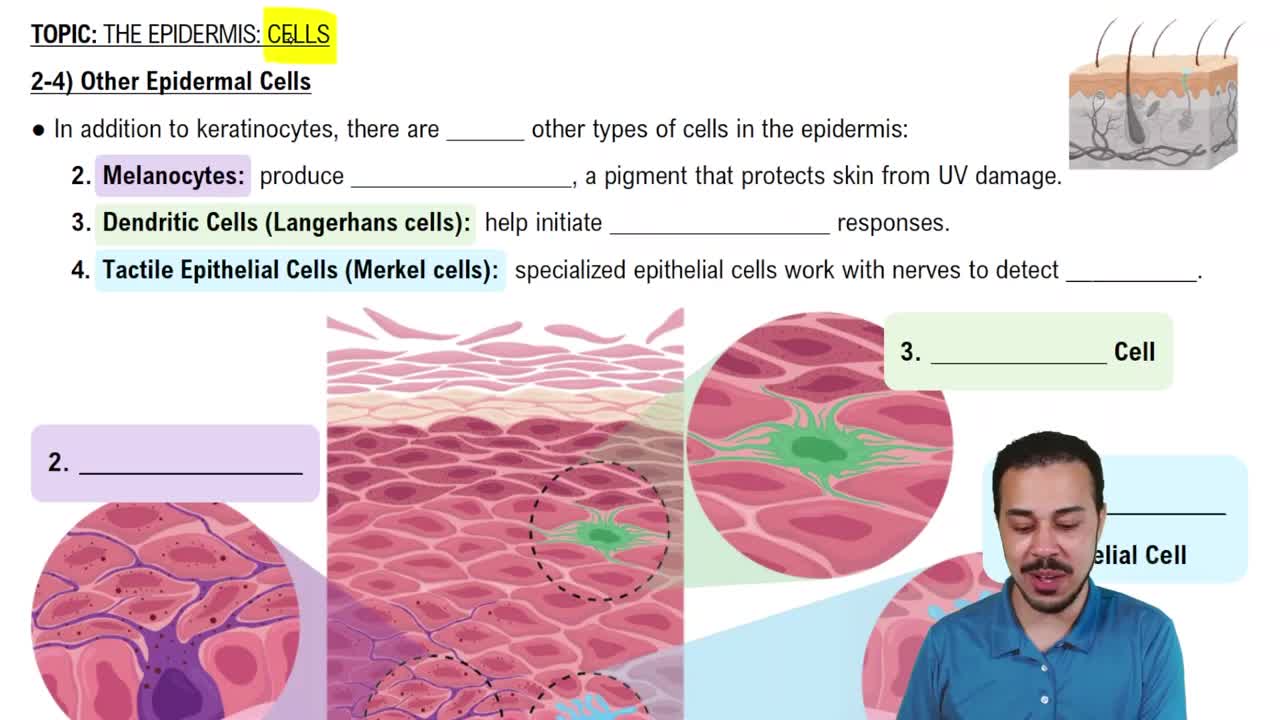
Recognize that in the integument (skin), EGF primarily affects keratinocytes, the predominant cell type in the epidermis, promoting their division and migration.
Identify that EGF accelerates wound healing by stimulating epidermal regeneration and enhancing the repair process of damaged skin.
Note that EGF also influences the production of extracellular matrix components, which supports skin structure and integrity.
Summarize that the widespread effects of EGF on the integument include increased epidermal thickness, faster wound closure, and improved skin renewal and repair.
Verified video answer for a similar problem:
This video solution was recommended by our tutors as helpful for the problem above
Video duration:
3m
Play a video:
0 Comments
Key Concepts
Here are the essential concepts you must grasp in order to answer the question correctly.
Epidermal Growth Factor (EGF)
EGF is a protein that stimulates cell growth, proliferation, and differentiation by binding to its receptor on the cell surface. It plays a critical role in skin repair and regeneration by promoting the division of epidermal cells.
The integument refers to the skin and its appendages, serving as a protective barrier. Understanding its layers—epidermis, dermis, and hypodermis—is essential to grasp how EGF influences skin health and healing.
EGF triggers keratinocyte proliferation, enhances wound healing, and stimulates the production of extracellular matrix components. These effects lead to improved skin regeneration, thickness, and overall maintenance of the integument.