Ch. 16 The Reproductive System
Marieb - Essentials of Human Anatomy & Physiology 13th Edition
Marieb13th EditionEssentials of Human Anatomy & PhysiologyISBN: 9780135624340Not the one you use?Change textbook
Chapter 16, Problem 1

More than one choice may apply.
Which of the following are accessory sex structures in the male?
a. Gonads
b. Gametes
c. Broad shoulders
d. Seminal vesicles

Verified step by step guidance
1
Step 1: Understand the term 'accessory sex structures' in the male reproductive system. These are structures that assist in the reproductive process but are not directly involved in producing gametes (sperm) or hormones.
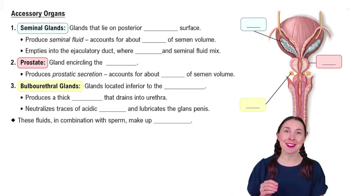
Step 2: Review the male reproductive anatomy. Accessory sex structures include organs such as the seminal vesicles, prostate gland, and bulbourethral glands, which contribute to the production and transport of semen.
Step 3: Eliminate options that do not fit the definition of accessory sex structures. For example, gonads (testes) are primary sex organs responsible for producing gametes and hormones, not accessory structures.
Step 4: Consider the role of gametes (sperm). These are the reproductive cells produced by the gonads and are not classified as accessory sex structures.
Step 5: Evaluate the remaining options. Broad shoulders are a secondary sexual characteristic influenced by hormones but are not part of the male reproductive system. Seminal vesicles, however, are accessory sex structures as they contribute to semen production.

Verified video answer for a similar problem:

This video solution was recommended by our tutors as helpful for the problem above.
Video duration:
2m
Was this helpful?

Key Concepts

Here are the essential concepts you must grasp in order to answer the question correctly.

Accessory Sex Structures

Accessory sex structures are anatomical components that support reproductive functions but are not directly involved in the production of gametes. In males, these include organs such as the seminal vesicles, prostate gland, and bulbourethral glands, which contribute fluids to semen and aid in the reproductive process.
Recommended video:
3:21
Accessory Organs

Gonads

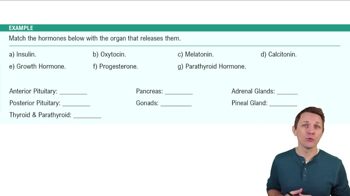
Gonads are the primary reproductive organs responsible for producing gametes and hormones. In males, the gonads are the testes, which produce sperm and testosterone. Unlike accessory structures, gonads are essential for the formation of reproductive cells.
Recommended video:
Guided course
4:31
Hormone Review Table Example 1

Gametes

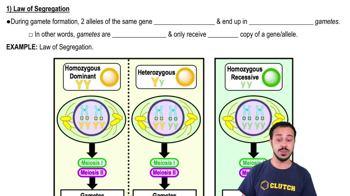
Gametes are the reproductive cells that unite during fertilization to form a new organism. In males, the gametes are sperm cells produced by the testes. Understanding the distinction between gametes and accessory structures is crucial for identifying the roles each plays in reproduction.
Recommended video:
03:24
Law of Segregation