Ch. 16 The Reproductive System
Marieb - Essentials of Human Anatomy & Physiology 13th Edition
Marieb13th EditionEssentials of Human Anatomy & PhysiologyISBN: 9780135624340Not the one you use?Change textbook
Chapter 16, Problem 15

What are the primary sex organs, or gonads, of males? What are their two major functions?

Verified step by step guidance
1
The primary sex organs, or gonads, of males are the testes. These are located within the scrotum, which is a pouch of skin outside the body.
The first major function of the testes is the production of sperm cells (spermatogenesis). This process occurs in the seminiferous tubules within the testes.
The second major function of the testes is the production of male sex hormones, primarily testosterone. This occurs in specialized cells called Leydig cells, located in the connective tissue surrounding the seminiferous tubules.
Sperm production is essential for reproduction, as sperm cells are the male gametes that combine with female gametes (ova) during fertilization.
Testosterone plays a critical role in the development of male secondary sexual characteristics, such as increased muscle mass, deepening of the voice, and the growth of facial and body hair, as well as maintaining reproductive functions.

Verified video answer for a similar problem:

This video solution was recommended by our tutors as helpful for the problem above.
Video duration:
2m
Was this helpful?

Key Concepts

Here are the essential concepts you must grasp in order to answer the question correctly.

Gonads

Gonads are the primary reproductive organs in both males and females. In males, the gonads are the testes, which are responsible for producing sperm and hormones, particularly testosterone. These organs play a crucial role in sexual development and reproductive functions.
Recommended video:
Guided course
4:31
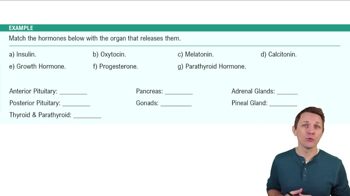
Hormone Review Table Example 1

Spermatogenesis

Spermatogenesis is the process by which sperm cells are produced in the testes. This complex process involves several stages, including the division and maturation of germ cells, ultimately resulting in the formation of mature sperm. It is essential for male fertility and reproduction.

Hormonal Regulation

Hormonal regulation refers to the control of physiological processes through hormones, which are chemical messengers in the body. In males, the primary hormones involved are testosterone and luteinizing hormone (LH), which regulate spermatogenesis and the development of male secondary sexual characteristics. This regulation is vital for maintaining reproductive health.
Recommended video:
Guided course
13:06
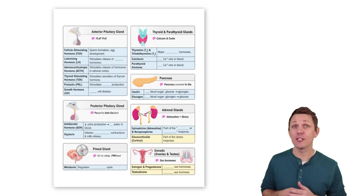
Review of Major Hormones