 Back
BackThe Endocrine System: Structure, Function, and Regulation
Study Guide - Smart Notes
 Tailored notes based on your materials, expanded with key definitions, examples, and context.
The Endocrine System
Overview of the Endocrine System
The endocrine system is a major regulatory system of the human body, acting in conjunction with the nervous system to maintain homeostasis. It influences metabolic activities through the release of hormones, which are chemical messengers that act over long distances and produce effects that are slower but longer-lasting than those of the nervous system.
Endocrine glands: Include the pituitary, thyroid, thymus, pancreas, parathyroid, gonads, adrenal, and pineal glands.
Integration with nervous system: Neuroendocrine cells respond to neurotransmitters by releasing hormones, especially in the hypothalamus and pituitary.
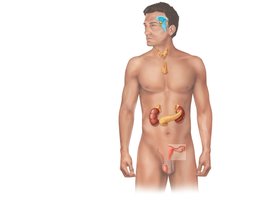
Comparison: Nervous System vs. Endocrine System
The nervous system and endocrine system both regulate body functions, but differ in their mechanisms and effects.
Nervous System: Uses nerve impulses and neurotransmitters, produces rapid and brief responses, acts on specific targets.
Endocrine System: Uses hormones, produces slower and longer-lasting responses, has a broader influence.
Hormones: Types and Mechanisms
Hormones are chemical substances secreted directly into the bloodstream, acting as long-distance signals.
Amino acid-based hormones: Includes amines, peptides, and proteins.
Steroid hormones: Synthesized from cholesterol; includes gonadal and adrenocortical hormones.
Other hormones: Some are lipids other than steroids.
Hormone Release Stimuli
Hormones are released in response to three types of stimuli:
Humoral: Changes in blood or bodily fluid composition (e.g., solute concentration, temperature).
Neural: Direct stimulation by neurons, leading to rapid hormone release.
Hormonal: One hormone triggers the release of another hormone.
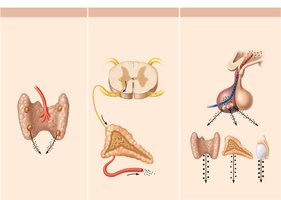
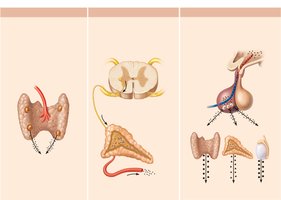
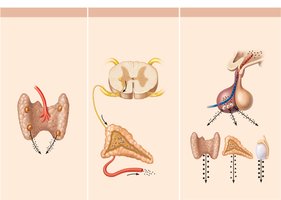
Target Cell Specificity
Hormones affect only target cells, which possess specific receptors for the hormone.
Factors influencing hormone action: Blood levels of the hormone, number of receptors, affinity between hormone and receptor.
Up-regulation: Target cells increase receptor number in response to hormone (e.g., estrogen, oxytocin).
Down-regulation: Target cells decrease receptor number in response to hormone (e.g., insulin, leptin).
Mechanisms of Hormone Action
Hormones act via two main mechanisms, depending on their chemical nature.
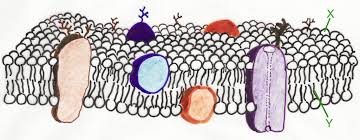
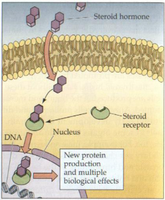
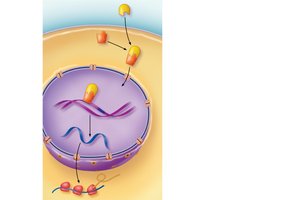
Slow-acting hormones: Steroid hormones cross the plasma membrane, bind to intracellular receptors, and alter gene expression. Effects are long-lasting.
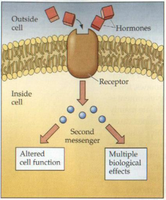
Fast-acting hormones: Amino acid-based hormones bind to membrane receptors, activate second messengers (e.g., cyclic AMP), and produce rapid, short-term effects.
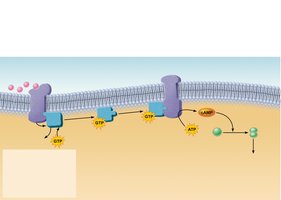
Cellular Hormones
Some cells outside traditional endocrine glands have endocrine capacity, such as intestinal cells (secretin, cholecystokinin) and kidney cells (erythropoietin).
Pituitary Gland
Structure and Function
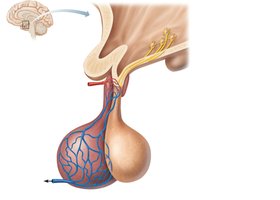
The pituitary gland has two lobes:
Anterior pituitary (adenohypophysis): Glandular tissue, releases hormones formed within the pituitary.
Posterior pituitary (neurohypophysis): Glial-like supporting cells and nerve fibers, releases hormones formed within the hypothalamus.
Anterior Pituitary Hormones
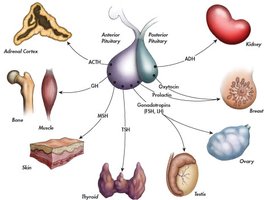
Growth hormone (GH): Stimulates bone and skeletal muscle, promotes protein synthesis, encourages fat use for fuel, and glycogen breakdown.
Thyroid stimulating hormone (TSH): Stimulates thyroid gland.
Adrenocorticotropic hormone (ACTH): Stimulates adrenal cortex.
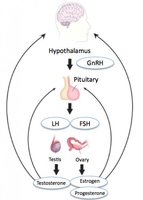
Follicle stimulating hormone (FSH) and luteinizing hormone (LH): Regulate function of ovaries and testes.
Prolactin: Stimulates milk production.
Melanocyte stimulating hormone (MSH): Stimulates melanocytes.
Growth Hormone (GH) Imbalances
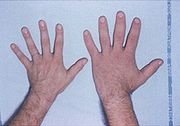
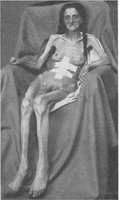
Hypersecretion: Causes gigantism in children and acromegaly in adults.
Hyposecretion: Causes pituitary dwarfism in children and Simmond’s disease in adults.



Growth Hormone Regulation
GH release is regulated by growth hormone-releasing hormone (GHRH) and somatostatin (GHIH) from the hypothalamus, with negative feedback from GH and insulin-like growth factors (IGFs).
Growth Hormone Applications
Medical: rHGH treats deficiency, wasting, Turner syndrome, chronic renal failure.
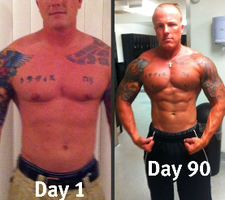
Sports: Illegal use for muscle mass; drawbacks include fatigue, diabetes risk, joint pain.
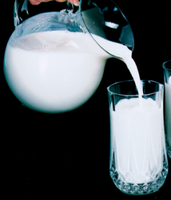
Agriculture: rBGH increases milk production in cows.
Thyroid-Stimulating Hormone (TSH)
TSH stimulates the thyroid gland and is regulated by thyrotropin-releasing hormone (TRH) from the hypothalamus and negative feedback from thyroid hormones. 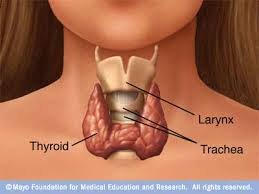
Adrenocorticotropic Hormone (ACTH)
ACTH stimulates the adrenal cortex to release corticosteroids. 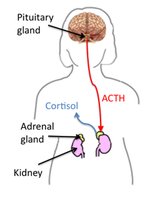
Gonadotropins (FSH & LH)
FSH and LH regulate the function of ovaries and testes, triggered by GnRH and suppressed by gonadal hormones. 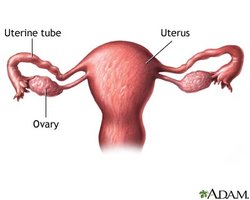
Prolactin
Prolactin stimulates milk production, rises toward the end of pregnancy, and is promoted by suckling. It also contributes to spermatogenesis in men and plays roles in neurogenesis and immune tolerance. 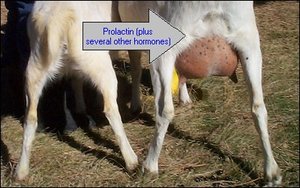
Melanocyte Stimulating Hormone (MSH)
MSH stimulates melanocytes, leading to skin darkening and may influence brain activity. 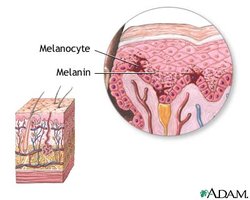

Control of Anterior Pituitary Hormones
Hormones are released in response to hypothalamic stimulation via the hypophyseal portal system, which allows direct hormone transport without dilution. 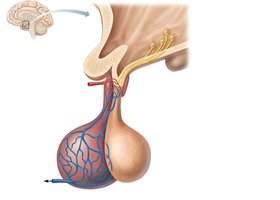
Posterior Pituitary
Structure and Function
The posterior pituitary stores and releases antidiuretic hormone (ADH) and oxytocin, produced by the hypothalamus and released in response to nerve impulses.
Oxytocin
Oxytocin stimulates uterine contractions during childbirth, triggers milk ejection, and plays a role in sexual arousal and bonding.
Antidiuretic Hormone (ADH)
ADH regulates water content by acting on the kidneys, also called vasopressin. It is released in response to high blood osmolality and inhibited when osmolality is low.
Imbalance: Diabetes insipidus results from low ADH, causing excessive urine output and thirst.
Thyroid Gland
Structure and Hormones
The thyroid gland is the largest endocrine gland, producing thyroxine (T4), triiodothyronine (T3), and calcitonin.
Thyroid Hormone (TH) Synthesis and Function
T4 (thyroxine): 2 tyrosine + 4 iodine atoms, converted to T3 in target cells.
T3 (triiodothyronine): 2 tyrosine + 3 iodine atoms, more active than T4.
Functions: Regulates metabolism, tissue growth, nerve cell reactivity, heart rate, and GI movement.
Thyroid Hormone Imbalances
Goiter: Enlargement of thyroid, often due to iodine deficiency.
Cretinism: Congenital hypothyroidism, stunted growth, developmental delay.
Myxedema: Adult hypothyroidism, lethargy, low temperature, swollen face.
Graves disease: Hyperthyroidism, treated by thyroid removal.
Calcitonin
Calcitonin lowers serum calcium by inhibiting bone resorption and stimulating calcium uptake by bone matrix. It is regulated by blood calcium levels and acts as an antagonist to parathyroid hormone (PTH).
Parathyroid Glands
Structure and Function
The parathyroid glands are small glands embedded in the thyroid, producing PTH, the most important hormone in calcium homeostasis.
Parathyroid Hormone (PTH)
Functions: Stimulates osteoclasts, enhances kidney reabsorption of Ca2+, increases intestinal absorption of Ca2+.
Negative feedback: Rising blood Ca2+ inhibits PTH release.
Imbalance: Hyperparathyroidism causes severe osteoporosis.
Adrenal Glands
Structure and Function
The adrenal glands are paired, pyramid-shaped organs atop the kidneys, consisting of the adrenal medulla (nervous tissue) and adrenal cortex (glandular tissue).
Adrenal Cortex Hormones
Mineralocorticoids (e.g., aldosterone): Regulate Na+ and K+, affect blood volume and pressure.
Glucocorticoids (e.g., cortisol): Regulate carbohydrate metabolism, stimulate gluconeogenesis, suppress inflammation.
Gonadocorticoids (sex hormones): Androgens, supplement gonadal hormones, contribute to puberty and sex drive.
Glucocorticoid Imbalances
Cushing’s disease: Overproduction of cortisol, weight gain, high blood pressure, immune suppression.
Addison’s disease: Deficiency of glucocorticoids and mineralocorticoids, hyperpigmentation, weight loss, fatigue.
Adrenal Medulla - Catecholamines
Epinephrine: Increases metabolic rate, bronchial dilation, blood flow to muscles and heart.
Norepinephrine: Increases blood pressure, heart rate, stroke volume.
Adrenal Medulla Imbalances
Pheochromocytoma: Neuroendocrine tumor, secretes high levels of catecholamines.
Pancreas
Structure and Function
The pancreas is a long, flat gland with both exocrine (digestive enzymes) and endocrine (hormones) functions.
Alpha cells: Secrete glucagon, increase blood glucose.
Beta cells: Secrete insulin, decrease blood glucose.
Exocrine Pancreas
Produces enzyme-rich juice for digestion, including trypsinogen, lipase, amylase, and nuclease.
Endocrine Pancreas - Glucagon and Insulin
Glucagon: Initiates glycogen breakdown in liver, increases blood glucose.
Insulin: Lowers blood glucose, enhances glucose uptake, inhibits glycogenolysis and gluconeogenesis.
Imbalances of Insulin
Diabetes mellitus (DM): Due to hyposecretion or hypoactivity of insulin, characterized by polyuria, polydipsia, and polyphagia.
Types: Type I, Type II, Gestational.
Minor Endocrine Glands
Thymus
The thymus is a two-lobed organ high in the chest, producing thymosins that stimulate lymphocyte production and are crucial for immune system development.
Pineal Gland
The pineal gland produces melatonin, which regulates timing of sexual maturation, photoperiod, and physiological rhythms.
Stress and the HPA Axis
Stress Response
The hypothalamic-pituitary-adrenal (HPA) axis regulates the body's response to stress, affecting digestion, mood, immune system, and metabolism.
Short-term stress: Sympathetic nervous system, adrenal medulla, epinephrine, norepinephrine.
Long-term stress: Endocrine system, adrenal cortex, glucocorticoids, mineralocorticoids.
General Adaptation Syndrome (GAS)
The stress response consists of three stages:
Alarm: Immediate, sympathetic activation, increased glucose and circulation.
Resistance: Long-term, endocrine activation, increased energy and protein production.
Exhaustion: Prolonged stress, cell death, immune failure.
Summary Table: Major Endocrine Glands and Their Hormones
Gland | Main Hormones | Primary Functions |
|---|---|---|
Pituitary | GH, TSH, ACTH, FSH, LH, PRL, MSH, ADH, Oxytocin | Growth, metabolism, reproduction, water balance |
Thyroid | T3, T4, Calcitonin | Metabolism, calcium regulation |
Parathyroid | PTH | Calcium homeostasis |
Adrenal | Cortisol, Aldosterone, Androgens, Epinephrine, Norepinephrine | Stress response, metabolism, electrolyte balance |
Pancreas | Insulin, Glucagon | Blood glucose regulation |
Thymus | Thymosins | Immune system development |
Pineal | Melatonin | Biological rhythms |
Gonads | Estrogen, Progesterone, Testosterone | Reproduction, secondary sex characteristics |
Key Equations
Hormone-Receptor Binding
Where H = hormone, R = receptor, HR = hormone-receptor complex.
Negative Feedback Regulation
Example: High thyroid hormone inhibits TSH release.
Blood Glucose Regulation
Conclusion
The endocrine system is essential for regulating numerous physiological processes, including growth, metabolism, reproduction, and stress response. Understanding the structure, function, and regulation of endocrine glands and their hormones is fundamental for students of anatomy and physiology.
