Ch. 16 The Endocrine System
Amerman - Human Anatomy & Physiology 2nd Edition
Amerman2nd EditionHuman Anatomy & PhysiologyISBN: 9780136873822Not the one you use?Change textbook
Chapter 16, Problem 4

How does ADH affect the amount of water in the body, and how does it accomplish this? How does this affect the osmolarity of the blood?

Verified step by step guidance
1
Understand the role of ADH (antidiuretic hormone): ADH is a hormone secreted by the posterior pituitary gland that helps regulate water balance in the body by acting on the kidneys.
Explain the mechanism of ADH action: ADH binds to receptors on the cells of the collecting ducts in the kidneys, triggering the insertion of aquaporin-2 water channels into the cell membranes. This increases the permeability of the collecting ducts to water.
Describe the effect on water reabsorption: With more aquaporin-2 channels present, water is reabsorbed from the filtrate in the collecting ducts back into the bloodstream, reducing the amount of water excreted in urine and increasing the total water content in the body.
Discuss the impact on blood osmolarity: By increasing water reabsorption, ADH dilutes the solutes in the blood, thereby decreasing blood osmolarity (the concentration of solutes in the blood).
Summarize the feedback mechanism: ADH secretion is regulated by osmoreceptors in the hypothalamus. When blood osmolarity is high, ADH secretion increases to conserve water and restore osmolarity to normal levels. Conversely, when blood osmolarity is low, ADH secretion decreases to allow more water to be excreted.

Verified video answer for a similar problem:

This video solution was recommended by our tutors as helpful for the problem above.
Was this helpful?

Key Concepts

Here are the essential concepts you must grasp in order to answer the question correctly.

Antidiuretic Hormone (ADH)

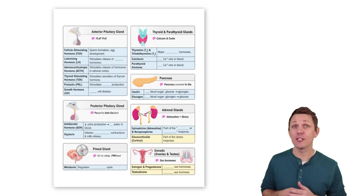
Antidiuretic Hormone, also known as vasopressin, is a peptide hormone produced by the hypothalamus and released by the posterior pituitary gland. Its primary function is to regulate water balance in the body by promoting water reabsorption in the kidneys, specifically in the collecting ducts. This action helps to concentrate urine and reduce water loss, thereby maintaining hydration and blood volume.
Recommended video:
Guided course
13:06
Review of Major Hormones

Osmolarity

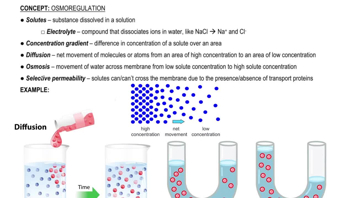
Osmolarity refers to the concentration of solutes in a solution, which affects the movement of water across cell membranes. In the context of blood, osmolarity is crucial for maintaining fluid balance and proper physiological function. When ADH increases water reabsorption, it dilutes the solute concentration in the blood, thereby lowering osmolarity and helping to prevent dehydration.
Recommended video:
07:59
Osmosis and Osmolarity

Kidney Function in Water Regulation

The kidneys play a vital role in regulating water balance through processes such as filtration, reabsorption, and secretion. When ADH is present, it enhances the permeability of the kidney's collecting ducts, allowing more water to be reabsorbed back into the bloodstream. This mechanism not only conserves water but also influences blood pressure and osmolarity, ensuring homeostasis within the body.
Recommended video:
1:00
The Kidneys Example 1
Related Practice
Textbook Question

Hypothalamic releasing and inhibiting hormones are released into the _____ system and affect secretion from the _____ gland.

860
views

Textbook Question

Let's say that the dietary supplement in question 2 actually works and successfully blocks cortisol secretion. Could this drug potentially be harmful? Predict its effects on overall homeostasis.

1042
views
Textbook Question

A new diet guru claims hypersecretion of cortisol is the reason why so many people are obese. He is marketing a dietary supplement that is supposedly able to block cortisol secretion and lead to weight loss. How would cortisol hypersecretion cause weight gain? Would blocking normal cortisol secretion lead to weight loss? Why or why not?

964
views
Textbook Question

Which of the following correctly describes the functions of the endocrine system?

a. Transport of blood through the body and through the lungs

b. Regulation of body functions through hormone secretion

c. Regulation of body functions through nerve impulses

d. Immunity and returning extra tissue fluid to the blood vessels

1160
views
1
rank
Textbook Question

List the target tissues and effects of the following anterior pituitary gland hormones.

a. Thyroid-stimulating hormone

b. Adrenocorticotropic hormone

c. Prolactin

d. Gonadotropins

e. Growth hormone

1398
views
Textbook Question

What has likely happened to the pH of Mr. Montez's blood? What does this mean about the hydrogen ion concentration in his blood? How will his buffer systems respond to this change in pH?

1012
views