Ch. 16 The Endocrine System
Amerman - Human Anatomy & Physiology 2nd Edition
Amerman2nd EditionHuman Anatomy & PhysiologyISBN: 9780136873822Not the one you use?Change textbook
Chapter 16, Problem L3.B5

What has likely happened to the pH of Mr. Montez's blood? What does this mean about the hydrogen ion concentration in his blood? How will his buffer systems respond to this change in pH?

Verified step by step guidance
1
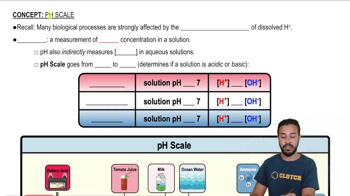
Step 1: Understand the relationship between pH and hydrogen ion concentration. pH is inversely related to hydrogen ion concentration, meaning that as pH decreases, hydrogen ion concentration increases, and vice versa. This is important for interpreting changes in Mr. Montez's blood pH.
Step 2: Analyze the likely change in pH. If Mr. Montez's blood pH has decreased, it indicates that his blood has become more acidic. Conversely, if his pH has increased, it suggests his blood has become more basic (alkaline). Determine whether the scenario suggests acidosis (low pH) or alkalosis (high pH).
Step 3: Relate the change in pH to hydrogen ion concentration. If the blood pH has decreased, the hydrogen ion concentration has increased. If the pH has increased, the hydrogen ion concentration has decreased. This is a direct consequence of the pH scale and its logarithmic nature.
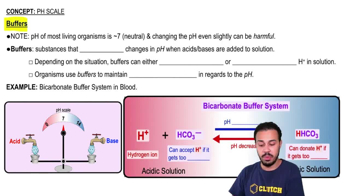
Step 4: Explain the role of buffer systems in response to pH changes. Buffer systems, such as the bicarbonate buffer system, work to stabilize blood pH. For example, if the blood becomes acidic, the bicarbonate buffer system will bind excess hydrogen ions to form carbonic acid, which can then be converted to water and carbon dioxide for exhalation. If the blood becomes basic, the buffer system will release hydrogen ions to lower the pH.
Step 5: Summarize the physiological importance of maintaining pH balance. Blood pH is tightly regulated because even small deviations can disrupt enzyme function, cellular processes, and overall homeostasis. The buffer systems act as the first line of defense to prevent harmful changes in pH and maintain equilibrium.

Verified video answer for a similar problem:

This video solution was recommended by our tutors as helpful for the problem above.
Was this helpful?

Key Concepts

Here are the essential concepts you must grasp in order to answer the question correctly.

pH and Hydrogen Ion Concentration

pH is a measure of the acidity or alkalinity of a solution, defined as the negative logarithm of the hydrogen ion concentration. A lower pH indicates a higher concentration of hydrogen ions, while a higher pH indicates a lower concentration. Understanding this relationship is crucial for assessing changes in blood chemistry, as deviations from the normal pH range can have significant physiological effects.
Recommended video:
07:58
pH Scale

Buffer Systems in Blood

Buffer systems in the blood, primarily the bicarbonate buffer system, help maintain pH within a narrow range despite changes in hydrogen ion concentration. These buffers work by neutralizing excess acids or bases, thus stabilizing the pH. When pH changes, the buffer systems respond by either releasing hydrogen ions to increase acidity or binding them to decrease acidity, ensuring homeostasis.
Recommended video:
05:38
Buffers

Acidosis and Alkalosis

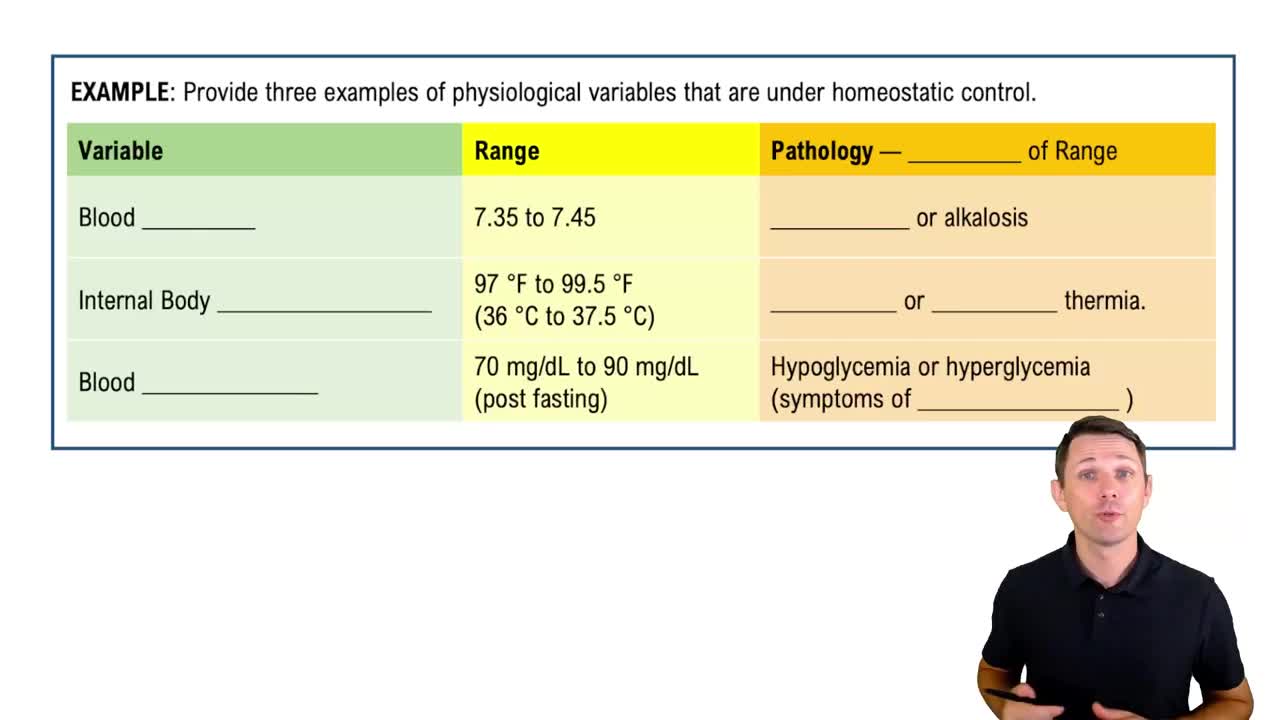
Acidosis and alkalosis refer to conditions where the blood pH falls below or rises above the normal range (7.35-7.45), respectively. Acidosis indicates an increase in hydrogen ion concentration, while alkalosis indicates a decrease. Recognizing these conditions is essential for understanding the implications of pH changes in Mr. Montez's blood and how his body will attempt to correct these imbalances through physiological mechanisms.
Recommended video:
Guided course
03:46
Homeostasis Example 1
Related Practice
Textbook Question

Let's say that the dietary supplement in question 2 actually works and successfully blocks cortisol secretion. Could this drug potentially be harmful? Predict its effects on overall homeostasis.

1042
views

Textbook Question

Mr. Montez is a patient with type I diabetes mellitus. He presents with dizziness, rapid breathing, confusion, and weakness. You find out that he forgot to inject his normal dose of insulin this morning. Will his blood glucose concentration be normal? Explain. Your colleague suggests that Mr. Montez needs to ingest some sugar. Is this going to help him? Why or why not? 

925
views
Textbook Question

A new diet guru claims hypersecretion of cortisol is the reason why so many people are obese. He is marketing a dietary supplement that is supposedly able to block cortisol secretion and lead to weight loss. How would cortisol hypersecretion cause weight gain? Would blocking normal cortisol secretion lead to weight loss? Why or why not?

964
views
Textbook Question

How does ADH affect the amount of water in the body, and how does it accomplish this? How does this affect the osmolarity of the blood?

1317
views
Textbook Question

Ms. Reczkiewicz has her thyroid gland removed to treat hyperthyroidism. Her condition is stable after surgery, but one day later she develops symptoms of severe hypocalcemia. What has happened? How would you correct this problem?

681
views
Textbook Question

You have read that aldosterone causes sodium ion retention from the kidneys. How would blocking aldosterone secretion decrease the amount of water retained from the fluid in the kidneys?

1069
views