Ch. 9 The Endocrine System
Marieb - Essentials of Human Anatomy & Physiology 13th Edition
Marieb13th EditionEssentials of Human Anatomy & PhysiologyISBN: 9780135624340Not the one you use?Change textbook
Chapter 9, Problem 20

Mr. Flores brings his wife to the clinic, concerned about her nervousness, heart palpitations, and excessive sweating. Tests show hyperglycemia and hypertension. What hormones are probably being hypersecreted? What is the cause? What physical factors allow you to rule out thyroid problems?

Verified step by step guidance
1
Step 1: Begin by identifying the symptoms presented: nervousness, heart palpitations, excessive sweating, hyperglycemia (high blood sugar), and hypertension (high blood pressure). These symptoms suggest overactivation of the sympathetic nervous system and hormonal imbalance.
Step 2: Consider the hormones involved in the stress response and sympathetic activation. The adrenal medulla secretes catecholamines, specifically epinephrine (adrenaline) and norepinephrine, which can cause these symptoms when hypersecreted.
Step 3: Evaluate the cause of hypersecretion. A likely cause is a tumor in the adrenal medulla, such as a pheochromocytoma, which leads to excessive production of catecholamines. This condition aligns with the symptoms described.
Step 4: Rule out thyroid problems by considering physical factors. Hyperthyroidism can cause similar symptoms (e.g., nervousness, sweating, palpitations), but it typically does not lead to hyperglycemia or hypertension as primary symptoms. Additionally, thyroid hormone excess would present with other signs like weight loss, heat intolerance, and goiter, which are not mentioned here.
Step 5: Conclude that the symptoms and test results point to hypersecretion of adrenal medulla hormones (epinephrine and norepinephrine) due to a potential pheochromocytoma. Further diagnostic tests, such as imaging studies and catecholamine level measurements, would confirm the diagnosis.

Verified video answer for a similar problem:

This video solution was recommended by our tutors as helpful for the problem above.
Video duration:
2m
Was this helpful?

Key Concepts

Here are the essential concepts you must grasp in order to answer the question correctly.

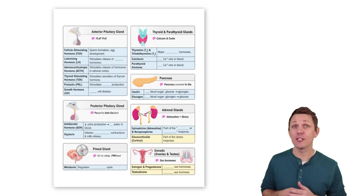
Hormonal Regulation of Stress Response

The body's response to stress is primarily regulated by hormones such as adrenaline (epinephrine) and cortisol. These hormones are secreted by the adrenal glands and play a crucial role in the 'fight or flight' response, leading to symptoms like increased heart rate, sweating, and elevated blood sugar levels. In cases of hypersecretion, these hormones can lead to conditions such as anxiety and hypertension.
Recommended video:
Guided course
13:06
Review of Major Hormones

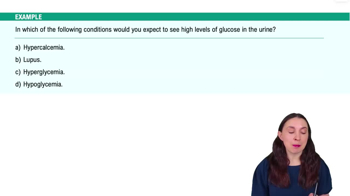
Hyperglycemia and Hypertension

Hyperglycemia refers to elevated blood sugar levels, often associated with stress or endocrine disorders like Cushing's syndrome. Hypertension, or high blood pressure, can also be a result of excessive catecholamines (like adrenaline) released during stress. Understanding the relationship between these conditions is essential for diagnosing underlying hormonal imbalances.
Recommended video:
0:52
Renal Physiology Step 2: Tubular Reabsorption Example 6

Differentiating Thyroid Disorders

Thyroid disorders, such as hyperthyroidism, can cause symptoms similar to those described, including nervousness and palpitations. However, physical factors such as the absence of weight loss, normal body temperature, and specific lab results can help rule out thyroid issues. A thorough assessment of these factors is crucial in distinguishing between thyroid-related problems and other hormonal causes.
Recommended video:
05:21
Autosomal Disorders