
Ch. 9 The Endocrine System
Marieb - Essentials of Human Anatomy & Physiology 13th Edition
Marieb13th EditionEssentials of Human Anatomy & PhysiologyISBN: 9780135624340Not the one you use?Change textbook
Chapter 9, Problem 18

Two hormones are closely involved in the regulation of the fluid and electrolyte balance of the body. Name them, and explain their effects on their common target organ.

Verified step by step guidance
1
Identify the two hormones involved in fluid and electrolyte balance: Antidiuretic Hormone (ADH) and Aldosterone.
Understand the target organ for both hormones: The kidneys, specifically the nephrons, are the common target organ.
Explain the effect of ADH: ADH increases water reabsorption in the collecting ducts of the nephrons by making them more permeable to water. This helps to conserve water and reduce urine output.
Explain the effect of Aldosterone: Aldosterone promotes sodium reabsorption in the distal tubules and collecting ducts of the nephrons. Water follows sodium due to osmosis, which helps to increase blood volume and pressure.
Summarize the combined effects: Both hormones work together to regulate blood pressure, blood volume, and electrolyte balance by controlling the reabsorption of water and sodium in the kidneys.

Verified video answer for a similar problem:

This video solution was recommended by our tutors as helpful for the problem above.
Video duration:
1m
Was this helpful?

Key Concepts

Here are the essential concepts you must grasp in order to answer the question correctly.

Antidiuretic Hormone (ADH)

Antidiuretic Hormone, also known as vasopressin, is produced in the hypothalamus and released by the posterior pituitary gland. It plays a crucial role in regulating water balance by promoting water reabsorption in the kidneys, specifically in the collecting ducts. This action helps to concentrate urine and reduce water loss, thereby maintaining blood volume and pressure.
Recommended video:
Guided course
13:06
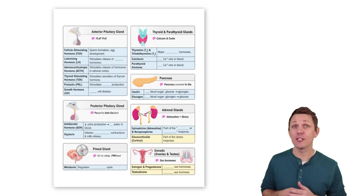
Review of Major Hormones

Aldosterone

Aldosterone is a steroid hormone produced by the adrenal cortex that regulates sodium and potassium levels in the body. It acts primarily on the kidneys, promoting sodium reabsorption and potassium excretion. This process not only helps to maintain electrolyte balance but also influences blood pressure by increasing blood volume through water retention.
Recommended video:
11:30
Renin-Angiotensin-Aldosterone-System

Common Target Organ: Kidneys

The kidneys are the primary organs involved in fluid and electrolyte balance, responding to hormones like ADH and aldosterone. They filter blood, reabsorb necessary substances, and excrete waste products in urine. The coordinated actions of these hormones on the kidneys ensure that the body maintains homeostasis, adjusting fluid levels and electrolyte concentrations according to physiological needs.
Recommended video:
2:50
Receptors at Target Organs