Join thousands of students who trust us to help them ace their exams!
Multiple Choice
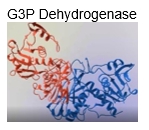
Which of the following is true regarding the tertiary structure of G3P dehydrogenase?
A
Its tertiary structure involves its entire 2D-structure.
B
Its tertiary structure is primarily stabilized by peptide backbone interactions.
C
Its R-group interactions stabilize its tertiary structure.
D
Only R-groups that are nearby in its primary sequence can interact.
0 Comments
Verified step by step guidance
1
Understand the concept of tertiary structure in proteins: Tertiary structure refers to the three-dimensional folding of a protein molecule, which is stabilized by interactions between the side chains (R-groups) of the amino acids.
Analyze the image of G3P dehydrogenase: The image shows a complex 3D structure, indicating the presence of multiple interactions that contribute to the protein's tertiary structure.
Identify the types of interactions that stabilize tertiary structure: These include hydrogen bonds, ionic bonds, hydrophobic interactions, and disulfide bridges, all of which occur between R-groups of amino acids.
Evaluate the statement about peptide backbone interactions: While peptide backbone interactions are important for secondary structure (alpha helices and beta sheets), tertiary structure is primarily stabilized by R-group interactions.
Consider the proximity of R-groups in primary sequence: Tertiary structure allows for interactions between R-groups that are not necessarily adjacent in the primary sequence, as the protein folds into its functional 3D shape.


 Verified step by step guidance

