 Back
BackEnzyme Kinetics: Principles, Mechanisms, and Applications
Study Guide - Smart Notes
 Tailored notes based on your materials, expanded with key definitions, examples, and context.
Enzyme Kinetics
Introduction to Enzyme Kinetics
Enzyme kinetics is the study of the rates at which enzymatic reactions proceed and the factors affecting these rates. Enzymes are biological catalysts that accelerate chemical reactions without being consumed in the process. Understanding enzyme kinetics is fundamental for biochemistry, as it provides insights into enzyme mechanisms, regulation, and their roles in metabolism.
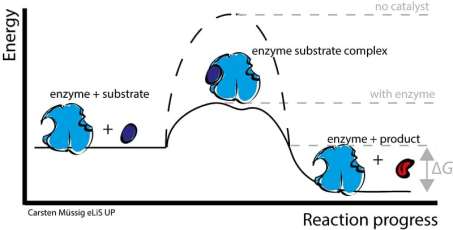
Enzyme: A protein that catalyzes biochemical reactions by lowering the activation energy required for the reaction to proceed.
Catalyst: A substance that increases the rate of a chemical reaction without undergoing permanent change.
Activation Energy (ΔG‡): The energy barrier that must be overcome for a reaction to proceed.
Biological Importance of Enzyme Kinetics
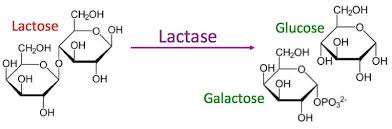
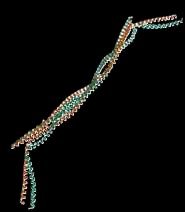
Enzyme deficiencies can lead to metabolic disorders, such as lactose intolerance, or more severe diseases. For example, mutations in enzymes like lamin A can cause progeria, a premature aging disorder. Understanding enzyme kinetics helps in diagnosing and treating such conditions.
Lactose Intolerance: Caused by deficiency of lactase, leading to discomfort upon lactose ingestion.
Progeria: A genetic disorder resulting from mutated lamin A, affecting nuclear structure and leading to accelerated aging.
Basic Concepts in Enzyme Kinetics
Reaction Rates and Rate Laws
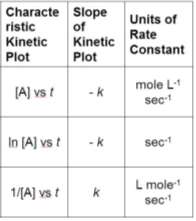
The rate of an enzymatic reaction (velocity, v) is defined as the change in product concentration over time. The rate law expresses this relationship and depends on the order of the reaction.
Zero Order: Rate is independent of substrate concentration.
First Order: Rate is directly proportional to substrate concentration.
Second Order: Rate is proportional to the square of substrate concentration or to the product of two reactant concentrations.
Reaction Order | Differential Rate Law |
|---|---|
Zero | - d[A]/dt = k |
First | - d[A]/dt = k[A] |
Second | - d[A]/dt = k[A]2 |
Arrhenius Equation and Temperature Dependence
The Arrhenius equation relates the rate constant (k) to the activation energy and temperature:
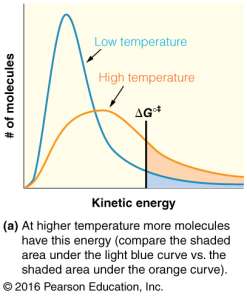
Increasing Temperature (T): Increases reaction rate by providing more molecules with sufficient energy to overcome the activation barrier.
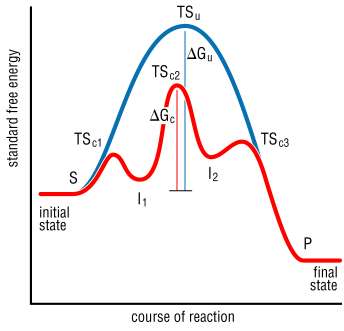
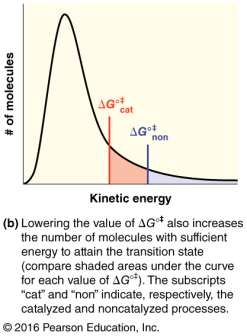
Decreasing Activation Energy (ΔG‡): Enzymes lower the activation energy, increasing the number of molecules that can reach the transition state.
Mechanisms of Enzyme Action
Transition State Stabilization
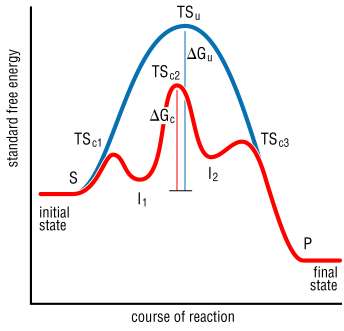
Enzymes accelerate reactions by stabilizing the transition state, thereby lowering the activation energy. The enzyme active site binds specifically to the transition state, not just the substrate, facilitating the reaction.
Transition State (TS): A high-energy, unstable state during the conversion of substrate to product.
ΔG‡ (Activation Energy): Lower in the presence of an enzyme, leading to faster reaction rates.
Enzyme-Substrate Complex Formation
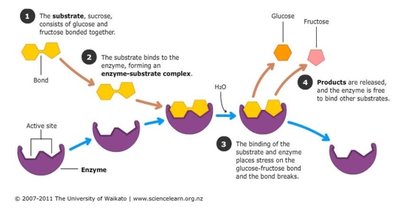
The enzyme binds to its substrate to form an enzyme-substrate (ES) complex. This binding is highly specific and often involves induced fit, where the enzyme changes conformation to better accommodate the substrate.
Active Site: The region of the enzyme where substrate binding and catalysis occur.
Induced Fit Model: The enzyme changes shape upon substrate binding to enhance catalysis.
Michaelis-Menten Kinetics
Michaelis-Menten Equation
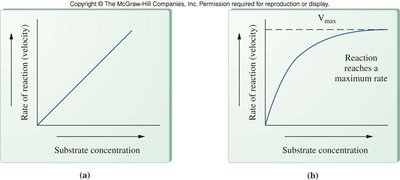
The Michaelis-Menten equation describes the rate of enzymatic reactions as a function of substrate concentration:
Vmax: Maximum reaction velocity when the enzyme is saturated with substrate.
KM: Michaelis constant; substrate concentration at which the reaction rate is half of Vmax. It is an indicator of enzyme affinity for the substrate (lower KM means higher affinity).
kcat: Turnover number; the number of substrate molecules converted to product per enzyme molecule per unit time at saturation.
Lineweaver-Burk Plot
The Lineweaver-Burk plot is a double reciprocal plot used to linearize the Michaelis-Menten equation for easier determination of kinetic parameters:
Y-intercept: 1/Vmax
X-intercept: -1/KM
Experimental Determination of Kinetic Parameters
Initial reaction rates are measured at various substrate concentrations to determine Vmax and KM. These values are used to calculate kcat and assess enzyme efficiency.
kcat = Vmax / [E]Total
KM: Calculated from the substrate concentration and initial velocity data using the Michaelis-Menten equation.
Complex Enzyme Mechanisms
Multi-Substrate Reactions
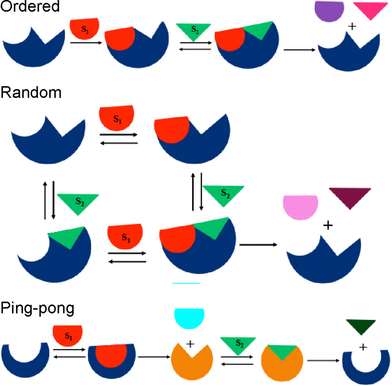
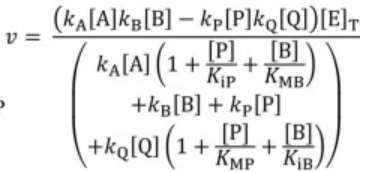
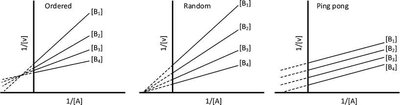
Many enzymes catalyze reactions involving two or more substrates. The order of substrate binding and product release can follow different mechanisms:
Sequential (Ordered or Random): Both substrates must bind before any product is released.
Ping-Pong (Double Displacement): One substrate binds and one product is released before the second substrate binds.
Summary Table: Key Kinetic Parameters
Parameter | Definition | Significance |
|---|---|---|
Vmax | Maximum velocity | Indicates enzyme saturation |
KM | Michaelis constant | Substrate concentration at half Vmax; affinity indicator |
kcat | Turnover number | Number of reactions per enzyme per second |
Conclusion
Enzyme kinetics provides a quantitative framework for understanding how enzymes function, how they are regulated, and how their activity can be modulated in health and disease. Mastery of these concepts is essential for advanced studies in biochemistry and related biomedical sciences.
