 Back
BackGluconeogenesis and Its Regulation: Biochemistry Study Guide
Study Guide - Smart Notes
 Tailored notes based on your materials, expanded with key definitions, examples, and context.
Gluconeogenesis and Its Regulation
General Overview of Gluconeogenesis
Gluconeogenesis is an essential anabolic pathway that allows organisms, particularly animals, to synthesize glucose from non-carbohydrate precursors. This process is crucial during fasting, vigorous exercise, or when dietary carbohydrate intake is low, ensuring a continuous supply of glucose for tissues highly dependent on it.
Definition: Gluconeogenesis is the formation of glucose from non-glucosidic precursors such as lactate, amino acids, glycerol, and intermediates of the citric acid cycle.
Location: Primarily occurs in the liver (cytosol), with minor activity in the renal cortex and intestinal epithelial cells. Muscle cells do not perform gluconeogenesis.
Importance: Maintains blood glucose levels during fasting, exercise, or carbohydrate restriction.
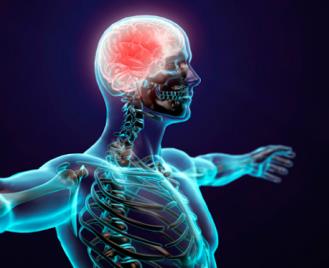
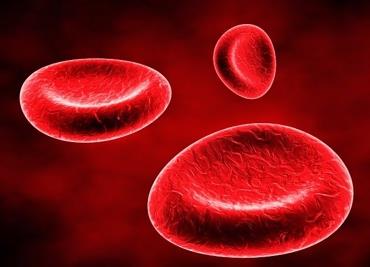
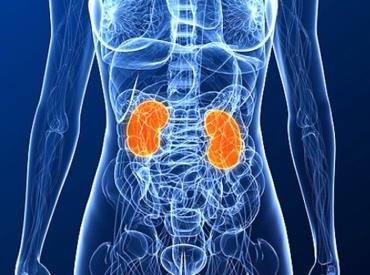
Key tissues dependent on glucose: Central nervous system, erythrocytes, renal medulla, and tissues with low oxygen access (e.g., cornea, retina).
Destinations and Roles of Pyruvate
Pyruvate is a central metabolite with multiple fates depending on cellular conditions:
Oxidation to Acetyl-CoA: Occurs in the presence of oxygen, entering the citric acid cycle.
Reduction to lactate: Under anaerobic conditions, pyruvate is converted to lactate (lactic fermentation).
Precursor for gluconeogenesis: In the liver, pyruvate can be used to synthesize glucose.
Precursors for Gluconeogenesis
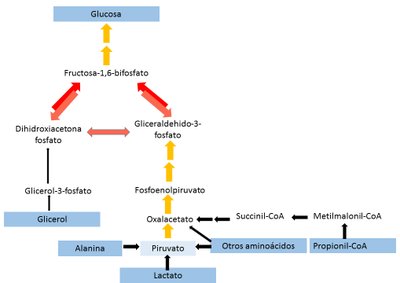
The liver can synthesize glucose from several sources:
Lactate: Via the Cori cycle.
Oxaloacetate: From the citric acid cycle.
Amino acids: Especially alanine and other glucogenic amino acids.
Glycerol: From triglyceride breakdown.
Comparison: Glycolysis vs. Gluconeogenesis
Glycolysis and gluconeogenesis are tightly linked but operate in opposite directions. Most reactions are reversible, but three key steps in glycolysis are irreversible and require bypass reactions in gluconeogenesis.
Irreversible glycolytic steps: Hexokinase, phosphofructokinase-1 (PFK-1), and pyruvate kinase.
Bypass reactions: Gluconeogenesis uses alternative enzymes to circumvent these steps.
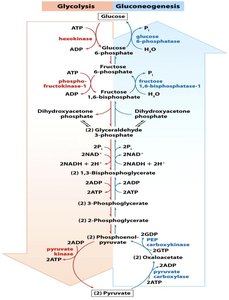
Key Bypass Reactions in Gluconeogenesis
Bypass 1: Conversion of Pyruvate to Phosphoenolpyruvate (PEP)
This step is not a simple reversal of glycolysis due to the highly negative ΔG of the pyruvate kinase reaction. It involves two main enzymes and occurs in both mitochondria and cytosol.
Pyrvuate carboxylase: Converts pyruvate to oxaloacetate in the mitochondria, requiring ATP and biotin as a cofactor.
PEP carboxykinase: Converts oxaloacetate to PEP, requiring GTP and magnesium ions. Exists in both mitochondrial and cytosolic isoforms.
Regulation: Acetyl-CoA is a positive modulator of pyruvate carboxylase; PEP carboxykinase is active when ATP is high.
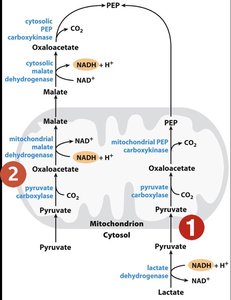
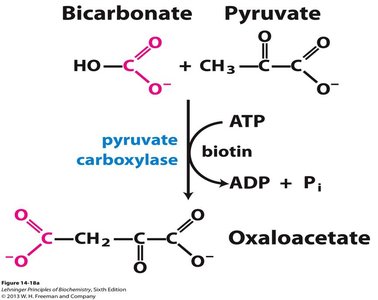
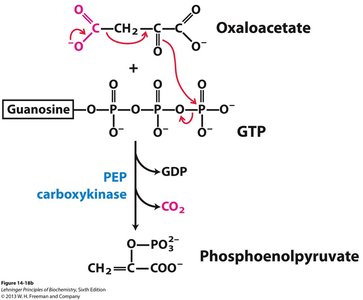
Depending on the isoform, oxaloacetate may be converted to malate for transport to the cytosol, then reconverted to oxaloacetate before PEP formation.
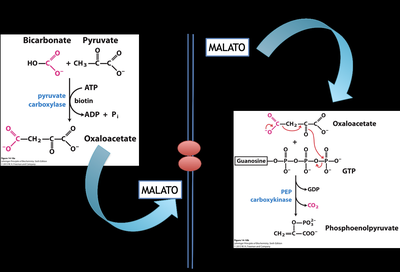
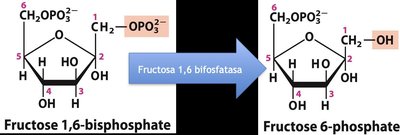
Bypass 2: Conversion of Fructose-1,6-bisphosphate to Fructose-6-phosphate
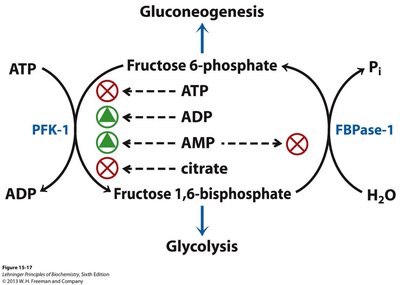
This reaction is catalyzed by fructose-1,6-bisphosphatase (FBPase-1), a hydrolase that releases inorganic phosphate (Pi).
Enzyme: Fructose-1,6-bisphosphatase (FBPase-1).
Regulation: Allosterically regulated by ATP, AMP, citrate, and fructose 2,6-bisphosphate.
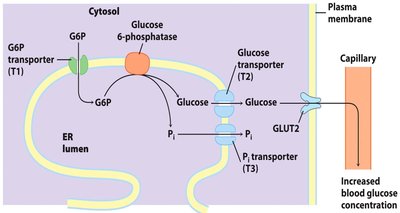
Bypass 3: Conversion of Glucose-6-phosphate to Glucose
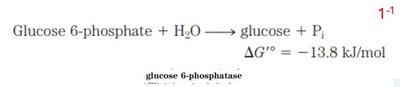
Glucose-6-phosphatase catalyzes the final step, releasing free glucose into the bloodstream. This enzyme is present in hepatocytes, renal cells, and intestinal epithelial cells, but not in muscle or adipose tissue.
Enzyme: Glucose-6-phosphatase (Mg2+ dependent).
Location: Endoplasmic reticulum membrane.
Reaction:
ΔG°: -13.8 kJ/mol
Energetics of Gluconeogenesis
Gluconeogenesis is energetically expensive, requiring significant input of ATP, GTP, and NADH.
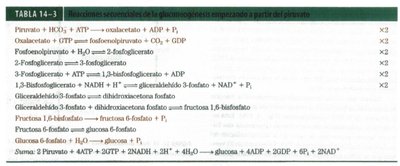
Energy consumption: 6 high-energy molecules (4 ATP, 2 GTP) and 2 NADH per glucose synthesized.
Regulation of Gluconeogenesis and Glycolysis
Reciprocal Regulation in Hepatic Cells
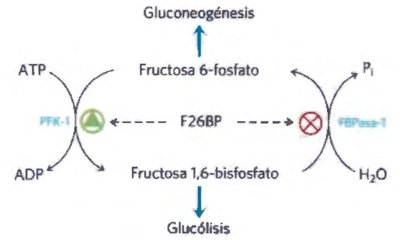
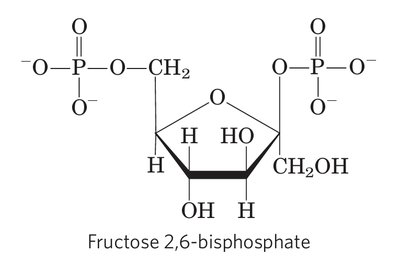
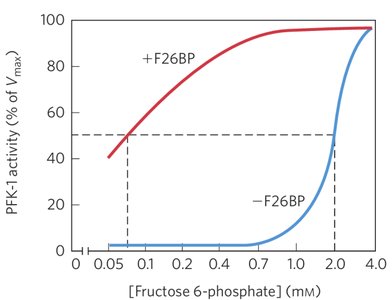
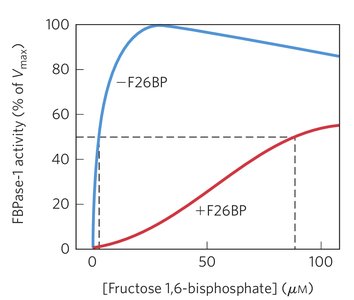
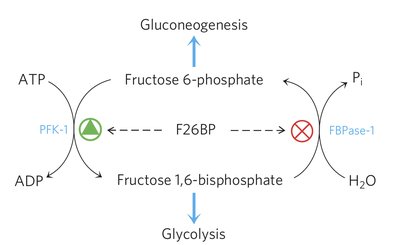
Gluconeogenesis and glycolysis are reciprocally regulated to prevent futile cycling. The key regulator is fructose 2,6-bisphosphate, which acts as a potent allosteric effector.
Fructose 2,6-bisphosphate: Activates PFK-1 (glycolysis) and inhibits FBPase-1 (gluconeogenesis).
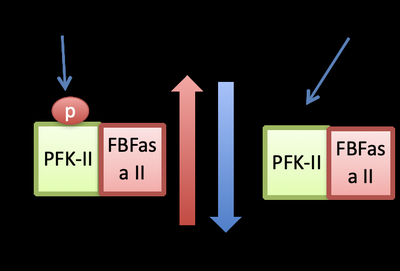
Bifunctional enzyme: Phosphofructokinase II and fructose 2,6-bisphosphatase control synthesis and degradation of F2,6BP.
Hormonal regulation: Insulin and glucagon modulate the activity of these enzymes.
Physiological Context: The Cori Cycle
Muscle-Liver Cooperation
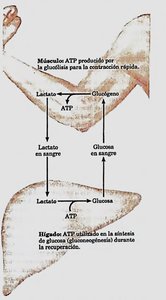
During intense muscular activity, lactate produced by anaerobic glycolysis is transported to the liver, where it is converted back to glucose via gluconeogenesis. This glucose can then return to the muscle, completing the Cori cycle.
Importance: Prevents lactic acidosis and maintains energy supply during exercise.
Summary Table: Gluconeogenesis Reactions
The following table summarizes the main reactions of gluconeogenesis starting from pyruvate:
Step | Reaction | Enzyme |
|---|---|---|
1 | Pyruvate + HCO3- + ATP → Oxaloacetate + ADP + Pi | Pyruvate carboxylase |
2 | Oxaloacetate + GTP → Phosphoenolpyruvate + CO2 + GDP | PEP carboxykinase |
3 | Phosphoenolpyruvate → 2-phosphoglycerate | Enolase |
4 | 2-phosphoglycerate → 3-phosphoglycerate | Phosphoglycerate mutase |
5 | 3-phosphoglycerate + ATP → 1,3-bisphosphoglycerate + ADP | Phosphoglycerate kinase |
6 | 1,3-bisphosphoglycerate + NADH + H+ → Glyceraldehyde-3-phosphate + NAD+ + Pi | Glyceraldehyde-3-phosphate dehydrogenase |
7 | Glyceraldehyde-3-phosphate ↔ Dihydroxyacetone phosphate | Triose phosphate isomerase |
8 | Fructose-1,6-bisphosphate + H2O → Fructose-6-phosphate + Pi | Fructose-1,6-bisphosphatase |
9 | Fructose-6-phosphate ↔ Glucose-6-phosphate | Phosphoglucose isomerase |
10 | Glucose-6-phosphate + H2O → Glucose + Pi | Glucose-6-phosphatase |
Clinical and Physiological Relevance
Fasting and starvation: Gluconeogenesis is activated to maintain blood glucose.
Exercise: Muscle-derived lactate is converted to glucose in the liver.
Low carbohydrate diets: Increased gluconeogenesis supplies glucose to essential organs.
Diabetes mellitus: Uncontrolled diabetes leads to excessive hepatic gluconeogenesis.
Example: Cori Cycle
During rapid muscle contraction, lactate is produced and transported to the liver, where it is converted to glucose and returned to the muscle.
Self-Assessment Questions
In which cell type does gluconeogenesis occur predominantly?
What situations activate gluconeogenesis?
How does the regulation of glycolysis and gluconeogenesis prevent futile cycling?
Additional info: These notes expand on the original lecture content with definitions, reaction mechanisms, regulatory principles, and clinical context, ensuring a comprehensive and self-contained study guide for biochemistry students.
