Back
BackThe Chemical Foundation of Life: Water, Acids, Bases, and Buffers
Study Guide - Smart Notes
 Tailored notes based on your materials, expanded with key definitions, examples, and context.
The Chemical Foundation of Life
Introduction to Water in Biochemistry
Water is fundamental to all life on Earth, serving as the medium in which biochemical reactions occur. Its unique properties are essential for the structure and function of biological macromolecules, including proteins, nucleic acids, carbohydrates, and membranes.
Water as a Solvent: Water is often called the "universal solvent" because it dissolves a wide variety of substances, facilitating biochemical reactions.
Role in Cellular Structure: The shapes and interactions of macromolecules are heavily influenced by their interactions with water.

Water Conservation in Biology
Organisms have evolved various mechanisms to conserve water, especially in arid environments. For example, the Eureka Dunes evening primrose has specialized adaptations for water conservation.

Properties of Water
Molecular Structure and Polarity
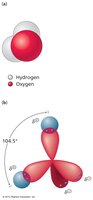
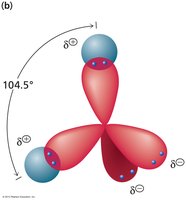
The water molecule (H2O) consists of two hydrogen atoms covalently bonded to an oxygen atom. The molecule is bent, with a bond angle of 104.5°, and exhibits polarity due to the difference in electronegativity between oxygen and hydrogen.
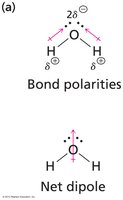
Polarity: Oxygen is more electronegative, resulting in a partial negative charge near the oxygen and a partial positive charge near the hydrogens.
Permanent Dipole: The geometry and bond polarities create a permanent dipole moment.
Comparison with Other Molecules
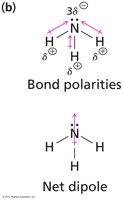
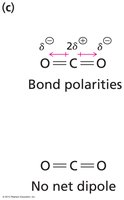
Other molecules, such as ammonia (NH3), are also polar due to their geometry, while molecules like carbon dioxide (CO2) are nonpolar because their bond polarities cancel out.
Like Dissolves Like: Polar molecules dissolve well in polar solvents like water.
Hydrogen Bonding in Water
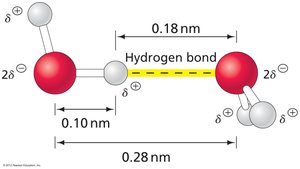
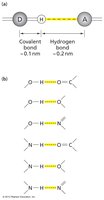
Hydrogen bonds are weak interactions that occur between the slightly positive hydrogen of one water molecule and the slightly negative oxygen of another. These bonds are crucial for the unique properties of water.
Hydrogen Bond Donor and Acceptor: The hydrogen atom acts as a donor, while the oxygen atom acts as an acceptor.
Strength: Hydrogen bonds are much weaker than covalent bonds but are essential for the structure of water and biological macromolecules.


Hydrogen Bonding Capacity and Structure of Ice
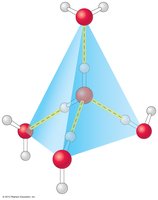
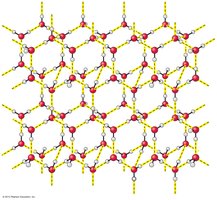
Each water molecule can form up to four hydrogen bonds, leading to a highly organized structure in ice. This regular hydrogen-bonding pattern gives ice a high melting point and unique properties compared to liquid water.
Thermal Properties of Water
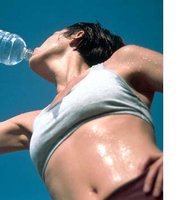
Water has a high specific heat capacity and heat of vaporization due to hydrogen bonding. This allows water to buffer temperature changes in organisms and environments.
Specific Heat: The amount of heat required to raise the temperature of 1 gram of water by 1°C.
Heat of Vaporization: The energy required to convert water from liquid to gas.
Solvent Properties and Solubility
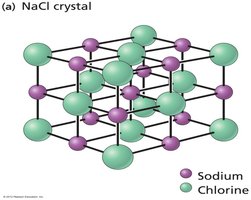
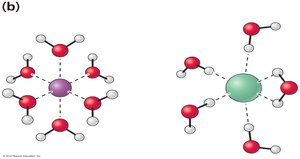
Water dissolves polar and ionic substances efficiently. The solubility of a molecule in water depends on the ratio of polar to nonpolar groups.
Hydrophilic: Substances that dissolve readily in water.
Hydrophobic: Substances that do not dissolve in water.
Solubility of Alcohols
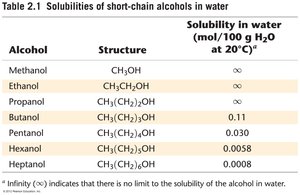
The solubility of alcohols in water decreases as the hydrocarbon chain length increases. More polar groups increase solubility.
Alcohol | Structure | Solubility in water (mol/100 g H2O at 20°C) |
|---|---|---|
Methanol | CH3OH | ∞ |
Ethanol | CH3CH2OH | ∞ |
Propanol | CH3(CH2)2OH | ∞ |
Butanol | CH3(CH2)3OH | 0.11 |
Pentanol | CH3(CH2)4OH | 0.030 |
Hexanol | CH3(CH2)5OH | 0.0058 |
Heptanol | CH3(CH2)6OH | 0.0008 |
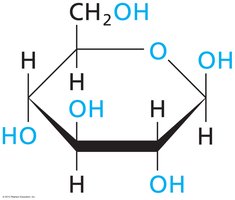
Glucose: A Highly Soluble Molecule
Glucose contains multiple hydroxyl groups, making it highly soluble in water due to extensive hydrogen bonding.
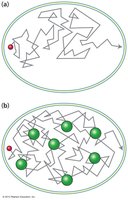
Diffusion and Cellular Crowding
Diffusion of solutes in cells is slower than in pure water due to higher viscosity, transient binding, and molecular crowding.
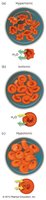
Osmosis and Osmotic Pressure
Osmosis is the movement of water across a semipermeable membrane from low to high solute concentration. Cells regulate osmotic pressure to prevent lysis, often by storing glucose as glycogen.
Noncovalent Interactions in Biochemistry
Types of Noncovalent Interactions
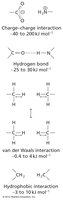
Noncovalent interactions are essential for the structure and function of biomolecules. The four major types are:
Charge-Charge (Ionic) Interactions
Hydrogen Bonds
van der Waals Forces
Hydrophobic Interactions
Charge-Charge Interactions
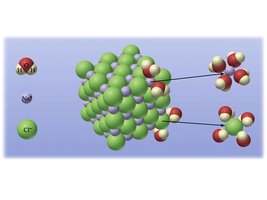
Electrostatic interactions between charged particles are among the strongest noncovalent forces. In proteins, these are often called salt bridges and are important for structural stability.
Hydrogen Bonds in Biomolecules
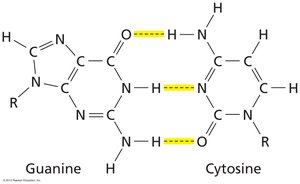
Hydrogen bonds stabilize the structures of proteins and nucleic acids. For example, hydrogen bonds between guanine and cytosine stabilize DNA double helices.
van der Waals Forces
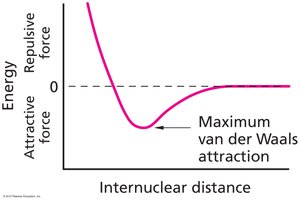
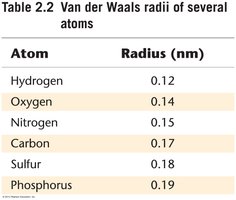
These weak interactions arise from transient dipoles and are significant when atoms are in close proximity. They contribute to the overall stability of macromolecular structures.
Hydrophobic Interactions
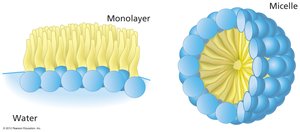
Hydrophobic interactions drive the folding of proteins and the formation of biological membranes. Nonpolar molecules aggregate in water to minimize their exposure to the polar solvent.
Amphipathic Molecules: Molecules with both hydrophilic and hydrophobic regions, such as detergents, can form micelles in water.

Acids, Bases, and Buffers
Acids and Bases in Aqueous Solutions
Acids increase the concentration of hydrogen ions (H+) in solution, while bases decrease it. The strength of acids and bases is measured by their degree of dissociation in water.
Strong Acids/Bases: Completely dissociate in water.
Weak Acids/Bases: Partially and reversibly dissociate.
The pH Scale
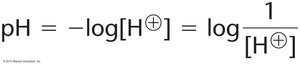
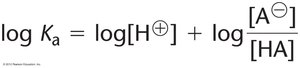
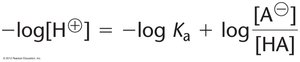
pH is a logarithmic measure of hydrogen ion concentration, defined as:

Buffers and Buffering Capacity
Buffers are solutions that resist changes in pH upon addition of small amounts of acid or base. They are typically composed of a weak acid and its conjugate base.
Buffering Range: Most effective within one pH unit of the acid's pKa.
Titration Curves and pKa Determination
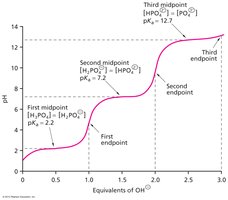
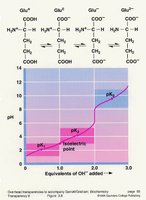
Titration curves plot pH against the amount of acid or base added, revealing the buffering regions and pKa values of weak acids.
Amino Acids: Amphoteric Compounds
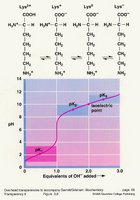
Amino acids contain both acidic (carboxyl) and basic (amino) groups, allowing them to act as buffers. The isoelectric point (pI) is the pH at which an amino acid has no net charge.
Henderson-Hasselbalch Equation: Used to calculate the pH of buffer solutions and the ionization state of amino acids.
Titration Curves of Amino Acids
The titration curve of an amino acid shows two buffering regions corresponding to the carboxyl and amino groups. The pI is calculated as the average of the pKa values of these groups for simple amino acids.
pH Measurement Tools
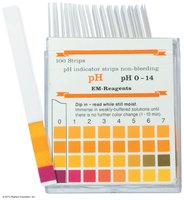
pH indicator strips are commonly used to measure the pH of solutions in laboratory and clinical settings.