 Back
BackThe Citric Acid Cycle (TCA/Krebs Cycle): Central Pathway of Aerobic Metabolism
Study Guide - Smart Notes
 Tailored notes based on your materials, expanded with key definitions, examples, and context.
The Citric Acid Cycle (TCA/Krebs Cycle)
Overview and Biological Significance
The Citric Acid Cycle, also known as the tricarboxylic acid (TCA) cycle or Krebs cycle, is a central metabolic pathway that completes the oxidation of organic molecules, producing energy and metabolic intermediates. It is the final common pathway for the oxidation of carbohydrates, fats, and proteins, and occurs in the mitochondrial matrix of eukaryotic cells.
Catabolic Role: Oxidizes acetyl CoA to CO2 and captures high-energy electrons in NADH and QH2.
Anabolic Role: Provides intermediates for biosynthetic pathways (e.g., amino acids, nucleotide bases).
Amphibolic Nature: Functions in both catabolism and anabolism.
Fates of Pyruvate
Pyruvate, the end product of glycolysis, has several metabolic fates depending on the organism and oxygen availability:
Anaerobic (Yeast): Pyruvate is converted to acetaldehyde and then to ethanol (fermentation).
Anaerobic (Mammals): Pyruvate is reduced to lactate (lactic acid fermentation).
Aerobic (All Types): Pyruvate is converted to acetyl CoA, which enters the citric acid cycle.
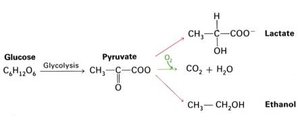
Equation for Glycolysis:
Location and Transport
The TCA cycle occurs in the mitochondrial matrix in eukaryotes. Pyruvate produced in the cytosol is transported into the mitochondria:
Passes through the outer mitochondrial membrane via porin channels.
Transported across the inner mitochondrial membrane by pyruvate translocase (symport with H+).
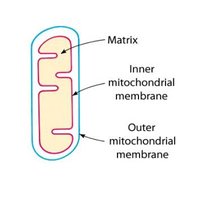
Conversion of Pyruvate to Acetyl CoA
Before entering the TCA cycle, pyruvate is converted to acetyl CoA by the pyruvate dehydrogenase complex (PDC), a multi-enzyme complex requiring five coenzymes:
Reaction: Pyruvate + CoA + NAD+ → Acetyl CoA + CO2 + NADH
Key Features: Decarboxylation (CO2 released), reduction of NAD+, and formation of a high-energy thioester bond in acetyl CoA.
Steps of the Citric Acid Cycle
The cycle consists of eight enzyme-catalyzed reactions that oxidize acetyl CoA and regenerate oxaloacetate:
Condensation: Acetyl CoA + Oxaloacetate → Citrate (via citrate synthase)
Only C–C bond formation in the cycle; irreversible; driven by thioester hydrolysis.
Isomerization: Citrate → Isocitrate (via aconitase)
Prepares for oxidation by converting a tertiary alcohol to a secondary alcohol.
First Oxidative Decarboxylation: Isocitrate → α-Ketoglutarate (via isocitrate dehydrogenase)
CO2 released; NAD+ reduced to NADH.
Second Oxidative Decarboxylation: α-Ketoglutarate → Succinyl-CoA (via α-ketoglutarate dehydrogenase complex)
CO2 released; NAD+ reduced to NADH.
Substrate-Level Phosphorylation: Succinyl-CoA → Succinate (via succinyl-CoA synthetase)
GTP (or ATP) formed from GDP and Pi, driven by thioester hydrolysis.
Oxidation: Succinate → Fumarate (via succinate dehydrogenase)
FAD (as part of ubiquinone, Q) reduced to QH2.
Hydration: Fumarate → L-Malate (via fumarase)
Stereospecific addition of water.
Oxidation: L-Malate → Oxaloacetate (via malate dehydrogenase)
NAD+ reduced to NADH.
Summary of Products per Acetyl CoA
3 NADH
1 QH2 (reduced ubiquinone)
1 GTP (or ATP)
2 CO2
NADH and QH2 donate electrons to the electron transport chain, driving ATP synthesis via oxidative phosphorylation.
Biological Importance and Integration
The TCA cycle is the end stage of catabolism for carbohydrates, fats, and proteins, all of which are converted to acetyl CoA.
Intermediates serve as precursors for biosynthetic pathways (e.g., amino acid, nucleotide, and heme synthesis).
Key Equations
Overall Reaction for One Turn of the Cycle:
