 Back
BackCell Structure, Function, and Membrane Transport: Study Notes
Study Guide - Smart Notes
 Tailored notes based on your materials, expanded with key definitions, examples, and context.
Cell Structure and Function
Cells in General
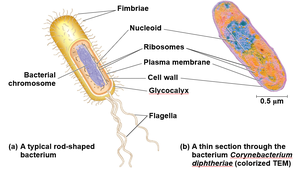
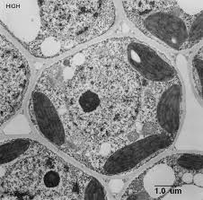
All living organisms are composed of cells, which are the fundamental units of life. The structure of a cell is closely related to its function, and all cells share certain basic features, including a plasma membrane, cytoplasm, chromosomes, and ribosomes. Cells are classified as either prokaryotic or eukaryotic based on the presence or absence of a nucleus and membrane-bound organelles.
Prokaryotic cells: Lack a nucleus; DNA is located in the nucleoid region. They do not have membrane-bound organelles and include bacteria and archaea.
Eukaryotic cells: Possess a true nucleus containing DNA and various membrane-bound organelles. They are generally larger and include plants, animals, fungi, and protists.
Major Cell Types
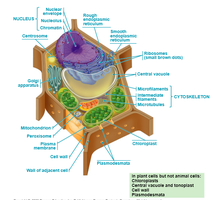
Animal cells: Lack cell walls, have centrioles, and contain lysosomes.
Plant cells: Possess cell walls, chloroplasts, and a large central vacuole.
Microscopy and Cell Visualization
Microscopes
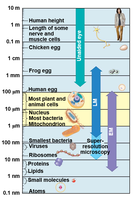
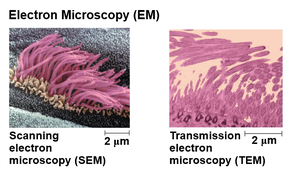
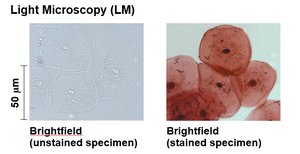
Cells are typically too small to be seen with the naked eye. Microscopes are essential tools for visualizing cellular structures. Light microscopes (LM) use visible light, while electron microscopes (EM) use electron beams for higher resolution.
Light Microscopy (LM): Suitable for viewing live or stained cells.
Scanning Electron Microscopy (SEM): Provides 3D images of cell surfaces.
Transmission Electron Microscopy (TEM): Used to study internal cell structures.
Subcellular Components
Basic Features of All Cells
Plasma membrane: Selectively permeable boundary composed of a phospholipid bilayer.
Cytosol: Semifluid substance within the cell.
Chromosomes: Carry genetic information.
Ribosomes: Sites of protein synthesis.
Nucleus
The nucleus is the information center of eukaryotic cells, containing most of the cell's DNA. It is surrounded by a double-membrane nuclear envelope and contains the nucleolus, where ribosomal RNA is synthesized.
Ribosomes
Ribosomes are complexes of rRNA and protein that synthesize proteins. They can be free in the cytosol or bound to the endoplasmic reticulum (ER).
Endoplasmic Reticulum (ER)
Rough ER: Studded with ribosomes; synthesizes proteins and membranes.
Smooth ER: Lacks ribosomes; synthesizes lipids, metabolizes carbohydrates, stores calcium, and detoxifies poisons.
Golgi Apparatus
The Golgi apparatus consists of flattened sacs (cisternae) and functions in modifying, sorting, and packaging proteins and lipids for secretion or delivery to other organelles.
Lysosomes
Lysosomes are membrane-bound sacs containing hydrolytic enzymes for digesting macromolecules, recycling organelles (autophagy), and cellular waste disposal.
Vacuoles and Vesicles
Vacuoles: Large membrane-bound sacs for storage and maintenance of cell rigidity (central vacuole in plants).
Vesicles: Smaller sacs for transport and storage.
Mitochondria
Mitochondria are the sites of cellular respiration, converting chemical energy from food into ATP. They have a double membrane, with the inner membrane folded into cristae to increase surface area for ATP synthesis.
Chloroplasts
Chloroplasts are found in plants and algae and are the sites of photosynthesis. They contain chlorophyll, thylakoids (membranous sacs), and stroma (internal fluid).
Peroxisomes
Peroxisomes are oxidative organelles that break down fatty acids and detoxify harmful substances, producing hydrogen peroxide and converting it to water.
Cytoskeleton
The cytoskeleton is a network of protein fibers (microtubules, microfilaments, intermediate filaments) that provides structural support, facilitates cell movement, and organizes organelles.
Cell Compartmentalization
Advantages
Efficiency: Specialized environments for specific reactions.
Multi-functionality: Simultaneous processes in different compartments.
Increased surface area: Folds and membranes provide more space for reactions.
Disadvantages
Requires larger cell size, reducing surface area-to-volume ratio.
Barriers to movement: Membranes restrict diffusion, requiring active transport and more ATP.
Origin of Eukaryotic Cells
Endosymbiotic Theory
The endosymbiotic theory proposes that mitochondria and chloroplasts originated from free-living bacteria that were engulfed by ancestral eukaryotic cells. Evidence includes their double membranes, circular DNA, and similarities to bacteria.
Cell Size and Surface Area-to-Volume Ratio
Limits on Cell Size
Cell size is limited by metabolic requirements. As cells grow, their volume increases faster than their surface area, limiting the rate of material exchange with the environment. Cells maximize surface area-to-volume ratio through structures like microvilli, root hairs, and flattened shapes.
Plasma Membrane Structure and Function
Plasma Membrane
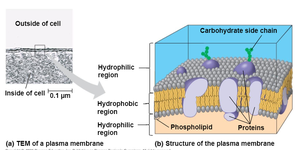
The plasma membrane is a selectively permeable barrier composed of a phospholipid bilayer with embedded proteins. It regulates the passage of oxygen, nutrients, and waste products.
Phospholipids and Proteins
Phospholipids: Amphipathic molecules with hydrophilic heads and hydrophobic tails, forming a bilayer.
Proteins: Integral (span the membrane) or peripheral (attached to the surface); involved in transport, signaling, and cell adhesion.
Fluid Mosaic Model
The fluid mosaic model describes the membrane as a dynamic structure with proteins floating in or on the fluid lipid bilayer. Membrane fluidity is influenced by temperature and cholesterol content.
Cholesterol
Cholesterol modulates membrane fluidity by restraining phospholipid movement at high temperatures and preventing tight packing at low temperatures.
Membrane Permeability and Cell Walls
Selective Permeability
Membrane permeability depends on molecular size, polarity, and the presence of transport proteins. Small, nonpolar molecules diffuse easily, while ions and polar molecules require transport proteins.
Extracellular Matrix (ECM) and Cell Junctions
ECM: Provides structural support, adhesion, and signaling in animal cells.
Cell junctions: Tight junctions, desmosomes, and gap junctions facilitate cell-cell adhesion and communication.
Plant Cell Walls
Plant cell walls provide protection, maintain shape, and prevent excessive water uptake. Plasmodesmata are channels that connect plant cells, allowing the passage of water and small molecules.
Membrane Transport Mechanisms
Passive Transport
Diffusion: Movement of molecules from high to low concentration.
Osmosis: Diffusion of water across a selectively permeable membrane.
Facilitated diffusion: Passive transport of molecules via membrane proteins.
Active Transport
Moves substances against their concentration gradient using energy (ATP).
Examples: Sodium-potassium pump, proton pump, co-transport mechanisms.
Bulk transport: Endocytosis (phagocytosis, pinocytosis, receptor-mediated) and exocytosis.
Tonicity and Osmoregulation
Osmosis and Tonicity
Isotonic: No net water movement.
Hypertonic: Cell loses water.
Hypotonic: Cell gains water.
Osmoregulation
Cells regulate water balance using structures like contractile vacuoles (protists) and central vacuoles (plants).
Water Potential
Water potential (Ψ) predicts the direction water will move. It is calculated as the sum of solute potential (Ψs) and pressure potential (Ψp):
Solute potential is calculated as:
i: Ionization constant
C: Molar concentration
R: Pressure constant (0.0831 liter bars/mol K)
T: Temperature in Kelvin
