 Back
BackEukaryotic Cells: Structure, Function, and Compartmentalization
Study Guide - Smart Notes
 Tailored notes based on your materials, expanded with key definitions, examples, and context.
Concept 6.2: Eukaryotic Cells Have Internal Membranes That Compartmentalize Their Functions
Introduction to Cell Types
Cells are the fundamental structural and functional units of all living organisms. There are two primary types of cells: prokaryotic and eukaryotic. Prokaryotic cells are found in the domains Bacteria and Archaea, while eukaryotic cells are found in the domain Eukarya, which includes protists, fungi, animals, and plants.
Prokaryotic cells: Lack a membrane-bound nucleus and organelles.
Eukaryotic cells: Possess a membrane-bound nucleus and various organelles.
Protists: A diverse group of mostly unicellular eukaryotes.
Comparing Prokaryotic and Eukaryotic Cells
All cells share certain features, including a plasma membrane, cytosol, chromosomes, and ribosomes. However, there are key differences between prokaryotic and eukaryotic cells:
Prokaryotic cells: DNA is located in a nucleoid region (not membrane-enclosed), and they generally lack membrane-bound organelles.
Eukaryotic cells: DNA is enclosed within a nucleus, and they contain various membrane-bound organelles.
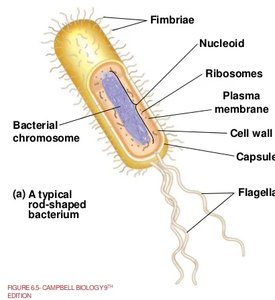
Fimbriae: Hair-like structures for attachment.
Nucleoid: Region containing DNA.
Ribosomes: Sites of protein synthesis (free-floating in prokaryotes).
Plasma membrane: Encloses the cytoplasm.
Cell wall: Rigid structure outside the plasma membrane.
Capsule: Jellylike outer coating.
Flagella: Structures for locomotion.
Cytoplasm and Cytosol
In eukaryotic cells, the cytoplasm refers to the region between the nucleus and the plasma membrane, containing organelles suspended in cytosol (the aqueous fluid that fills the cell). In all cells, cytosol is present, but the cytoplasm includes the cytosol, organelles, and cytoskeleton (excluding the nucleus).
Cell Size and Surface Area-to-Volume Ratio
Cell size is limited by the need for a high surface area-to-volume ratio, which is critical for efficient material exchange. Prokaryotic cells are typically smaller (1–5 μm), while eukaryotic cells are larger (10–100 μm). The smallest cells, such as mycoplasmas, can be as small as 0.1–1.0 μm.
Surface area-to-volume ratio: Smaller cells have a higher ratio, facilitating exchange of materials with the environment.
As cell size increases, volume grows faster than surface area, limiting efficiency.
Larger organisms have more cells, not larger cells, to maintain this ratio.
Formulas for Spheres:
Volume:
Surface Area:
Cells with high exchange needs, such as intestinal cells, often have elongated shapes or microvilli to increase surface area.
Plasma Membrane Structure
The plasma membrane is composed of a phospholipid bilayer with hydrophilic heads and hydrophobic tails. Membrane proteins span or attach to the bilayer, and carbohydrate side chains extend from the cell surface, playing roles in cell recognition and signaling.
Internal Membranes and Compartmentalization in Eukaryotic Cells
Eukaryotic cells possess internal membranes that create compartments, or organelles, allowing for specialized metabolic processes to occur simultaneously. The plasma membrane and organelle membranes are involved in metabolism, with many enzymes embedded within them. Each membrane type has a unique composition of lipids and proteins tailored to its function.
Mitochondria: Enzymes in the mitochondrial membranes are essential for cellular respiration.
Nucleus: Enclosed by a double membrane (nuclear envelope) with pores, continuous with the endoplasmic reticulum (ER).
Nucleolus: Site of ribosome production within the nucleus.
Chromatin: DNA-protein complex, visible as chromosomes during cell division.
Endoplasmic Reticulum (ER): Network of membranous tubules and sacs; rough ER (with ribosomes) synthesizes and modifies proteins, smooth ER synthesizes lipids and detoxifies substances.
Golgi Apparatus: Modifies, sorts, and secretes cell products.
Lysosomes: Digest macromolecules.
Peroxisomes: Perform specialized metabolic functions, convert hydrogen peroxide to water.
Ribosomes: Sites of protein synthesis, either free in cytosol or bound to rough ER/nuclear envelope.
Cytoskeleton: Network of microfilaments, intermediate filaments, and microtubules that reinforce cell shape and aid movement.
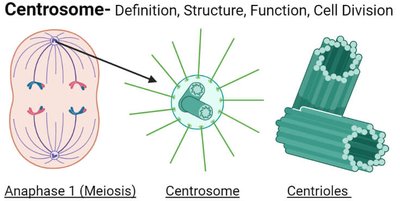
Centrosome: Region where microtubules are initiated, containing a pair of centrioles.
Flagella: Motility structures composed of microtubules, present in some animal cells.
Microvilli: Projections that increase cell surface area.
Specialized Structures in Plant Cells
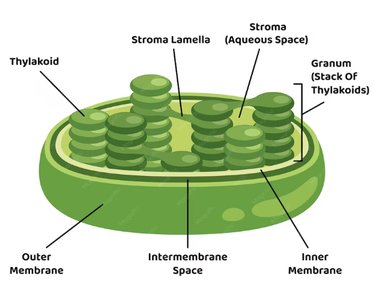
Chloroplasts: Sites of photosynthesis, containing chlorophyll and a double membrane with internal thylakoid membranes arranged in stacks called grana.
Plasmodesmata: Channels for cytoplasmic connections between plant cells.
Cell wall: Provides shape and protection.
Central vacuole: Involved in storage, waste breakdown, hydrolysis of macromolecules, and plant growth.
Key Organelles and Their Functions
Nucleus: Control center of the cell, contains most genetic material (DNA), regulates gene expression, and mediates DNA replication during the cell cycle.
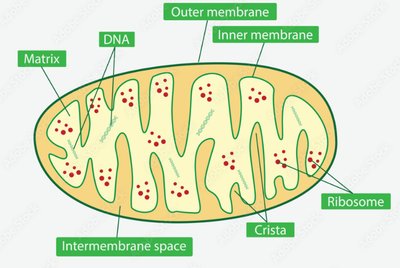
Mitochondrion: Powerhouse of the cell, generates ATP through cellular respiration, has a double membrane with inner folds (cristae) to increase surface area for energy production.
Chloroplast: Found in plant cells, site of photosynthesis, contains chlorophyll, double membrane, and internal thylakoid membranes arranged in grana.
Endoplasmic Reticulum (ER): Network of membranous tubules and sacs; rough ER (with ribosomes) synthesizes and modifies proteins, smooth ER synthesizes lipids and detoxifies substances.
Summary Table: Comparison of Prokaryotic and Eukaryotic Cells
Feature | Prokaryotic Cells | Eukaryotic Cells |
|---|---|---|
Nucleus | Absent (DNA in nucleoid) | Present (membrane-bound) |
Organelles | Generally absent | Present (membrane-bound) |
Cell Size | 1–5 μm | 10–100 μm |
Domains | Bacteria, Archaea | Eukarya |
Examples | Bacteria, Archaea | Protists, fungi, animals, plants |
Additional info:
Cells maintain a high surface area-to-volume ratio to optimize exchange of materials with their environment.
Internal membranes in eukaryotic cells allow for compartmentalization and specialization of cellular functions.
