 Back
BackGuided Study: Microbial Life – Prokaryotes and Protists
Study Guide - Smart Notes
 Tailored notes based on your materials, expanded with key definitions, examples, and context.
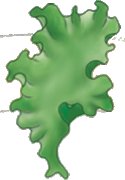
Q6. A common misunderstanding regarding seaweed is that they are plants. Briefly explain this misunderstanding.
Background
Topic: Protists vs. Plants
This question is testing your understanding of the differences between seaweeds (which are protists) and true plants, and why seaweeds are often mistakenly classified as plants.
Key Terms:
Seaweed: Large, multicellular algae found in marine environments, classified as protists.
Plants: Multicellular, autotrophic organisms with specialized tissues, classified in the kingdom Plantae.
Protists: A diverse group of eukaryotic organisms, often unicellular or simple multicellular, not classified as plants, animals, or fungi.
Step-by-Step Guidance
Consider the characteristics that define true plants, such as the presence of roots, stems, leaves, and specialized tissues for transporting water and nutrients.
Compare these features to those found in seaweeds. Seaweeds lack true roots, stems, and leaves, and do not have vascular tissue.
Think about the classification of seaweeds. They belong to the group of protists, specifically algae, and not to the kingdom Plantae.
Reflect on why people might confuse seaweeds with plants. Seaweeds are multicellular and photosynthetic, which are traits shared with plants, but their cellular structure and evolutionary lineage are different.
Try solving on your own before revealing the answer!
Final Answer:
Seaweeds are often mistaken for plants because they are multicellular and photosynthetic, but they lack the specialized tissues and structures found in true plants. Seaweeds are classified as protists, not plants.
This distinction is important because it highlights the evolutionary differences between these groups.
