 Back
BackProkaryotes: Structure, Diversity, and Metabolism
Study Guide - Smart Notes
 Tailored notes based on your materials, expanded with key definitions, examples, and context.
Prokaryotes
Introduction to Prokaryotes
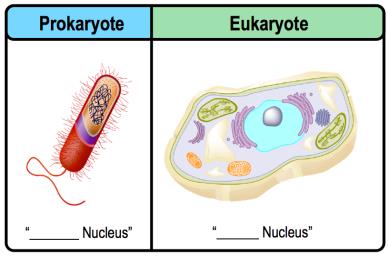
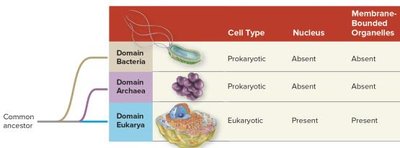
Prokaryotes are one of the broadest and most distinct groupings of all life, encompassing the domains Bacteria and Archaea. They are characterized by the absence of a nucleus and membrane-bound organelles, distinguishing them from eukaryotic cells. Prokaryotes are fundamental to the biosphere, playing essential roles in nutrient cycling, environmental adaptation, and human health.
Prokaryotic Cells: Lack a nucleus; include both Bacteria and Archaea.
Eukaryotic Cells: Possess a nucleus and other membrane-bound organelles.
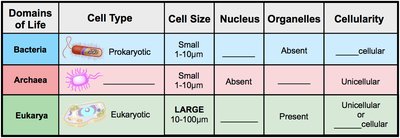
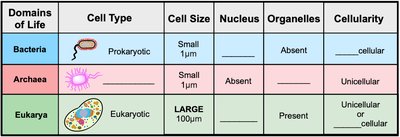
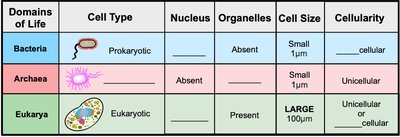
Domains of Life: Bacteria and Archaea are prokaryotic; Eukarya are eukaryotic.
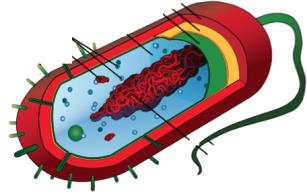
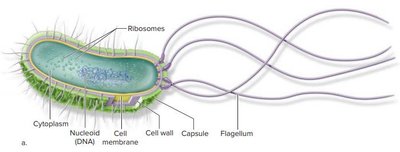
Prokaryotic vs. Eukaryotic Cells
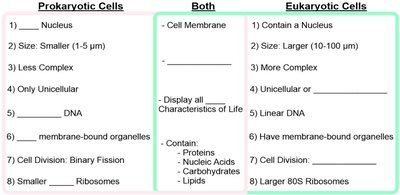
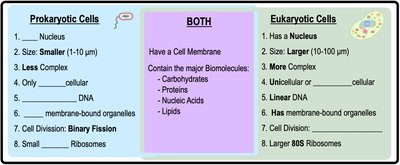
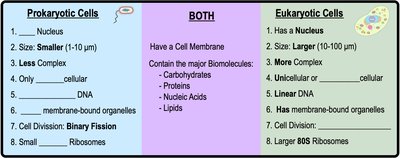
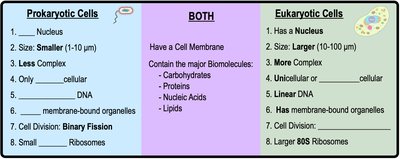
Prokaryotic and eukaryotic cells differ in several key aspects, including cell size, complexity, presence of nucleus, organelles, and ribosome size. These differences are foundational for understanding cellular biology and the evolutionary relationships among life forms.
Cell Size: Prokaryotes are generally smaller (1-10 μm) than eukaryotes (10-100 μm).
Nucleus: Prokaryotes lack a nucleus; eukaryotes have a nucleus.
Organelles: Prokaryotes lack membrane-bound organelles; eukaryotes possess them.
Ribosome Size: Prokaryotes have smaller 70S ribosomes; eukaryotes have larger 80S ribosomes.
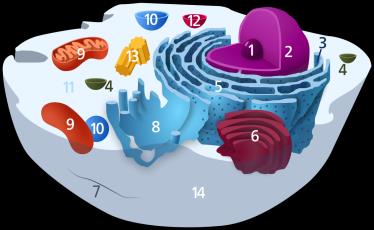
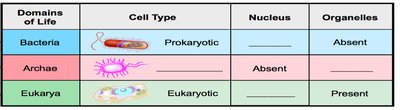
Introduction to Archaea
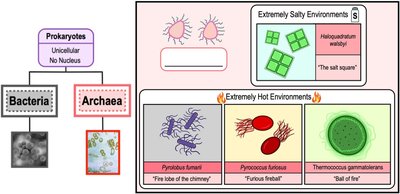
Archaea are prokaryotic organisms with unique features, such as distinctive ribosomal RNA sequences and cell walls lacking peptidoglycan. Many archaea are extremophiles, thriving in environments with extreme temperature, salinity, or pH, but some also inhabit moderate environments.
Extremophiles: Archaea that grow in extreme environments (e.g., hot springs, salt lakes).
Cell Structure: Prokaryotic, but with unique biochemical properties.
Prokaryotic Cell Structure
Bacterial Cell Walls
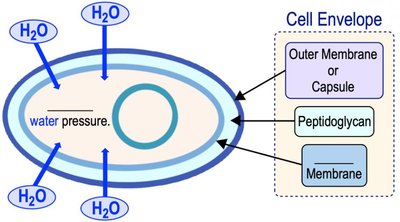
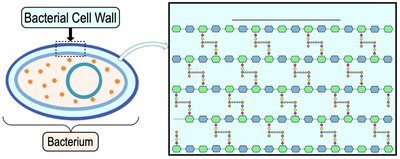
Bacterial cell walls are essential for maintaining cell shape, protecting against osmotic pressure, and providing structural support. The main component of most bacterial cell walls is peptidoglycan, a mesh-like polysaccharide and protein complex.
Cell Envelope: Includes the cell wall, cell membrane, and outer membrane (if present).
Peptidoglycan: Provides rigidity and structural support.
Gram-Positive & Gram-Negative Bacteria
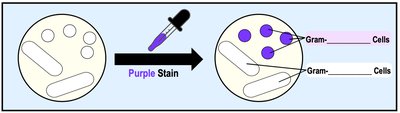
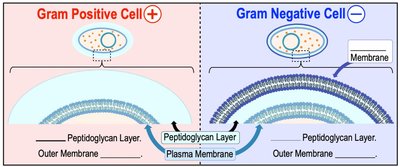
Bacteria are classified as gram-positive or gram-negative based on their cell wall structure and response to the Gram stain. Gram-positive bacteria have a thick peptidoglycan layer, while gram-negative bacteria have a thin peptidoglycan layer and an outer membrane.
Gram Stain: Differentiates bacteria based on cell wall structure.
Gram-Positive: Thick peptidoglycan, retain stain.
Gram-Negative: Thin peptidoglycan, do not retain stain, have an outer membrane.
The Glycocalyx: Capsules & Slime Layers
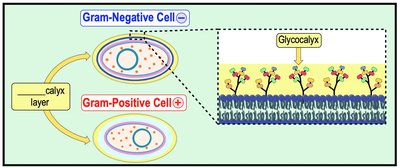
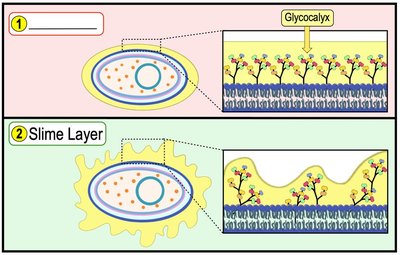
The glycocalyx is a sticky, gel-like polysaccharide layer surrounding many bacterial cells. It promotes cell attachment, protects against dehydration, and aids in nutrient collection. The glycocalyx can be categorized as either a capsule (organized, tightly anchored) or a slime layer (unorganized, easily removable).
Capsules: Highly organized, dense, tightly anchored.
Slime Layers: Unorganized, loosely attached, easily removed.
Biofilm Formation: Glycocalyx is crucial for biofilm development.
Pili and Fimbriae
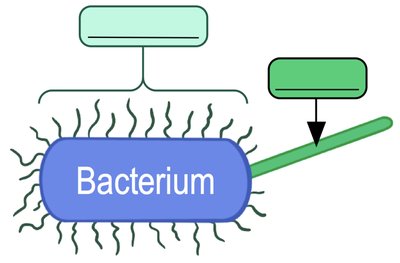
Pili are filamentous protein structures on the surface of bacterial cells, involved in motility, attachment, and DNA transfer (conjugation). Fimbriae are shorter and more numerous, primarily facilitating cell adhesion and biofilm formation.
Pili: Few per cell, functions include motility and conjugation.
Fimbriae: Numerous, shorter, critical for biofilm formation.
Endospores
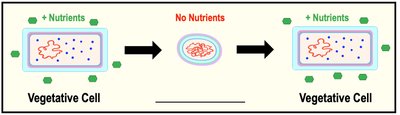
Endospores are dormant, highly resistant cells produced by some bacteria (notably Bacillus and Clostridium) in response to adverse conditions. They are not a form of reproduction but a survival mechanism, allowing bacteria to withstand extreme heat, chemicals, and nutrient depletion.
Vegetative Cell: Normal, replicating cell.
Endospore Formation: Triggered by environmental stress.
Prokaryotic Motility
Chemotaxis
Chemotaxis is the movement of a cell toward chemoattractants and away from chemorepellents, often mediated by flagella. Phototaxis refers to movement toward or away from light.
Flagella: Primary structures for motility.
Chemoattractant: Chemical attracting motile cells.
Chemorepellent: Chemical repelling motile cells.
Prokaryotic Flagella
Flagella are long, filamentous surface proteins that drive motility. A flagellum consists of three parts: filament (made of flagellin), hook (connects filament to basal body), and basal body (embedded in cell envelope).
Filament: Composed of flagellin protein.
Hook: Flexible connector.
Basal Body: Anchors flagellum in cell envelope.

Prokaryotic Reproduction
Bacterial Plasmids
Plasmids are small, circular, double-stranded DNA molecules replicated independently of the cell’s chromosome. They often carry genes for antibiotic resistance and other traits, but are not essential for survival.
Plasmid Curing: Loss of plasmid, can be spontaneous or induced.
Antibiotic Resistance: Commonly encoded on plasmids.
Binary Fission
Prokaryotes reproduce asexually by binary fission, where one cell divides to form two new daughter cells. This process is distinct from eukaryotic cell division (mitosis and meiosis).
Daughter Cells: Genetically identical to parent cell.
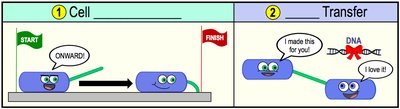
Horizontal Gene Transfer
Horizontal gene transfer allows prokaryotes to acquire new traits and increases genetic diversity. There are three main mechanisms:
Transformation: Uptake of free (naked) DNA from the environment.
Transduction: DNA transfer mediated by bacteriophage viruses.
Conjugation: Direct DNA transfer between cells via cell-to-cell contact.
Bacterial Transformation
Transformation requires a competent cell capable of taking up DNA from the environment. Competence can be natural or induced chemically.
Transduction
Transduction involves the transfer of bacterial DNA by a bacteriophage, resulting in a transducing particle carrying bacterial DNA instead of viral DNA.
Conjugation
Conjugation is the direct transfer of DNA between two bacterial cells, requiring a donor and recipient cell. The process often involves a sex pilus and a conjugative plasmid (such as the F plasmid in E. coli).
F+ Cell: Contains the F plasmid, synthesizes the F pilus.
F– Cell: Lacks the F plasmid, recipient in conjugation.
Hfr Cell: F plasmid integrated into chromosome, transfers chromosomal DNA.
Prokaryotic Metabolism
Nutritional Factors of Microbial Growth
Microbes are classified based on three nutritional factors: energy source, electron source, and carbon source.
Energy Source: Phototrophs (sunlight), Chemotrophs (chemical compounds).
Electron Source: Lithotrophs (inorganic molecules), Organotrophs (organic molecules).
Carbon Source: Autotrophs (CO2), Heterotrophs (organic molecules).
Nutritional Diversity Among Microbes
Microbes can combine these nutritional factors in various ways, resulting in diverse metabolic strategies. For example, chemoheterotrophs use organic molecules for both energy and carbon, while photoautotrophs use sunlight and CO2.
Oxygen Requirements for Microbial Growth
Microbes are classified based on their oxygen requirements:
Obligate Aerobes: Require O2.
Obligate Anaerobes: Cannot tolerate O2.
Facultative Anaerobes: Can grow with or without O2.
Aerotolerant Anaerobes: Indifferent to O2.
Microaerophiles: Require low O2 concentrations.
Biofilms
Biofilms are groups of cells encased in a slime-like polysaccharide layer attached to a surface. They are supported by a matrix of Extracellular Polymeric Substances (EPS), which include polysaccharides, proteins, glycoproteins, glycolipids, and lipids.
Prokaryotic Diversity
Major Prokaryotic Lineages
Proteobacteria: Diverse gram-negative clade, includes nitrogen fixers and pathogens.
Chlamydiae: Gram-negative, lack peptidoglycan, obligate intracellular parasites.
Spirochetes: Gram-negative, corkscrew-shaped, many pathogenic species.
Cyanobacteria: Gram-negative photoautotrophs, perform oxygenic photosynthesis.
Actinobacteria: High-GC gram-positive, includes antibiotic-producing Streptomyces.
Firmicutes: Low-GC gram-positive, includes Lactobacillus.
Salt Tolerance and Environmental Adaptation
Microbes are classified by their tolerance to salt concentrations:
Non-halotolerants: Cannot tolerate moderate salt.
Halotolerants: Can tolerate moderate salt.
Halophiles: Require moderate to high salt (1-14%).
Extreme Halophiles: Require very high salt (>15%).
Prokaryotes in the Environment
Prokaryote Ecology
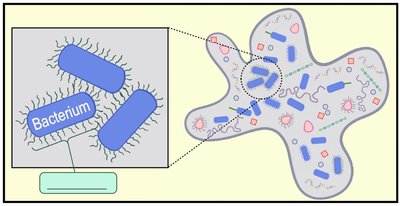
Bacteria and archaea are essential for nutrient cycling, such as nitrogen fixation and oxygen production. They also play crucial roles in the internal environments of humans and other animals.
The Human Microbiome
The microbiome consists of communities of microbes living in and on the human body. These microbes can be classified as resident (long-term) or transient (short-term, often pathogenic).
Pathogenic Toxins and Virulence
Pathogens produce toxins that damage host tissues. Exotoxins are soluble proteins released during infection, while endotoxins are lipopolysaccharides (LPS) found in gram-negative bacteria. Virulence refers to the degree of pathogenicity, and virulence factors are traits that enable an organism to cause disease (e.g., adhesins, capsules, toxins).
Summary Table: Prokaryotic Cell Features
Feature | Prokaryotes | Eukaryotes |
|---|---|---|
Nucleus | Absent | Present |
Cell Size | Small (1-10 μm) | Large (10-100 μm) |
Organelles | Absent | Present |
Ribosome Size | 70S | 80S |
Cell Division | Binary Fission | Mitosis/Meiosis |
DNA Shape | Circular | Linear |
Summary Table: Nutritional Types
Type | Energy Source | Electron Source | Carbon Source |
|---|---|---|---|
Photoautotroph | Light | Inorganic | CO2 |
Chemoheterotroph | Chemicals | Organic | Organic |
Photoheterotroph | Light | Organic | Organic |
Chemoautotroph | Chemicals | Inorganic | CO2 |
Additional info: These notes expand on brief points and fill in missing context to provide a comprehensive overview of prokaryotic biology, suitable for college-level study.
