Back
BackThe Chemical Building Blocks of Life: Structure and Function of Biological Macromolecules
Study Guide - Smart Notes
 Tailored notes based on your materials, expanded with key definitions, examples, and context.
Chapter 3: The Chemical Building Blocks of Life
Carbon: The Framework of Biological Molecules
Carbon is the foundational element in biological molecules, forming the backbone of organic compounds essential for life. Its unique bonding properties allow for the diversity and complexity of biomolecules.
Bonding Capacity: Carbon can form up to four covalent bonds, enabling the construction of large, complex molecules.
Hydrocarbons: Molecules consisting only of carbon and hydrogen; these are nonpolar and hydrophobic.
Common Elements Bonded to Carbon: Oxygen (O), Nitrogen (N), Sulfur (S), Phosphorus (P), and Hydrogen (H).
Functional Groups
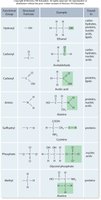
Functional groups are specific clusters of atoms that attach to carbon skeletons, conferring distinct chemical properties and reactivity to organic molecules.
Definition: Groups of atoms with characteristic properties that influence the behavior of the entire molecule in chemical reactions.
Examples: Hydroxyl, carbonyl, carboxyl, amino, sulfhydryl, phosphate, and methyl groups.
Importance: The presence and arrangement of functional groups determine the function and reactivity of biomolecules.
Isomers
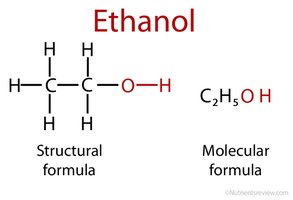
Isomers are molecules with the same molecular or empirical formula but different structures or spatial arrangements, leading to distinct properties.
Structural Isomers: Differ in the covalent arrangement of atoms (carbon skeleton).
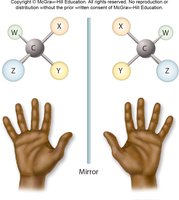
Stereoisomers: Same covalent structure but differ in spatial arrangement of atoms.
Enantiomers: Stereoisomers that are non-superimposable mirror images of each other, often with different biological activities.
Macromolecules: Polymers and Monomers
Macromolecules are large, complex molecules essential for life, constructed from smaller subunits called monomers. The four major classes are carbohydrates, nucleic acids, proteins, and lipids.
Polymer: A long molecule built by linking together repeated monomer units.
Monomer: A small, similar chemical subunit that serves as a building block for polymers.
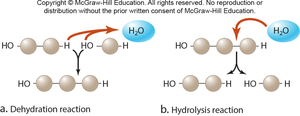
Formation: Polymers are formed by dehydration synthesis (removal of water) and broken down by hydrolysis (addition of water).
Carbohydrates
Monosaccharides
Carbohydrates are organic molecules composed of carbon, hydrogen, and oxygen, primarily serving as energy sources and structural components.
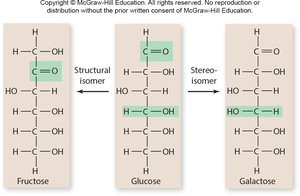
Monosaccharide: The simplest carbohydrate; a single sugar unit (e.g., glucose, fructose, galactose).
Isomerism: Glucose, fructose, and galactose are isomers, differing in structure or spatial arrangement.
Biological Importance: Six-carbon sugars (hexoses) like glucose are central to metabolism.
Disaccharides
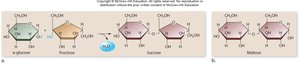
Disaccharides are formed by joining two monosaccharides via dehydration synthesis, serving as transportable energy sources.
Examples: Sucrose (glucose + fructose), lactose (glucose + galactose), maltose (glucose + glucose).
Function: Used for sugar transport and energy storage in organisms.
Polysaccharides
Polysaccharides are long chains of monosaccharides linked by dehydration synthesis, functioning in energy storage and structural support.
Energy Storage: Starch (plants), glycogen (animals).
Structural Support: Cellulose (plants), chitin (arthropods and fungi).
Nucleic Acids
Structure and Function
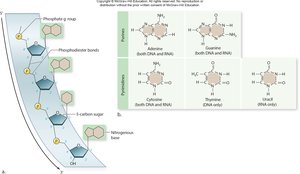
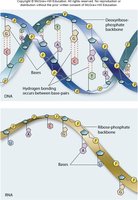
Nucleic acids, including DNA and RNA, store and transmit genetic information. They are polymers of nucleotides, each consisting of a sugar, phosphate group, and nitrogenous base.
Nucleotide: Composed of a pentose sugar (deoxyribose in DNA, ribose in RNA), a phosphate group, and a nitrogenous base (adenine, guanine, cytosine, thymine, or uracil).
Bonding: Nucleotides are joined by phosphodiester bonds.
DNA vs. RNA
DNA and RNA differ in structure and function, but both are essential for genetic information flow.
DNA: Double helix, deoxyribose sugar, bases A, T, C, G; stores genetic information.
RNA: Single strand, ribose sugar, bases A, U, C, G; involved in protein synthesis.
Base Pairing: In DNA, A pairs with T, C pairs with G; in RNA, A pairs with U.
Proteins
Structure and Function
Proteins are versatile macromolecules that perform a wide range of functions in cells, including catalysis, transport, support, and regulation.
Functions: Enzyme catalysis, defense, transport, support, motion, regulation, storage.
Polypeptides: Proteins are composed of one or more long, unbranched chains called polypeptides.
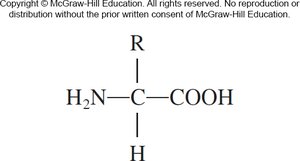
Amino Acids: The monomers of proteins, each with a central carbon, amino group, carboxyl group, hydrogen, and variable R group.
Peptide Bonds
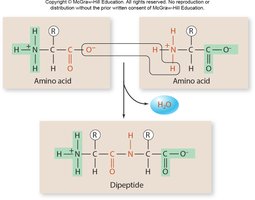
Amino acids are linked by peptide bonds formed through dehydration synthesis, connecting the amino group of one amino acid to the carboxyl group of another.
Levels of Protein Structure
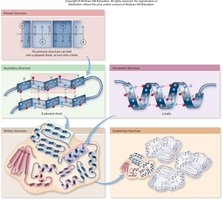
Protein function depends on its structure, which is organized into four hierarchical levels:
Primary Structure: Sequence of amino acids in a polypeptide chain.
Secondary Structure: Local folding into alpha-helices and beta-pleated sheets, stabilized by hydrogen bonds.
Tertiary Structure: Overall three-dimensional shape of a polypeptide, determined by interactions among R groups.
Quaternary Structure: Association of multiple polypeptide chains to form a functional protein.
Denaturation
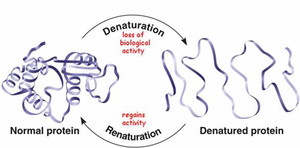
Denaturation is the loss of protein structure and function due to changes in environmental conditions such as pH, temperature, or ionic concentration. This process is often irreversible.
Lipids
Structure and Types
Lipids are a diverse group of hydrophobic molecules, primarily composed of hydrocarbons. They are insoluble in water due to their nonpolar nature and serve as energy storage, structural components, and signaling molecules.
Types: Fats, oils, waxes, phospholipids, steroids, and some vitamins.
Fats (Triglycerides)
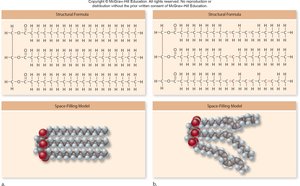
Fats are composed of one glycerol molecule and three fatty acids. Fatty acids can be saturated (no double bonds) or unsaturated (one or more double bonds).
Saturated Fats: No double bonds, solid at room temperature, typically from animal sources.
Unsaturated Fats: One or more double bonds, liquid at room temperature, typically from plant sources.
Trans Fats: Industrially produced, associated with health risks.
Phospholipids
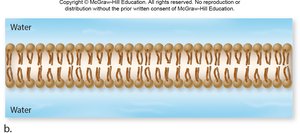
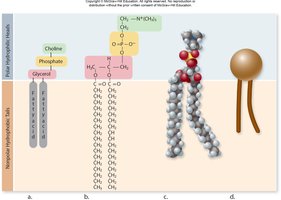
Phospholipids are essential components of biological membranes, consisting of a glycerol backbone, two fatty acid tails (hydrophobic), and a phosphate group (hydrophilic head).
Amphipathic Nature: Hydrophilic head and hydrophobic tails allow phospholipids to form bilayers in aqueous environments.
Phospholipid Bilayer
The phospholipid bilayer forms the fundamental structure of cell membranes, with hydrophilic heads facing outward toward water and hydrophobic tails facing inward, away from water.