Pearson+ LogoPearson+ Logo
Ch. 11 How Genes Are Controlled
Taylor - Campbell Biology: Concepts & Connections 10th Edition
Taylor, Simon, Dickey, Hogan10th EditionCampbell Biology: Concepts & ConnectionsISBN: 9780136538783Not the one you use?Change textbook
Chapter 11, Problem 4

Which of the following is a valid difference between embryonic stem cells and the stem cells found in adult tissues?
a. In laboratory culture, only adult stem cells are immortal.
b. In nature, only embryonic stem cells give rise to all the different types of cells in the organism.
c. Only adult stem cells can differentiate in culture.
d. Embryonic stem cells are generally more difficult to grow in culture than adult stem cells.

Verified step by step guidance
1
Understand the key difference between embryonic stem cells and adult stem cells. Embryonic stem cells are pluripotent, meaning they can differentiate into almost any cell type in the organism, while adult stem cells are multipotent, meaning they are more limited in the types of cells they can become.
Analyze the options provided in the question. Option (a) states that only adult stem cells are immortal in laboratory culture. This is incorrect because embryonic stem cells are known for their ability to divide indefinitely under the right conditions.
Evaluate option (b). It states that only embryonic stem cells give rise to all the different types of cells in the organism in nature. This is correct because embryonic stem cells are pluripotent and can differentiate into all cell types, unlike adult stem cells.
Consider option (c). It claims that only adult stem cells can differentiate in culture. This is incorrect because both embryonic and adult stem cells can differentiate in culture under appropriate conditions.
Review option (d). It states that embryonic stem cells are more difficult to grow in culture than adult stem cells. This is incorrect because embryonic stem cells are generally easier to grow and maintain in culture compared to adult stem cells, which are more challenging to isolate and grow.

Verified video answer for a similar problem:

This video solution was recommended by our tutors as helpful for the problem above.
Video duration:
1m
Was this helpful?

Key Concepts

Here are the essential concepts you must grasp in order to answer the question correctly.

Embryonic Stem Cells

Embryonic stem cells are pluripotent cells derived from the early stages of an embryo. They have the unique ability to differentiate into any cell type in the body, which makes them invaluable for developmental biology and regenerative medicine. Their capacity for unlimited self-renewal in culture allows researchers to study various aspects of cell differentiation and development.
Recommended video:
Guided course
06:02
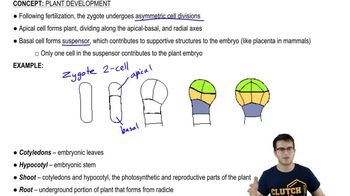
Embryonic Plant Development

Adult Stem Cells

Adult stem cells, also known as somatic or tissue-specific stem cells, are multipotent cells found in various tissues of the body. Unlike embryonic stem cells, they are limited in their differentiation potential, typically giving rise to cell types specific to the tissue they reside in. They play a crucial role in tissue maintenance and repair, but their ability to proliferate and differentiate is more restricted compared to embryonic stem cells.
Recommended video:
Guided course
01:47
Embryonic and Adult Tissues

Cell Culture Techniques

Cell culture techniques involve growing cells in a controlled environment outside their natural habitat, allowing for the study of cellular behavior and properties. The growth characteristics of stem cells can vary significantly between embryonic and adult types, influencing their use in research and therapy. Understanding these techniques is essential for manipulating stem cells for potential medical applications, including tissue engineering and regenerative medicine.
Recommended video:
Guided course
09:28
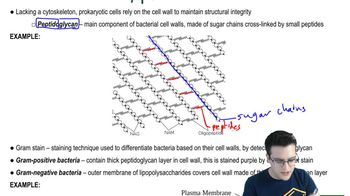
Prokaryotic Cell Structures 1
Related Practice
Textbook Question

Complete the following concept map to test your knowledge of gene regulation.

<IMAGE>

a.

b.

c.

d.

e.

f.

g.

2289
views
Textbook Question

Which of the following methods of gene regulation do eukaryotes and prokaryotes have in common?

a. Elaborate packing of DNA in chromosomes

b. Activator and repressor proteins, which attach to DNA

c. The addition of a cap and tail to mRNA after transcription

d. Lac and trp operons

1363
views
Textbook Question

A homeotic gene does which of the following?

a. It serves as the ultimate control for prokaryotic operons.

b. It regulates the expression of groups of other genes during development.

c. It represses the histone proteins in eukaryotic chromosomes.

d. It helps splice mRNA after transcription.

1022
views
Textbook Question

The control of gene expression is more complex in multicellular eukaryotes than in prokaryotes because __________. (Explain your answer.)

a. Eukaryotic cells are much smaller

b. In a multicellular eukaryote, different cells are specialized for different functions

c. Prokaryotes are restricted to stable environments

d. Eukaryotes have fewer genes, so each gene must do several jobs

951
views
Textbook Question

Your bone cells, muscle cells, and skin cells look different because

a. Each cell contains different kinds of genes.

b. They are present in different organs.

c. Different genes are active in each kind of cell.

d. They contain different numbers of genes.

1769
views
Textbook Question

All your cells contain proto-oncogenes, which can change into cancer-causing oncogenes. Why do cells possess such potential time bombs?

1781
views