We know that sea turtle hatchlings use Earth's magnetic field to navigate. Do they also use light cues from the moon to get from the sand to the ocean waves? Outline an experiment to answer this question.
Verified step by step guidance
1
Formulate a hypothesis: Propose a testable hypothesis, such as 'Sea turtle hatchlings use light cues from the moon to navigate from the sand to the ocean waves.'
Design the experimental groups: Create two groups of sea turtle hatchlings. In the control group, allow the hatchlings to navigate under natural moonlight. In the experimental group, block the moonlight using an artificial barrier or conduct the experiment on a moonless night.
Introduce a variable: For the experimental group, provide an alternative light source (e.g., artificial light placed in a direction different from the ocean) to test whether the hatchlings follow the artificial light instead of the moonlight.
Observe and record behavior: Monitor and document the direction and success rate of the hatchlings' movement toward the ocean in both groups. Use consistent methods to measure their orientation and path.
Analyze the results: Compare the navigation success and directionality between the control and experimental groups to determine if the presence or absence of moonlight affects their ability to reach the ocean.
Verified video answer for a similar problem:
This video solution was recommended by our tutors as helpful for the problem above.
Video duration:
1m
Play a video:
Was this helpful?
Key Concepts
Here are the essential concepts you must grasp in order to answer the question correctly.
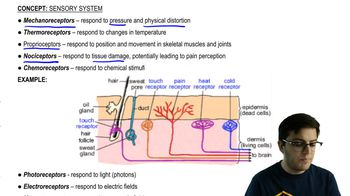
Magnetoreception
Magnetoreception is the ability of certain animals, including sea turtles, to detect the Earth's magnetic field and use it for navigation. This sensory mechanism allows them to orient themselves and migrate over long distances. Understanding how sea turtles utilize this ability is crucial for studying their navigation patterns and behaviors.
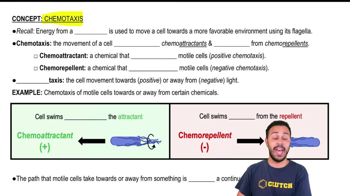
Phototaxis refers to the movement of an organism in response to light. Sea turtle hatchlings exhibit positive phototaxis, meaning they are drawn towards light sources, which is essential for their journey from the nest to the ocean. This behavior is influenced by natural light cues, such as moonlight, which can guide them during their critical first moments after hatching.
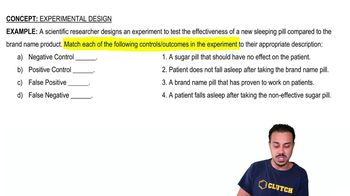
Experimental design is the process of planning an experiment to test a hypothesis. It involves defining variables, selecting appropriate controls, and determining methods for data collection and analysis. In the context of the question, a well-structured experiment would help isolate the effects of light cues from the moon on the navigation of sea turtle hatchlings, allowing for a clearer understanding of their behavior.