Pearson+ LogoPearson+ Logo
Ch. 48 - The Immune System in Animals
Freeman - Biological Science 7th Edition
Freeman7th EditionBiological ScienceISBN: 9783584863285Not the one you use?Change textbook
Chapter 48, Problem 15

<Image>
In developed countries, an enormous change has occurred within the human body over the past century—the loss of parasitic worms. Due to improvements in sanitation, roundworms that have inhabited human intestines (such as the hookworm above) and challenged our immune system for millions of years are no longer a threat. Does the end of this long-term relationship come at a cost?
The roundworm Heligmosomoides polygyrus is a natural intestinal parasite of mice, and it offers an excellent model of the immunology of worm infections in humans. Scientists evaluated the impact of parasitic roundworms on immune disorders using mice prone to developing type 1 diabetes mellitus. Five-week-old mice were infected with H. polygyrus (Hp). Two weeks later, half of the mice were cured of the infection (Rx). When the mice were 40 weeks old, scientists calculated the percentage of mice that developed diabetes in both groups: those exposed to roundworms and those in uninfected control groups (** means P<0.01). What two conclusions are supported by the results shown below?
Graphs showing percentage of diabetic mice over time for control and infected groups.

Verified step by step guidance
1
Examine the graphs provided. The top graph shows the percentage of diabetic mice over time for two groups: Control (uninfected) and Hp (long infection). The bottom graph shows the same comparison but for Hp (short infection) where mice were cured after two weeks.
In the top graph, observe that the Control group (blue line) shows a steady increase in the percentage of diabetic mice, reaching around 80% by 40 weeks. In contrast, the Hp (long infection) group (red line) remains significantly lower, indicating that long-term infection with H. polygyrus reduces the incidence of diabetes.
In the bottom graph, note that the Control group again shows a similar increase in diabetes incidence as in the top graph. However, the Hp (short infection) group (red line) also shows a reduced percentage of diabetic mice compared to the Control group, though not as low as the long infection group.
Interpret the data: The presence of H. polygyrus, whether long-term or short-term, appears to have a protective effect against the development of diabetes in mice. This suggests that the immune modulation by the parasite may play a role in reducing autoimmune disorders like diabetes.
Conclude that the results support two main conclusions: 1) Long-term infection with H. polygyrus significantly reduces the incidence of diabetes in mice prone to the disease. 2) Even short-term infection provides some level of protection against diabetes, though less pronounced than long-term infection.

Verified video answer for a similar problem:

This video solution was recommended by our tutors as helpful for the problem above.
Video duration:
1m
Was this helpful?

Key Concepts

Here are the essential concepts you must grasp in order to answer the question correctly.

Parasitic Relationships

Parasitic relationships involve one organism benefiting at the expense of another. In this context, parasitic worms like *Heligmosomoides polygyrus* have co-evolved with their hosts, influencing immune responses. The loss of these parasites due to improved sanitation may disrupt this balance, potentially leading to increased susceptibility to autoimmune diseases.
Recommended video:
Guided course
02:37
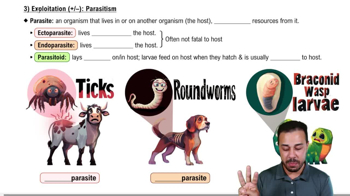
3) Exploitation (+/-): Parasitism

Immune System Regulation

The immune system is responsible for defending the body against pathogens, but it must also maintain tolerance to self-antigens to prevent autoimmune diseases. Parasitic infections can modulate immune responses, often promoting regulatory mechanisms that prevent overactive immune reactions, which may explain the lower incidence of type 1 diabetes in infected mice.
Recommended video:
Guided course
09:19
Immune System

Experimental Design in Immunology

The study employs a controlled experimental design, comparing diabetic incidence in mice with and without parasitic infections. By analyzing the effects of both long-term and short-term infections, researchers can draw conclusions about the role of *H. polygyrus* in immune modulation and its potential protective effects against autoimmune disorders like type 1 diabetes.
Recommended video:
Guided course
02:50
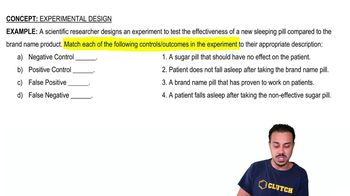
Experimental Design Example 1
Related Practice
Textbook Question

<Image>

In developed countries, an enormous change has occurred within the human body over the past century—the loss of parasitic worms. Due to improvements in sanitation, roundworms that have inhabited human intestines (such as the hookworm above) and challenged our immune system for millions of years are no longer a threat. Does the end of this long-term relationship come at a cost?

Explain how the adaptive and innate immune responses work together to defend the human body against infection by parasitic worms.

878
views
Textbook Question

<Image>

In developed countries, an enormous change has occurred within the human body over the past century—the loss of parasitic worms. Due to improvements in sanitation, roundworms that have inhabited human intestines (such as the hookworm above) and challenged our immune system for millions of years are no longer a threat. Does the end of this long-term relationship come at a cost?

Pattern-recognition receptors have been identified that recognize worm products. Explain how these receptors are used to activate the adaptive immune response most appropriate for worm infection.

963
views
Textbook Question

<Image>

In developed countries, an enormous change has occurred within the human body over the past century—the loss of parasitic worms. Due to improvements in sanitation, roundworms that have inhabited human intestines (such as the hookworm above) and challenged our immune system for millions of years are no longer a threat. Does the end of this long-term relationship come at a cost?

Parasitic worms modulate their host's immune response by inducing the proliferation of regulatory T cells. What role do these cells play in the adaptive immune response? How could this effect on regulatory T cells be linked to the hygiene hypothesis?

733
views
Textbook Question

<Image>

In developed countries, an enormous change has occurred within the human body over the past century—the loss of parasitic worms. Due to improvements in sanitation, roundworms that have inhabited human intestines (such as the hookworm above) and challenged our immune system for millions of years are no longer a threat. Does the end of this long-term relationship come at a cost?

There is a strong association between the prevalence of diabetes mellitus in parents and their children. If you were a physician, would you ask parents who have type 1 diabetes to intentionally infect their children with intestinal worms? What additional information would you need to make this decision?

946
views