
Textbook Question
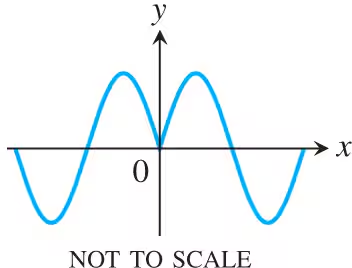
110. Suppose the derivative of the function y = f(x) is
y'=(x-1)^22(x-2)(x-4).
At what points, if any, does the graph of f have a local minimum, local maximum, or
point of inflection?
166
views

 Verified step by step guidance
 04:50
04:50
 07:09
07:09 05:59
05:59110. Suppose the derivative of the function y = f(x) is
y'=(x-1)^22(x-2)(x-4).
At what points, if any, does the graph of f have a local minimum, local maximum, or
point of inflection?
In Exercises 9–66, graph the function using appropriate methods from the graphing procedures presented just before Example 9, identifying the coordinates of any local extreme points and inflection points. Then find coordinates of absolute extreme points, if any.
y = 1 / (x² - 1)
Identifying Extrema
In Exercises 19–40:
a. Find the open intervals on which the function is increasing and those on which it is decreasing.
b. Identify the function’s local extreme values, if any, saying where they occur.
f(x) = x − 6√(x − 1)
Identifying Extrema
In Exercises 15–18:
a. Find the open intervals on which the function is increasing and those on which it is decreasing.
b. Identify the function’s local and absolute extreme values, if any, saying where they occur.
Finding Functions from Derivatives
In Exercises 37–40, find the function with the given derivative whose graph passes through the point P.
f'(x) = 2x − 1, P(0,0)
Checking the Mean Value Theorem
Find the value or values of c that satisfy the equation (f(b) − f(a)) / (b − a) = f′(c) in the conclusion of the Mean Value Theorem for the functions and intervals in Exercises 1–6.
f(x) =√(x − 1), [1, 3]