
Textbook Question
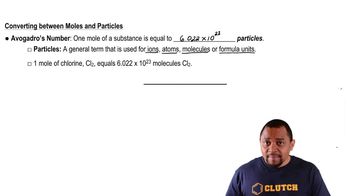
Determine the number of moles of hydrogen atoms in each sample. a. 0.0885 mol C4H10 b. 1.3 mol CH4
3429
views

 Verified step by step guidance
 02:41
02:41
 03:13
03:13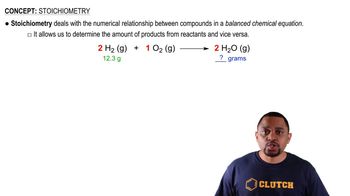 01:16
01:16Determine the number of moles of hydrogen atoms in each sample. a. 0.0885 mol C4H10 b. 1.3 mol CH4
Calculate the mass (in kilograms) of chlorine in 25 kg of each chlorofluorocarbon (CFC). b. CFCl3
Calculate mass (in grams) of sodium in 8.5 g of each sodium containing food additive. a. NaCl (table salt) b. Na3PO4 (sodium phosphate) c. NaC7H5O2 (sodium benzoate) d. Na2C6H6O7 (sodium hydrogen citrate)
Determine the number of moles of oxygen atoms in each sample. a. 4.88 mol H2O2 b. 2.15 mol N2O c. 0.0237 mol H2CO3 d. 24.1 mol CO2
Write a ratio showing the relationship between the molar amounts of each element for each compound. (See Appendix IIA for color codes.) (b)
The iodide ion is a dietary mineral essential to good nutrition. In countries where potassium iodide is added to salt, iodine deficiency (or goiter) has been almost completely eliminated. The recommended daily allowance (RDA) for iodine is 150 mg/day. How much potassium iodide (76.45% I) should you consume if you want to meet the RDA?