Which type of radiation is used to preserve foods? a. Ionizing b. Nonionizing c. Radiowaves d. Microwaves e. All of the above
Verified step by step guidance
1
Understand the types of radiation listed: ionizing, nonionizing, radiowaves, and microwaves. Each has different energy levels and effects on microorganisms.
Recall that ionizing radiation (such as gamma rays and X-rays) has enough energy to remove tightly bound electrons from atoms, causing damage to microbial DNA and effectively killing or inactivating microbes.
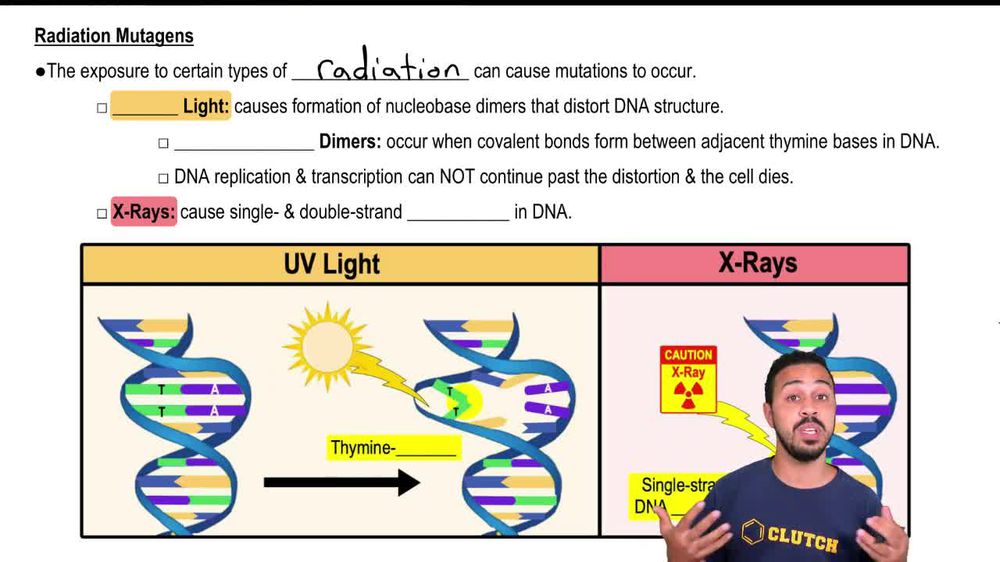
Recognize that nonionizing radiation (such as ultraviolet light) has less energy and primarily causes damage by creating thymine dimers in DNA, which can inhibit microbial replication but is less penetrating than ionizing radiation.
Consider the uses of radiowaves and microwaves: radiowaves have very low energy and are not typically used for microbial control, while microwaves kill microbes mainly by heat generation rather than direct DNA damage.
Conclude that the type of radiation commonly used to preserve foods by directly killing or inactivating microbes without raising temperature significantly is ionizing radiation.
Verified video answer for a similar problem:
This video solution was recommended by our tutors as helpful for the problem above
Video duration:
2m
Play a video:
0 Comments
Key Concepts
Here are the essential concepts you must grasp in order to answer the question correctly.
Ionizing Radiation
Ionizing radiation includes gamma rays, X-rays, and high-energy electron beams that have enough energy to remove tightly bound electrons from atoms, causing ionization. It is commonly used in food preservation to kill bacteria and other pathogens, extending shelf life without significantly raising the temperature.
Nonionizing radiation, such as ultraviolet (UV) light, has lower energy and cannot ionize atoms but can damage microbial DNA, leading to microbial inactivation. It is used for surface sterilization but is less effective for deep food preservation due to limited penetration.
Microwaves and radiowaves are forms of nonionizing electromagnetic radiation primarily used for heating food rather than preservation. They cause water molecules to vibrate, generating heat, but do not effectively kill microbes or preserve food over long periods.