 Back
BackPathogenic Gram-Negative Cocci and Bacilli: Key Pathogens, Diseases, and Clinical Features
Study Guide - Smart Notes
 Tailored notes based on your materials, expanded with key definitions, examples, and context.
Pathogenic Gram-Negative Cocci and Bacilli
Overview
This section covers important aerobic and anaerobic Gram-negative bacilli that are pathogenic to humans. These bacteria are responsible for a variety of diseases, ranging from mild to severe, and are significant in both clinical and public health contexts. Understanding their characteristics, mechanisms of pathogenicity, and clinical manifestations is essential for microbiology students.
Pathogenic, Gram-Negative, Aerobic Bacilli
Bartonella
Bartonella species are aerobic bacilli primarily found in animals but can cause disease in humans. Three species are pathogenic:
Bartonella bacilliformis: Causes Bartonellosis.
Bartonella quintana: Causes Trench fever, as well as Bacillary angiomatosis and Bacillary peliosis hepatitis.
Bartonella henselae: Causes Cat scratch disease.
Treatment involves various antimicrobials.
Example: Cat scratch disease is typically acquired from scratches or bites from cats, especially kittens.
Brucella
Brucella are small, nonmotile, aerobic coccobacilli that can infect both animals and humans. Brucella melitensis is responsible for all human disease, causing brucellosis:
Often asymptomatic or mild
Characterized by fluctuating fever
Transmitted via contaminated animal products or direct contact with infected animals
Treated with antimicrobial drugs; animal vaccines are available
Bordetella
Bordetella pertussis is a small, nonmotile, aerobic coccobacillus that causes pertussis (whooping cough), primarily in children. Disease is mediated by adhesins and toxins:
Filamentous hemagglutinin
Pertussis toxin
Adenylate cyclase toxin
Dermonecrotic toxin
Tracheal cytotoxin (inhibits cells lining the trachea)
Bacteria are inhaled in aerosols and multiply in epithelial cells.
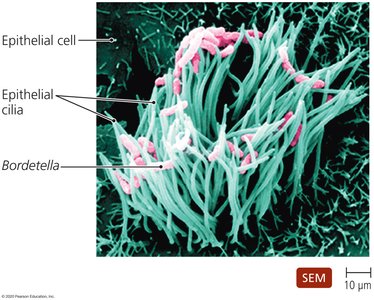
Pertussis (Whooping Cough)
Pertussis progresses through four stages:
Incubation: No symptoms
Catarrhal: Rhinorrhea, sneezing, malaise, fever
Paroxysmal: Repetitive cough with whoops, vomiting, exhaustion
Convalescent: Diminishing cough, possible secondary complications
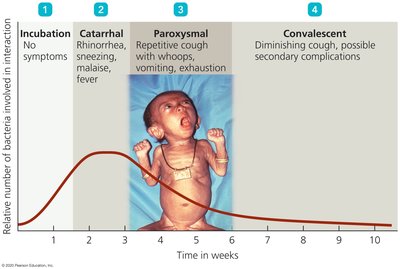
Example: Most cases occur in children, and the disease can be severe or fatal without vaccination.
Burkholderia
Burkholderia cepacia: Aerobic, flagellated betaproteobacterium; decomposes organic molecules, used in environmental cleanup, opportunistic pathogen in cystic fibrosis patients, resistant to many drugs.
Burkholderia pseudomallei: Causes melioidosis.
Pseudomonads
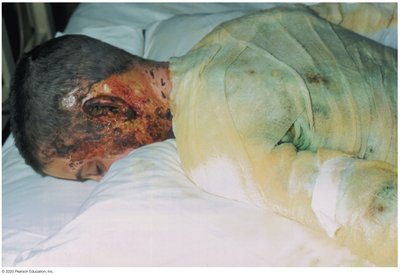
Pseudomonas aeruginosa is an aerobic bacillus problematic in hospitals. It is rarely part of the human microbiota but can cause opportunistic infections, especially in immunocompromised patients and those with cystic fibrosis. It is highly drug-resistant and can colonize almost any organ.
Francisella
Francisella tularensis is a small, nonmotile, strictly aerobic coccobacillus and an intracellular parasite. It causes tularemia, a zoonotic disease spread by ticks, contact with infected animals, or contaminated meat, water, or aerosols. Highly infectious and may be misdiagnosed due to nonspecific symptoms. Treated with antimicrobials; prevention involves avoiding reservoirs.
Legionella
Legionella are aerobic, slender, pleomorphic bacteria found in water. L. pneumophila causes most human disease, including Legionnaire’s disease and Pontiac fever. Transmission occurs via inhalation of contaminated aerosols. Diagnosis is by serological tests; treatment includes fluoroquinolones and azithromycin. Elimination from water sources is not feasible.
Coxiella
Coxiella burnetii is an extremely small, aerobic, obligate intracellular parasite. It causes Q fever, which presents with fever, headache, chills, muscle pain, and mild pneumonia. Chronic Q fever can cause endocarditis years later. Transmission is mainly by inhalation of infective bodies from farm animals and pets. Chronic cases require long-term antimicrobials. Vaccine exists but is not available in the U.S.
Pathogenic, Gram-Negative, Anaerobic Bacilli
Overview
These bacteria are predominant microbiota of the gastrointestinal, urinary, reproductive, and lower respiratory tracts. They are important for human health, inhibiting pathogen growth, synthesizing vitamins, and aiding digestion. However, they can cause disease if introduced into other body sites.
Bacteroides
Bacteroides fragilis is the most important pathogen of this genus, normally found in the intestinal and upper respiratory tracts. It produces various virulence factors and is involved in abdominal, genital (in women), and wound infections. Treated with metronidazole.
Prevotella
Prevotella species are normal microbiota of the urinary, genital, and upper respiratory tracts. They differ from Bacteroides in their sensitivity to bile and produce several virulence factors. They are involved in sinus and ear infections, periodontal infections, gynecological infections, brain abscesses, and abdominal infections. Treatment involves surgical removal of infected tissue and intravenous carbapenem.
Quiz Questions (Selected)
Question | Answer |
|---|---|
Bacteria from what genus cause tularemia? | Francisella |
What species of Bartonella causes cat scratch disease? | Bartonella henselae |
Which toxin of Bordetella pertussis inhibits cells that line the trachea? | Tracheal cytotoxin |
Additional info: The above notes expand on brief slide points with academic context, definitions, and examples for clarity and exam preparation.
