 Back
BackStudy Guide: Viruses, Pathogenic DNA & RNA Viruses, and Parasitic Eukaryotes
Study Guide - Smart Notes
 Tailored notes based on your materials, expanded with key definitions, examples, and context.
Characteristics and Structure of Viruses
General Properties of Viruses
Viruses are acellular infectious agents that require a host cell for replication. They are distinguished by their small size, inability to grow on standard laboratory media, and unique replication strategies.
Obligate intracellular parasites: Viruses cannot reproduce outside a host cell.
Too small for light microscopy: Electron microscopy is required for visualization.
Host range: Determined by specific interactions between viral surface proteins and host cell receptors.
Classification: Based on type of nucleic acid (DNA or RNA).
Viral Structure
Viruses consist of a nucleic acid core (DNA or RNA) surrounded by a protein coat (capsid), which is composed of subunits called capsomeres. Some viruses possess an envelope derived from the host cell membrane, often with glycoprotein spikes that facilitate host cell recognition and entry.
Naked viruses: Lack an envelope.
Enveloped viruses: Surrounded by a lipid bilayer with embedded proteins.
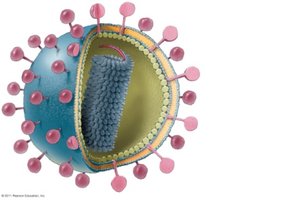
Virion: The extracellular, infectious form of a virus.
Bacteriophage: A virus that infects bacteria.
Viral Replication Cycles
Bacteriophage Replication
Bacteriophages infect bacterial cells and replicate through a series of steps:
Attachment (Adsorption): Phage binds to specific receptors on the bacterial surface.
Entry (Penetration): Injection of phage DNA into the host cell.
Synthesis (Replication): Host machinery synthesizes viral components.
Assembly & Maturation: New virions are assembled.
Release: Host cell lysis releases new phages.
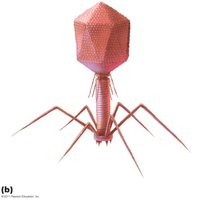
Lysogenic conversion: Some phages integrate their DNA into the host genome (prophage), potentially altering host phenotype.
Animal Virus Replication
Animal viruses follow similar steps but with variations in entry and release mechanisms:
Attachment: Viral proteins bind to host cell receptors (e.g., HIV gp120 binds CD4).
Entry: Can occur via direct penetration, endocytosis, or membrane fusion.
Uncoating: Removal of capsid to release viral genome inside the host cell.
Synthesis: Dependent on viral genome type (DNA, +ssRNA, -ssRNA, retrovirus).
Maturation and Release: Assembly of virions and exit by budding (enveloped) or lysis (naked).
Persistent infection: Virus remains in the host for extended periods, sometimes with ongoing replication.
Latency: Viral genome persists in host cells without active replication, can reactivate later.
Viruses and Cancer (Oncoviruses)
Oncogenic Viruses
Certain viruses are linked to cancer development by interfering with cell cycle regulation. Examples include:
Human papillomavirus (HPV): Cervical and other cancers.
Hepatitis B Virus (HBV): Hepatocellular carcinoma.
Epstein-Barr Virus (EBV): Burkitt lymphoma, nasopharyngeal carcinoma.
HPV E6 and E7 proteins inactivate tumor suppressors such as p53, promoting uncontrolled cell division.
Diagnostic Virology
Laboratory Techniques
Tissue or Cell Culture: Growth of viruses in cell monolayers; observation for cytopathic effect (CPE).
Chicken Eggs: Used for vaccine production (e.g., influenza).
ELISA: Detects viral antigens in patient samples.
PCR/DNA Probes: Amplifies and detects viral nucleic acids.
Serological Testing: Detects patient antibodies against viruses.
Cytopathic effect (CPE): Observable changes in host cells due to viral infection.
Antigen: Substance recognized by the immune system as foreign.
Antibody: Protein produced by the immune system to neutralize antigens.
Prions
Characteristics of Prions
Prions are infectious proteins that lack nucleic acids. They cause disease by inducing abnormal folding of normal cellular prion proteins, especially in neural tissue.
Transmissible spongiform encephalopathies: vCJD in humans, BSE in cattle, CWD in deer.
Prion PrP: Pathogenic form that induces misfolding of normal PrP.
Pathogenic DNA Viruses
Poxviridae Family (Orthopoxvirus)
Smallpox: Eradicated in 1980; concerns remain about potential bioterrorism.
Factors for eradication: No animal reservoir, effective vaccine, visible symptoms, short infectivity, global cooperation.
Herpesviridae Family
Includes several important human pathogens:
HSV-1 (HHV-1): Oral herpes; latent in trigeminal ganglia.
HSV-2 (HHV-2): Genital herpes; latent in sacral ganglia.
Varicella Zoster Virus (HHV-3): Chickenpox and shingles; latent in dorsal root ganglia.
Epstein-Barr Virus (HHV-4): Infectious mononucleosis; associated with certain cancers.
Cytomegalovirus (HHV-5): Congenital infections; risk for immunocompromised patients.
Human Papillomavirus (HPV)
HPV is a non-enveloped, single-stranded DNA virus with over 170 strains. Some strains cause benign warts, while others are oncogenic and linked to cervical and other cancers. Diagnosis is by Pap test and HPV DNA testing; prevention is via vaccination (Gardasil-9).
Hepatitis B Virus (HBV)
HBV is a partially double-stranded DNA virus that infects liver cells. Transmission occurs via blood and body fluids. Chronic infection increases risk of liver cancer. Prevention is by vaccination.
Pathogenic RNA Viruses
Picornaviridae Family
Rhinovirus: Common cold; transmitted via droplets and fomites.
Enteroviruses: Includes poliovirus (paralysis), Coxsackie viruses (various diseases), and echovirus (meningitis).
Hepatitis A Virus (HAV): Fecal-oral transmission; vaccine-preventable.
Arboviruses
West Nile Virus: Mosquito-borne; birds are natural hosts.
Dengue Fever: Mosquito-borne; causes severe flu-like illness.
Zika Virus: Mosquito-borne; associated with birth defects.

Coronaviruses
Coronaviruses are enveloped, positive-sense single-stranded RNA viruses. Notable human diseases include SARS, MERS, and COVID-19. The spike (S) protein mediates entry via the ACE2 receptor.
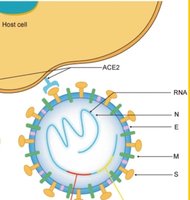
Symptoms: Range from mild respiratory illness to severe systemic disease.
Diagnosis: PCR and antigen testing.
Prevention: Vaccination and public health measures.
Retroviridae Family (HIV)
HIV is a retrovirus with two copies of +ssRNA, an envelope, and enzymes (reverse transcriptase, integrase, protease). It targets CD4+ T cells and leads to AIDS if untreated.
Transmission: Blood, sexual contact, vertical transmission.
Stages: Acute infection, clinical latency, AIDS.
Diagnosis: Antibody, antigen, and viral load testing.
Treatment: Antiretroviral therapy (ART) combining multiple drug classes.
Parasitic Protozoa, Helminths, and Arthropod Vectors
Protozoan Life Stages
Cyst: Dormant, environmentally resistant, infective stage.
Trophozoite: Active, feeding, and reproductive stage within the host.
Transmission and Life Cycles
Entamoeba histolytica: Fecal-oral transmission; causes amebic dysentery.
Acanthamoeba: Causes keratitis and encephalitis; enters via skin or mucosa.
Naegleria: Causes primary amebic meningoencephalitis; enters via nasal passages.
Flagellates
Trypanosoma cruzi: Chagas' disease; transmitted by triatomine bugs.
Leishmania: Leishmaniasis; transmitted by sand flies.
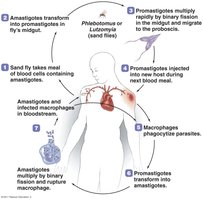
Giardia intestinalis: Giardiasis; fecal-oral transmission, causes diarrhea.
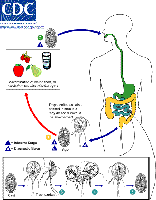
Trichomonas vaginalis: Causes vaginosis; transmitted sexually.
Apicomplexans
Plasmodium: Malaria; transmitted by Anopheles mosquitoes.
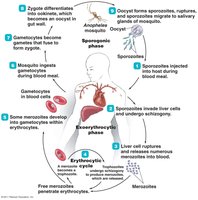
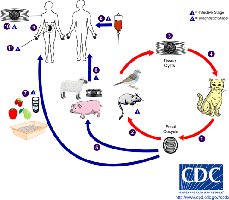
Toxoplasma gondii: Toxoplasmosis; transmitted via undercooked meat or cat feces.
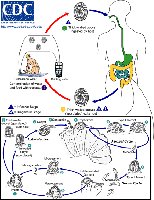
Cryptosporidium parvum: Causes diarrhea; transmitted via contaminated water.
Helminths
Ascaris lumbricoides: Ascariasis; transmitted via ingestion of eggs from contaminated soil.
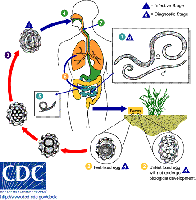
Enterobius vermicularis: Pinworm; transmitted via ingestion of eggs, causes perianal itching.
Summary Table: Key Viruses and Associated Diseases
Virus | Genome Type | Transmission | Major Disease(s) | Prevention |
|---|---|---|---|---|
Herpes Simplex Virus (HSV-1, HSV-2) | dsDNA | Contact | Oral/genital herpes | Safe practices |
Varicella Zoster Virus (VZV) | dsDNA | Respiratory, contact | Chickenpox, shingles | Vaccine |
HPV | ssDNA | Contact | Warts, cervical cancer | Vaccine |
Hepatitis B Virus (HBV) | ds/ssDNA | Blood, body fluids | Hepatitis, liver cancer | Vaccine |
Hepatitis A Virus (HAV) | +ssRNA | Fecal-oral | Hepatitis | Vaccine |
Hepatitis C Virus (HCV) | +ssRNA | Blood | Hepatitis, liver cancer | None |
HIV | +ssRNA (retrovirus) | Blood, sexual | AIDS | ART |
Influenza A & B | -ssRNA (segmented) | Respiratory | Flu | Vaccine |
Rotavirus | dsRNA | Fecal-oral | Diarrhea | Vaccine |
Coronavirus (SARS-CoV-2) | +ssRNA | Respiratory | COVID-19 | Vaccine |
