Ch. 19 - Pathogenic Gram-Positive Bacteria
Bauman - Microbiology with Diseases by Taxonomy 6th Edition
Bauman6th EditionMicrobiology with Diseases by TaxonomyISBN: 9780134832302Not the one you use?Change textbook
Chapter 19, Problem 6

Of the following genera, which can survive the harshest conditions?
a. Staphylococcus
b. Clostridium
c. Mycobacterium
d. Actinomyces

Verified step by step guidance
1
Step 1: Understand the question is asking which genus can survive the harshest environmental conditions, such as extreme heat, desiccation, or chemical exposure.
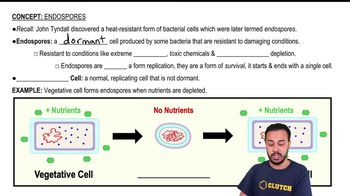
Step 2: Recall that some bacteria form endospores, which are highly resistant structures allowing survival under extreme conditions.
Step 3: Identify which genera among the options are known to form endospores. Clostridium is a genus well-known for producing endospores.
Step 4: Consider the other genera: Staphylococcus, Mycobacterium, and Actinomyces do not form endospores and generally have less resistance to extreme conditions compared to spore-formers.
Step 5: Conclude that the genus capable of surviving the harshest conditions is the one that forms endospores, which is Clostridium.

Verified video answer for a similar problem:

This video solution was recommended by our tutors as helpful for the problem above.
Video duration:
1m
Was this helpful?

Key Concepts

Here are the essential concepts you must grasp in order to answer the question correctly.

Bacterial Endospores

Endospores are highly resistant, dormant structures formed by certain bacteria like Clostridium to survive extreme conditions such as heat, desiccation, and chemicals. This ability allows them to endure environments that would kill most other bacteria.
Recommended video:

Bacterial Genera and Their Survival Mechanisms

Different bacterial genera have unique adaptations for survival. For example, Staphylococcus can tolerate salt and dryness, Mycobacterium has a waxy cell wall for resistance, but only Clostridium forms endospores, making it the most resilient under harsh conditions.
Recommended video:
Guided course
04:18
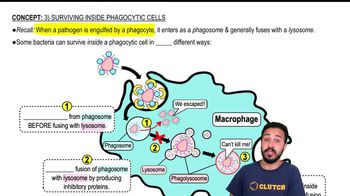
Surviving Inside Phagocytic Cells

Environmental Stress Factors Affecting Bacteria

Harsh conditions include extreme temperature, desiccation, radiation, and chemical exposure. Understanding how bacteria respond to these stresses helps identify which genera can survive, with endospore formation being the key factor for enduring the toughest environments.
Recommended video:
Guided course
03:48
Environmental Factors Affecting Enzyme Activity