Why are mycoplasmas able to survive a relatively wide range of osmotic conditions, even though these bacteria lack cell walls?
Ch. 19 - Pathogenic Gram-Positive Bacteria
Bauman6th EditionMicrobiology with Diseases by TaxonomyISBN: 9780134832302Not the one you use?Change textbook
Chapter 19, Problem 1
Which of the following bacteria causes a common type of food poisoning?
a. Streptococcus sanguis
b. Clostridium tetani
c. Staphylococcus aureus
d. Streptococcus pyogenes
Verified step by step guidance1
Step 1: Understand the question is asking which bacterium is commonly associated with food poisoning, a condition caused by ingestion of toxins or bacteria-contaminated food.
Step 2: Review the characteristics of each bacterium listed: Streptococcus sanguis is primarily associated with oral flora and dental plaque, not food poisoning.
Step 3: Clostridium tetani is known for causing tetanus, a neurological disease, and is not typically linked to food poisoning.
Step 4: Staphylococcus aureus produces enterotoxins that can contaminate food and cause rapid-onset food poisoning symptoms, making it a common cause of food poisoning.
Step 5: Streptococcus pyogenes is mainly responsible for infections like strep throat and skin infections, not food poisoning.

Verified video answer for a similar problem:
This video solution was recommended by our tutors as helpful for the problem above.
Video duration:
2mWas this helpful?
Key Concepts
Here are the essential concepts you must grasp in order to answer the question correctly.
Food Poisoning and Its Causes
Food poisoning occurs when harmful bacteria or their toxins contaminate food, leading to illness. Understanding which bacteria commonly cause food poisoning helps identify the source and symptoms of the infection.
Recommended video:
Guided course
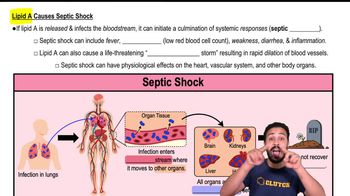
Lipid A Causes Septic Shock
Staphylococcus aureus as a Foodborne Pathogen
Staphylococcus aureus is a common bacterium that produces toxins causing rapid-onset food poisoning. It often contaminates improperly stored or handled foods, leading to symptoms like nausea, vomiting, and diarrhea.
Recommended video:
Guided course
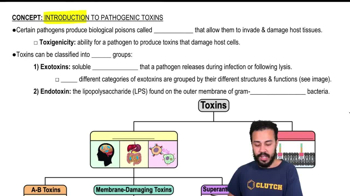
Introduction to Pathogenic Toxins
Distinguishing Pathogenic Roles of Bacteria
Different bacteria cause distinct diseases; for example, Clostridium tetani causes tetanus, while Streptococcus species are linked to throat infections or dental issues. Recognizing these roles helps differentiate which bacteria are responsible for food poisoning.
Recommended video:
Guided course
Introduction to Pathogenic Toxins
Related Practice
Textbook Question
1205
views
Textbook Question
Match the genera of pathogens to their appearance in stained smears: Actinomyces, Bacillus, Clostridium, Mycobacterium, Staphylococcus, Streptococcus.
(a) Methenamine silver <IMAGE>
(b) Gram <IMAGE>
(c) Gram <IMAGE>
(d) Acid fast <IMAGE>
(e) Gram <IMAGE>
(f) Gram <IMAGE>
1027
views
Textbook Question
For each of the following diseases or conditions, indicate the genus (or genera) of bacterium that causes it.
___ Scalded skin syndrome
___ Osteomyelitis
___ Pharyngitis
___ Scarlet fever
___ Pyoderma
___ Rheumatic fever
___ Glomerulonephritis
___ Sinusitis
___ Otitis media
___ Anthrax
___ Myonecrosis
___ Diphtheria
___ Leprosy
___ Dental caries
___ Acne
A. Staphylococcus
B. Streptococcus
C. Mycobacterium
D. Listeria
E. Propionibacterium
F. Corynebacterium
G. Bacillus
H. Clostridium
I. Actinomyces
967
views