Ch. 19 - Pathogenic Gram-Positive Bacteria
Bauman - Microbiology with Diseases by Taxonomy 6th Edition
Bauman6th EditionMicrobiology with Diseases by TaxonomyISBN: 9780134832302Not the one you use?Change textbook
Chapter 19, Problem 1

Why are mycoplasmas able to survive a relatively wide range of osmotic conditions, even though these bacteria lack cell walls?

Verified step by step guidance
1
Understand the typical role of the bacterial cell wall: It provides structural support and protection against osmotic pressure changes, preventing the cell from bursting in hypotonic environments.
Recognize that mycoplasmas lack a cell wall, which usually makes bacteria more vulnerable to osmotic stress because they don't have this rigid protective layer.
Identify the unique feature of mycoplasmas that compensates for the absence of a cell wall: their cell membrane contains sterols (such as cholesterol), which are uncommon in most bacteria.
Explain how sterols in the membrane increase membrane stability and rigidity, allowing mycoplasmas to maintain their shape and resist osmotic lysis despite lacking a cell wall.
Conclude that the presence of sterols in the plasma membrane is the key adaptation that enables mycoplasmas to survive a wide range of osmotic conditions.

Verified video answer for a similar problem:

This video solution was recommended by our tutors as helpful for the problem above.
Video duration:
2m
Was this helpful?

Key Concepts

Here are the essential concepts you must grasp in order to answer the question correctly.

Mycoplasma Cell Structure

Mycoplasmas are unique bacteria that lack a rigid cell wall, unlike most bacteria. Instead, they have a flexible plasma membrane reinforced with sterols, which provides structural support and helps maintain cell integrity under varying environmental conditions.
Recommended video:
Guided course
05:59
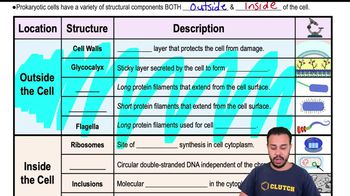
Overview of Prokaryotic Cell Structure

Osmotic Pressure and Cell Wall Function

In typical bacteria, the cell wall protects against osmotic lysis by resisting internal turgor pressure. Without a cell wall, cells are usually vulnerable to bursting in hypotonic environments, but mycoplasmas compensate through membrane adaptations to survive osmotic stress.
Recommended video:
Guided course
05:42
Cell Junctions

Role of Sterols in Membrane Stability

Sterols, such as cholesterol, are incorporated into the mycoplasma membrane, increasing its rigidity and reducing permeability. This adaptation stabilizes the membrane against osmotic fluctuations, allowing mycoplasmas to endure a wider range of osmotic conditions despite lacking a cell wall.
Recommended video:
Guided course
03:23
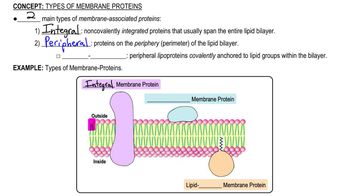
Types of Membrane Proteins
Related Practice
Textbook Question

Mycobacterium avium-intracellulare was considered relatively harmless until the late 20th century, when it became common in certain infections. Explain how this bacterium’s pathogenicity changed.

1136
views

Textbook Question

How does Staphylococcus aureus affect the matrix between cells in the human body?

a. S. aureus triggers blood clotting, which coats the matrix and inhibits cellular

communication.

b. S. aureus produces an enzyme that dissolves hyaluronic acid and thus enables it to pass between the cells.

c. S. aureus possesses a hyaluronic acid capsule that causes leukocytes to ignore the bacterium as if it were camouflaged.

d. S. aureus does not affect the matrix but instead produces a necrotizing agent that dissolves body cells.

42
views
Textbook Question

Which of the following bacteria causes a common type of food poisoning?

a. Streptococcus sanguis

b. Clostridium tetani

c. Staphylococcus aureus

d. Streptococcus pyogenes

34
views
Textbook Question

Label acetylcholine. Color the sites of action of botulism toxin on a nerve cell.

1105
views
Textbook Question

Match the genera of pathogens to their appearance in stained smears: Actinomyces, Bacillus, Clostridium, Mycobacterium, Staphylococcus, Streptococcus.

(a) Methenamine silver <IMAGE>

(b) Gram <IMAGE>

(c) Gram <IMAGE>

(d) Acid fast <IMAGE>

(e) Gram <IMAGE>

(f) Gram <IMAGE>

1027
views
Textbook Question

For each of the following diseases or conditions, indicate the genus (or genera) of bacterium that causes it.


___ Scalded skin syndrome

___ Osteomyelitis

___ Pharyngitis

___ Scarlet fever

___ Pyoderma

___ Rheumatic fever

___ Glomerulonephritis

___ Sinusitis

___ Otitis media

___ Anthrax

___ Myonecrosis

___ Diphtheria

___ Leprosy

___ Dental caries

___ Acne


A. Staphylococcus

B. Streptococcus

C. Mycobacterium

D. Listeria

E. Propionibacterium

F. Corynebacterium

G. Bacillus

H. Clostridium

I. Actinomyces

967
views