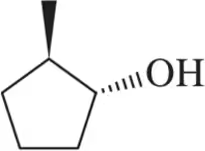
Provide the IUPAC name for the following molecules. (a)
Verified step by step guidance
1
Step 1: Identify the parent chain. The molecule is a cyclohexane ring, which serves as the parent chain.
Step 2: Determine the functional groups attached to the parent chain. There is a hydroxyl (-OH) group attached to the cyclohexane ring.
Step 3: Assign the lowest possible locant to the hydroxyl group. Since the hydroxyl group is the highest priority functional group, it is assigned position 1.
Step 4: Analyze the stereochemistry. The hydroxyl group is shown as a wedge (indicating it is coming out of the plane), and the methyl group is shown as a dash (indicating it is going into the plane). This stereochemistry must be included in the name using the R/S configuration.
Step 5: Combine the information to write the IUPAC name. Include the parent chain, the position of the hydroxyl group, and the stereochemistry in the name.
Verified video answer for a similar problem:
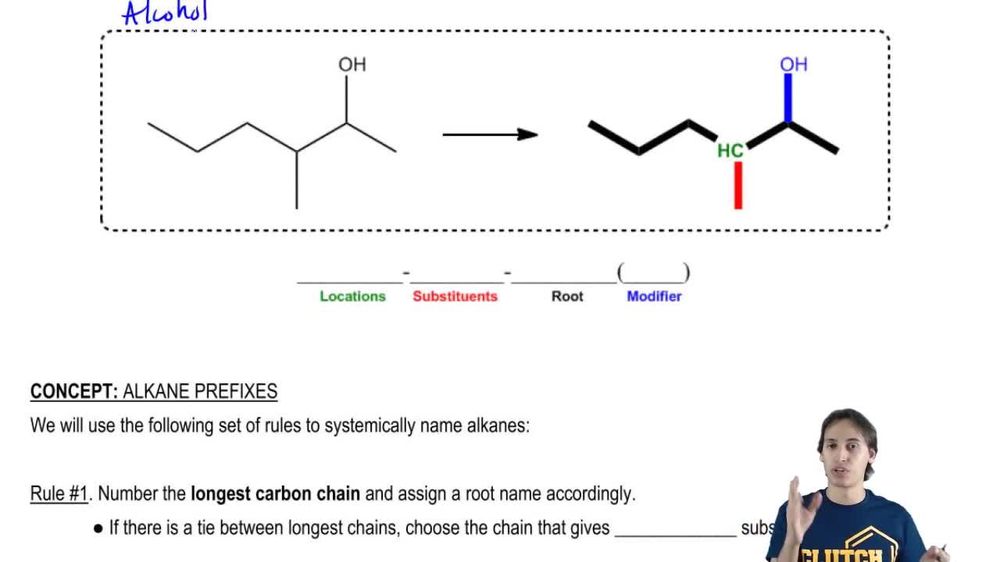
This video solution was recommended by our tutors as helpful for the problem above
Video duration:
11m
Play a video:
0 Comments
Key Concepts
Here are the essential concepts you must grasp in order to answer the question correctly.
IUPAC Nomenclature
IUPAC nomenclature is a systematic method for naming organic chemical compounds. It provides rules for naming based on the structure of the molecule, including the longest carbon chain, functional groups, and substituents. Understanding these rules is essential for accurately identifying and communicating the identity of organic compounds.
Functional groups are specific groups of atoms within molecules that are responsible for the characteristic chemical reactions of those molecules. In the case of the molecule shown, the hydroxyl group (-OH) is a functional group that defines it as an alcohol. Recognizing functional groups is crucial for determining the properties and reactivity of organic compounds.
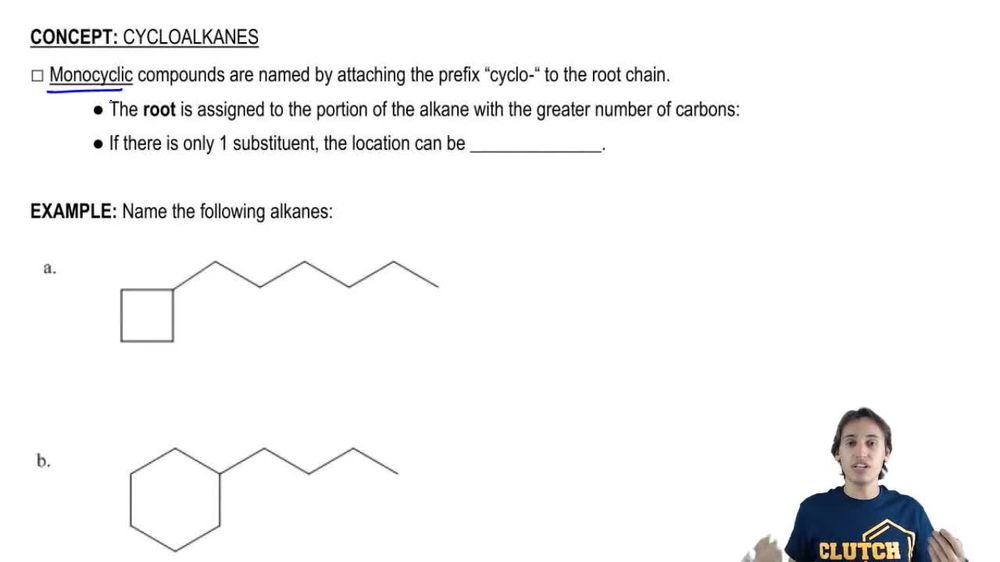
Cycloalkanes are saturated hydrocarbons that contain carbon atoms arranged in a ring structure. The presence of a ring affects the naming and properties of the compound. In the provided structure, the cyclohexane ring is a key feature that influences the IUPAC name, as it must be considered when identifying the main chain and substituents.