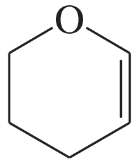
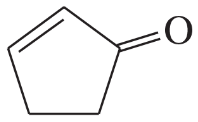
Draw a Lewis structure, and classify each of the following compounds. The possible classifications are as follows: alcohol ether ketone aldehyde carboxylic acid alkene (f) (g)
Verified step by step guidance
1
Identify the functional groups present in each compound. Look for characteristic groups such as hydroxyl (-OH) for alcohols, carbonyl (C=O) for ketones and aldehydes, and carboxyl (-COOH) for carboxylic acids.
For compound f, determine the presence of any double bonds between carbon atoms, which would indicate an alkene. If a hydroxyl group is attached to a saturated carbon, it is an alcohol.
For compound g, check for an oxygen atom bonded to two carbon atoms, which would classify it as an ether. If there is a carbonyl group at the end of a carbon chain, it is an aldehyde; if it is within the chain, it is a ketone.
Draw the Lewis structure for each compound by arranging the atoms to satisfy the octet rule, ensuring that each atom (except hydrogen) is surrounded by eight electrons. Use single or double bonds as necessary.
Classify each compound based on the identified functional groups and the drawn Lewis structures. Assign the correct classification from the given options: alcohol, ether, ketone, aldehyde, carboxylic acid, or alkene.
Verified video answer for a similar problem:
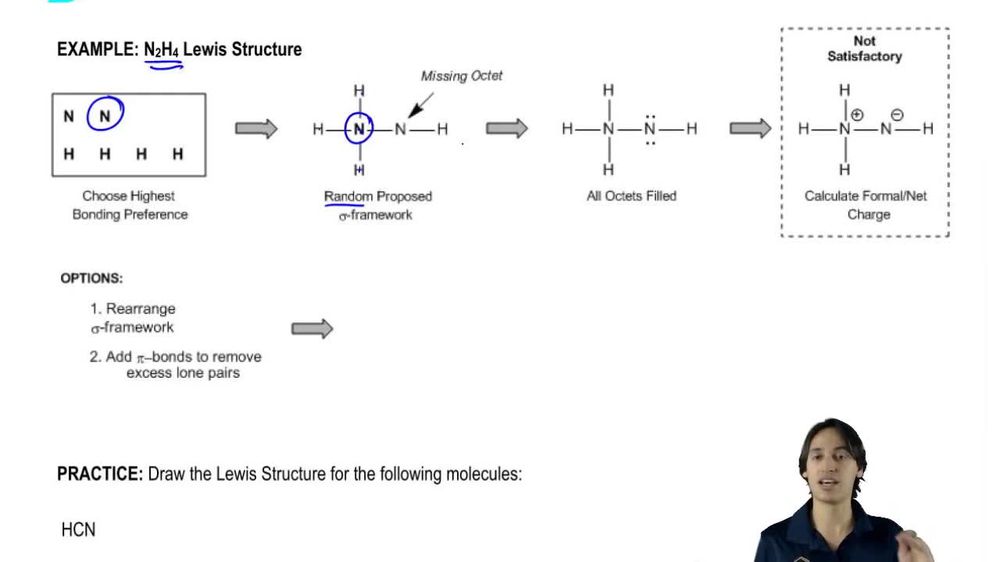
This video solution was recommended by our tutors as helpful for the problem above
Video duration:
4m
Play a video:
0 Comments
Key Concepts
Here are the essential concepts you must grasp in order to answer the question correctly.
Lewis Structures
Lewis structures are diagrams that represent the bonding between atoms of a molecule and the lone pairs of electrons that may exist. They are essential for visualizing the arrangement of atoms, the distribution of electrons, and the types of bonds (single, double, or triple) in a molecule. Understanding Lewis structures helps in predicting the geometry, reactivity, and properties of the compound.
Functional groups are specific groups of atoms within molecules that have characteristic properties and chemical reactivity. They are the key to classifying organic compounds, such as alcohols, ethers, ketones, aldehydes, carboxylic acids, and alkenes. Recognizing these groups in a Lewis structure allows for the identification and classification of the compound based on its functional group.
Organic compounds are classified based on their functional groups, which determine their chemical behavior and properties. For example, alcohols contain a hydroxyl group (-OH), ethers have an oxygen atom connected to two alkyl or aryl groups, and alkenes contain carbon-carbon double bonds. Understanding these classifications helps in predicting the compound's reactivity and potential applications.