Describe the proton-coupled 13C NMR spectra for compound 5 in Problem 41, indicating the relative positions of the signals. 5.
Verified step by step guidance
1
Analyze the structure of the compound provided in the image. The molecule is 3-methylbutanal, which contains a carbonyl group (C=O), a methyl group (CH3), and a branched alkyl chain.
Identify the unique carbon environments in the molecule. There are five distinct carbons: (1) the carbonyl carbon, (2) the CH carbon attached to the methyl group, (3) the CH3 group directly attached to the CH carbon, (4) the CH3 group attached to the CH2 carbon, and (5) the CH2 carbon attached to the carbonyl group.
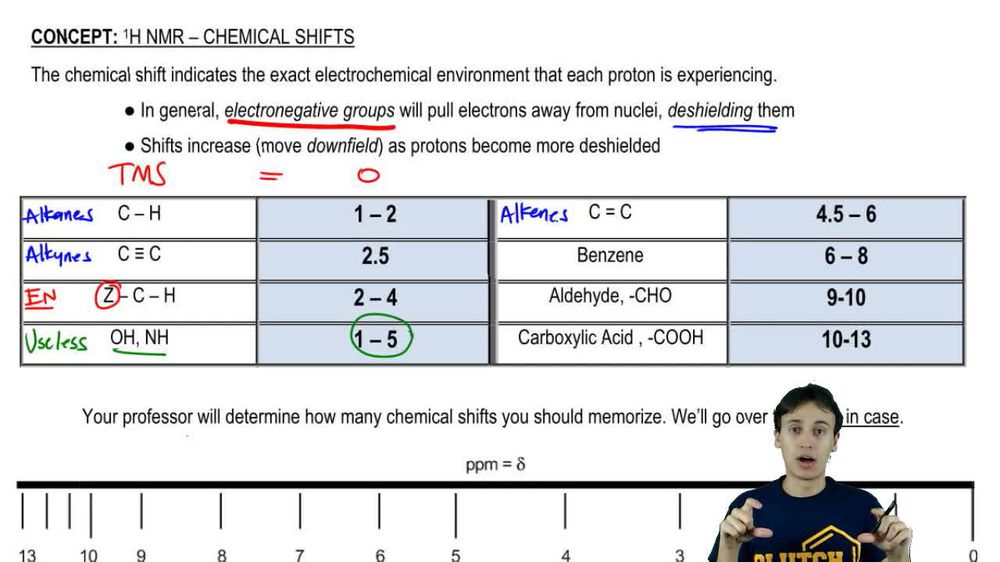
Consider the proton-coupled 13C NMR spectra. Each carbon will exhibit a signal based on its chemical environment. The carbonyl carbon will appear downfield due to its high deshielding effect, while the methyl and methylene carbons will appear upfield due to their relatively shielded environments.
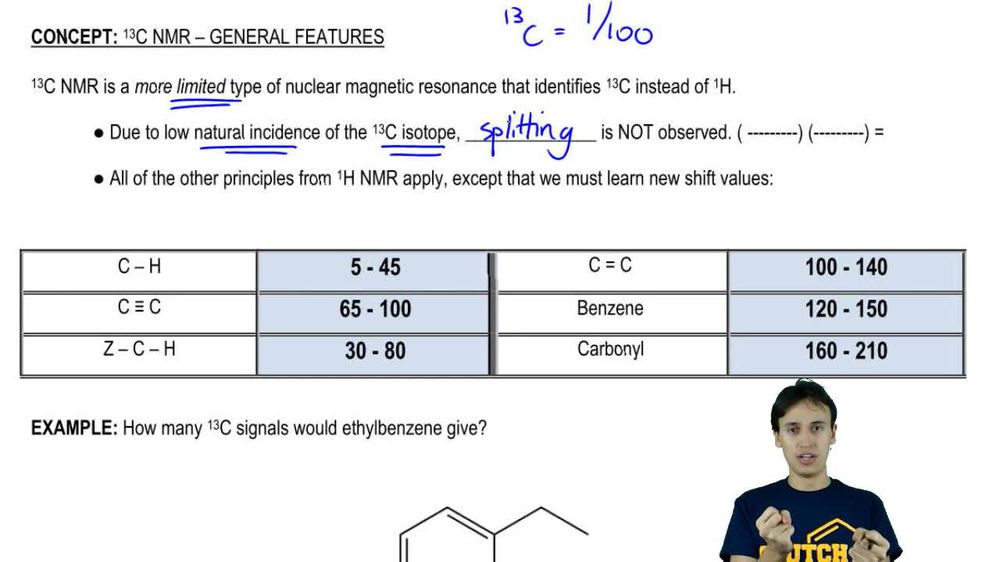
Determine the splitting patterns for each carbon signal based on the number of hydrogens directly attached to the carbon. For example, the CH carbon will show a doublet due to coupling with one hydrogen, while the CH3 carbons will show singlets as they are not coupled to any hydrogens directly attached to them.
Arrange the relative positions of the signals in the spectrum. The carbonyl carbon will be the furthest downfield, followed by the CH carbon, the CH2 carbon, and finally the CH3 carbons, which will appear upfield.
Verified video answer for a similar problem:
This video solution was recommended by our tutors as helpful for the problem above
Video duration:
5m
Play a video:
0 Comments
Key Concepts
Here are the essential concepts you must grasp in order to answer the question correctly.
Proton-Coupled 13C NMR Spectroscopy
Proton-coupled 13C NMR spectroscopy is a technique that provides information about the carbon environment in organic compounds by observing the interaction between carbon and hydrogen nuclei. In this method, the presence of protons attached to carbon atoms influences the chemical shifts of the carbon signals, allowing for a more detailed analysis of the molecular structure and connectivity.
Chemical shift in NMR spectroscopy refers to the position of a signal in the spectrum, which is influenced by the electronic environment surrounding the nucleus. In 13C NMR, different functional groups and hybridization states of carbon atoms lead to distinct chemical shifts, helping to identify the types of carbon present in a compound. For example, carbonyl carbons typically appear downfield (higher ppm) due to their deshielding effect.
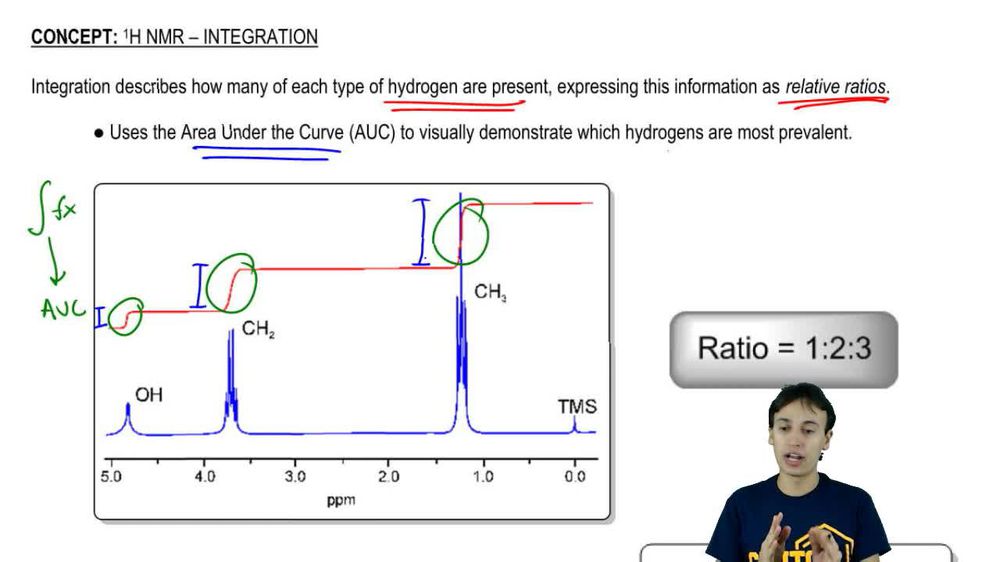
Multiplicity in NMR refers to the splitting of signals due to spin-spin coupling between neighboring nuclei, which provides insight into the number of adjacent protons. In 13C NMR, while the signals are generally singlets, the presence of protons can affect their intensity and position. Integration, although less common in 13C NMR, can indicate the relative number of equivalent carbon atoms contributing to a signal, aiding in the interpretation of the molecular structure.

 5:47 minutes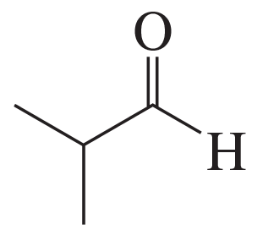
 Verified step by step guidance
 04:00
04:00