Show how you would accomplish the following synthetic transformations. Show all intermediates. j. trans-hex-2-ene → cis-hex-2-ene
Verified step by step guidance
1
Step 1: Recognize that the transformation involves converting the trans isomer of hex-2-ene to the cis isomer. This requires a stereochemical change in the double bond configuration.
Step 2: Understand that this stereochemical change can be achieved through catalytic hydrogenation followed by selective dehydrogenation. The intermediate formed will be hexane (fully saturated alkane).
Step 3: Perform catalytic hydrogenation using a metal catalyst such as palladium (Pd) or platinum (Pt) under hydrogen gas (H₂). This will convert trans-hex-2-ene into hexane by adding hydrogen across the double bond.
Step 4: Selectively dehydrogenate hexane using a catalyst such as palladium on carbon (Pd/C) under controlled conditions to regenerate the double bond. Ensure that the conditions favor the formation of the cis isomer (cis-hex-2-ene).
Step 5: Confirm the stereochemistry of the product (cis-hex-2-ene) using spectroscopic techniques such as NMR or IR to verify the successful transformation.
Verified video answer for a similar problem:
This video solution was recommended by our tutors as helpful for the problem above
Video duration:
8m
Play a video:
0 Comments
Key Concepts
Here are the essential concepts you must grasp in order to answer the question correctly.
Geometric Isomerism
Geometric isomerism, also known as cis-trans isomerism, occurs in alkenes where the arrangement of substituents around the double bond leads to different spatial configurations. In the case of hex-2-ene, the 'trans' configuration has substituents on opposite sides of the double bond, while the 'cis' configuration has them on the same side. Understanding this concept is crucial for recognizing how the transformation between these isomers can occur.
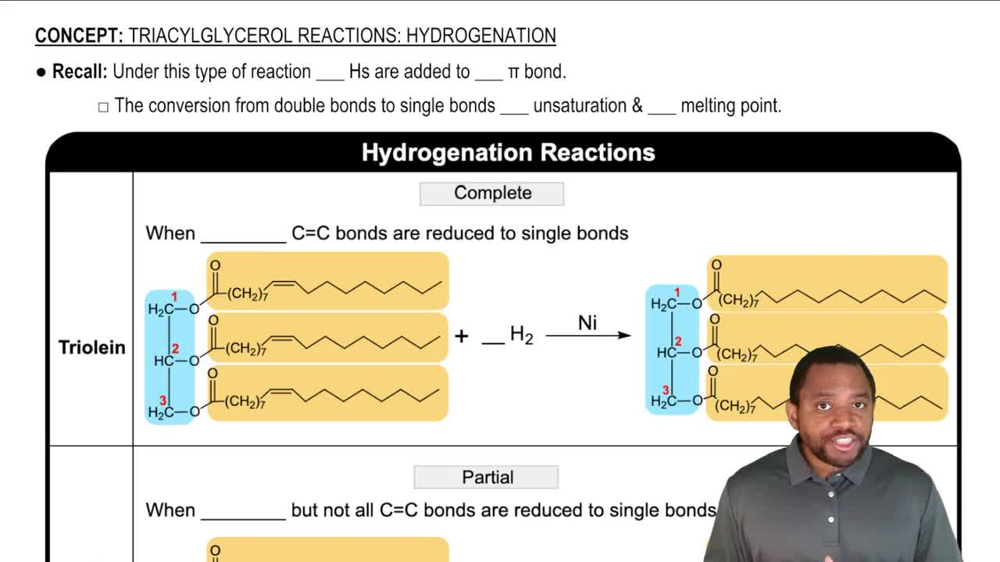
Hydrogenation is a chemical reaction that involves the addition of hydrogen (H2) across a double bond, converting alkenes into alkanes. This reaction can be facilitated by catalysts such as palladium or platinum. In the context of transforming trans-hex-2-ene to cis-hex-2-ene, hydrogenation can be used to create an intermediate that can then rearrange to form the desired cis isomer.
Stereochemistry refers to the study of the spatial arrangement of atoms in molecules and how this affects their chemical behavior. Understanding the mechanisms of reactions, including the stereochemical outcomes, is essential for predicting the formation of specific isomers. In this transformation, the mechanism must account for the stereochemical implications of the hydrogenation process and any subsequent rearrangements to achieve the desired cis configuration.