For each of the following molecules, predict the product that would form upon reaction of a single equivalent of a strong base. (e)
Verified step by step guidance
1
Analyze the structure of the molecule: The molecule contains a benzene ring with two hydroxyl (-OH) groups in the ortho position and a nitro group (-NO2) attached to the ring.
Identify the acidic protons: The hydroxyl groups (-OH) are acidic due to the ability of the oxygen atom to donate a proton. The nitro group is electron-withdrawing, which increases the acidity of the hydroxyl groups by stabilizing the negative charge on the conjugate base.
Determine the effect of a strong base: A strong base will deprotonate one of the hydroxyl groups, forming a phenoxide ion (-O⁻). The base will preferentially deprotonate the more acidic hydroxyl group, which is influenced by the electron-withdrawing nitro group.
Predict the product: The reaction will result in the formation of a phenoxide ion at the position of the deprotonated hydroxyl group. The nitro group will remain unchanged, and the other hydroxyl group will remain protonated.
Consider resonance stabilization: The phenoxide ion formed will be stabilized by resonance, where the negative charge on the oxygen can delocalize into the aromatic ring. The nitro group further stabilizes the resonance structure by withdrawing electron density.
Verified video answer for a similar problem:
This video solution was recommended by our tutors as helpful for the problem above
Video duration:
10m
Play a video:
0 Comments
Key Concepts
Here are the essential concepts you must grasp in order to answer the question correctly.
Strong Bases
Strong bases are substances that can completely dissociate in solution to produce hydroxide ions (OH-). Common examples include sodium hydroxide (NaOH) and potassium hydroxide (KOH). In organic chemistry, strong bases are often used to deprotonate acidic functional groups, leading to the formation of reactive intermediates such as alkoxides or carbanions.
Acid-base reactions involve the transfer of protons (H+) from an acid to a base. In the context of organic molecules, hydroxyl groups (-OH) can act as weak acids, donating a proton to a strong base. This reaction can lead to the formation of alkoxide ions, which are important in various organic reactions, including nucleophilic substitutions and eliminations.
Functional groups are specific groups of atoms within molecules that are responsible for the characteristic chemical reactions of those molecules. In the provided structure, the hydroxyl (-OH) and amine (-NH) groups are functional groups that can participate in acid-base reactions. Understanding the reactivity of these groups is crucial for predicting the products of reactions involving strong bases.

 10:21 minutes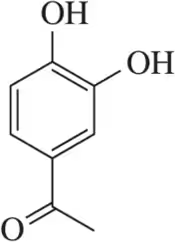
 Verified step by step guidance
 03:10
03:10