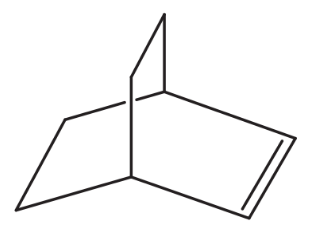
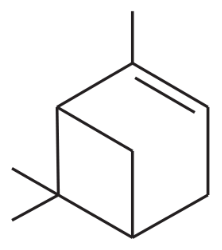
Give the products expected when the following compounds are ozonized and reduced. (c) (d)
Verified step by step guidance
1
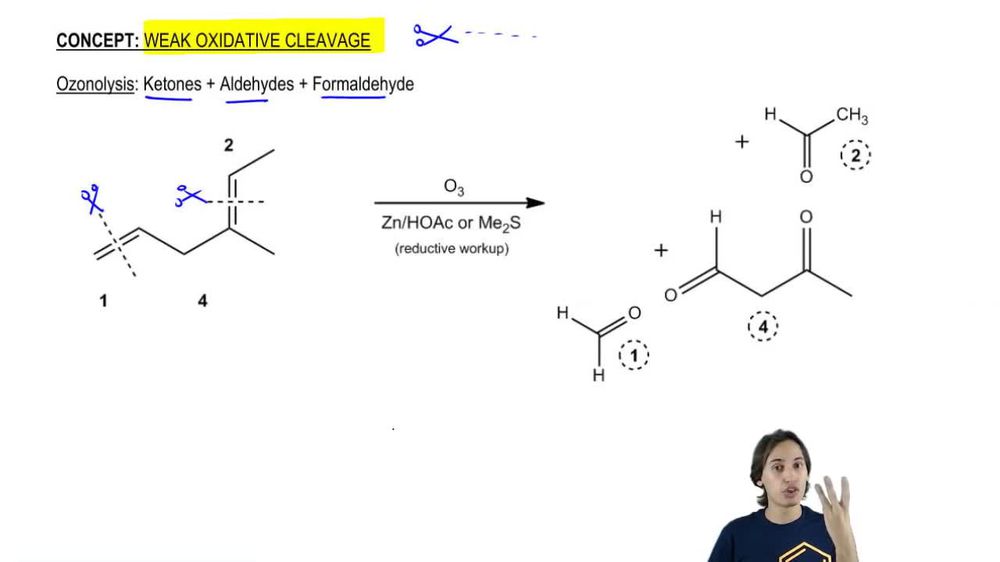
Step 1: Understand the reaction conditions. Ozonolysis involves the cleavage of double bonds in alkenes using ozone (O₃), followed by reduction (commonly with zinc and water or dimethyl sulfide). This process breaks the double bond and forms carbonyl compounds (aldehydes or ketones).
Step 2: Analyze compound (c). The structure contains a double bond in a bicyclic system. Identify the location of the double bond and predict the cleavage points. The double bond will split into two fragments, each forming a carbonyl group.
Step 3: For compound (c), draw the products after ozonolysis. The double bond will break, and the two carbons involved in the double bond will each form a carbonyl group. Consider the connectivity of the bicyclic structure to determine the resulting aldehydes or ketones.
Step 4: Analyze compound (d). This structure contains a double bond in a substituted bicyclic system. Identify the cleavage points of the double bond, and predict the products based on the substitution pattern and connectivity.
Step 5: For compound (d), draw the products after ozonolysis. The double bond will break, and the two carbons involved in the double bond will each form a carbonyl group. Consider the substituents on the bicyclic structure to determine the resulting aldehydes or ketones.
Verified video answer for a similar problem:
This video solution was recommended by our tutors as helpful for the problem above
Video duration:
9m
Play a video:
0 Comments
Key Concepts
Here are the essential concepts you must grasp in order to answer the question correctly.
Ozonolysis
Ozonolysis is a reaction involving the cleavage of alkenes or alkynes using ozone (O3) to form carbonyl compounds. The process typically occurs in two steps: first, the alkene reacts with ozone to form a molozonide, which rearranges to form ozonide. The ozonide is then reduced, often using a reducing agent like zinc or dimethyl sulfide, yielding aldehydes or ketones as products.
The reduction of ozonides is a crucial step following ozonolysis, where the unstable ozonide is converted into stable carbonyl compounds. Common reducing agents include zinc in acetic acid or dimethyl sulfide, which help to cleave the ozonide and yield the final products. Understanding the choice of reducing agent is important, as it influences the nature of the carbonyl products formed.
Stereochemistry plays a significant role in determining the structure of the products formed during ozonolysis. Depending on the configuration of the starting alkene, the ozonolysis can yield different stereoisomers of the carbonyl compounds. Recognizing the stereochemical implications of the reaction is essential for predicting the specific products and their properties.