Suggest the appropriate reagents to carry out the following transformations. (a)
Verified step by step guidance
1
Identify the functional group transformation: The starting material is benzyl alcohol, and the product is benzyl chloride. This transformation involves converting an alcohol group (-OH) to a chloride group (-Cl).
Consider common reagents for converting alcohols to alkyl halides: Alcohols can be converted to alkyl halides using reagents such as thionyl chloride (SOCl₂), phosphorus tribromide (PBr₃), or hydrogen chloride (HCl) in the presence of a catalyst.
Select thionyl chloride (SOCl₂) as a suitable reagent: Thionyl chloride is often used for converting primary alcohols to alkyl chlorides. It reacts with the alcohol to form the corresponding alkyl chloride, releasing sulfur dioxide (SO₂) and hydrogen chloride (HCl) as byproducts.
Outline the reaction mechanism: The alcohol oxygen attacks the sulfur atom in thionyl chloride, forming an intermediate. The chloride ion then displaces the leaving group, resulting in the formation of benzyl chloride.
Ensure reaction conditions are appropriate: The reaction is typically carried out in an inert solvent like dichloromethane (CH₂Cl₂) under mild conditions to prevent side reactions and ensure high yield of the desired product.
Verified video answer for a similar problem:
This video solution was recommended by our tutors as helpful for the problem above
Video duration:
3m
Play a video:
0 Comments
Key Concepts
Here are the essential concepts you must grasp in order to answer the question correctly.
Reagents in Organic Reactions
Reagents are substances that are added to a chemical reaction to cause a transformation. In organic chemistry, selecting the appropriate reagents is crucial for achieving the desired product. Different reagents can facilitate various types of reactions, such as oxidation, reduction, substitution, or elimination, and understanding their roles helps in predicting the outcome of the reaction.
Functional groups are specific groups of atoms within molecules that are responsible for the characteristic chemical reactions of those molecules. Identifying the functional groups present in the starting materials and the desired products is essential for determining the appropriate reagents and reaction conditions needed for the transformation. Common functional groups include alcohols, amines, carboxylic acids, and alkenes.
A reaction mechanism is a step-by-step description of the process by which reactants are converted into products. Understanding the mechanism helps in predicting the products of a reaction and the conditions required for it to occur. Knowledge of mechanisms also aids in troubleshooting reactions and optimizing conditions for better yields.

 3:31 minutes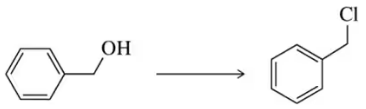
 Verified step by step guidance
 02:17
02:17