Predict the product(s) that would result when molecules (a)–(p) are allowed to react under the following conditions: (vii) HCl; (viii) HBr. If no reaction occurs, write 'no reaction.' (a)
Verified step by step guidance
1
Identify the functional group in the given molecule. The structure shows a benzyl alcohol, which has a hydroxyl group (-OH) attached to a benzyl group.
Consider the reaction with HCl. The hydroxyl group can be protonated by HCl, forming water, which is a good leaving group.
After the formation of water, a carbocation intermediate is generated. In this case, a benzyl carbocation, which is relatively stable due to resonance with the aromatic ring.
The chloride ion (Cl-) from HCl can then attack the carbocation, leading to the formation of benzyl chloride.
Repeat the same process for HBr. The hydroxyl group is protonated by HBr, forming water as a leaving group, and a benzyl carbocation is formed. The bromide ion (Br-) then attacks the carbocation, resulting in the formation of benzyl bromide.
Verified video answer for a similar problem:
This video solution was recommended by our tutors as helpful for the problem above
Video duration:
3m
Play a video:
0 Comments
Key Concepts
Here are the essential concepts you must grasp in order to answer the question correctly.
Acid-Base Reactions
Acid-base reactions involve the transfer of protons (H+) between reactants. In organic chemistry, strong acids like HCl and HBr can protonate nucleophiles or react with bases, influencing the reactivity of various functional groups. Understanding how acids interact with different substrates is crucial for predicting reaction outcomes.
Nucleophilicity refers to the ability of a species to donate an electron pair, while electrophilicity is the ability to accept an electron pair. In the context of reactions with HCl and HBr, identifying which reactants act as nucleophiles and which as electrophiles helps predict the products formed. This concept is fundamental in determining reaction mechanisms.
Reaction mechanisms describe the step-by-step process by which reactants transform into products. They provide insight into the intermediates formed and the energy changes involved. Understanding the mechanism is essential for predicting the products of reactions with acids like HCl and HBr, as it reveals how bonds are broken and formed during the reaction.

 3:32 minutes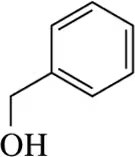
 Verified step by step guidance
 02:49
02:49