Join thousands of students who trust us to help them ace their exams!
Multiple Choice
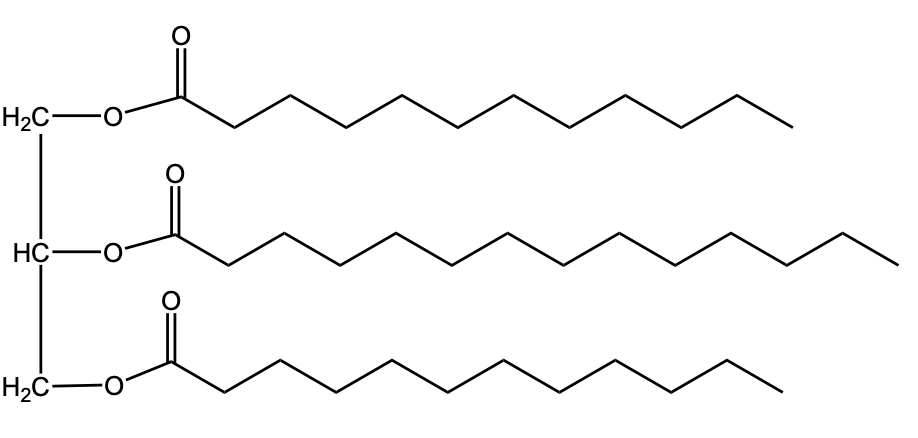
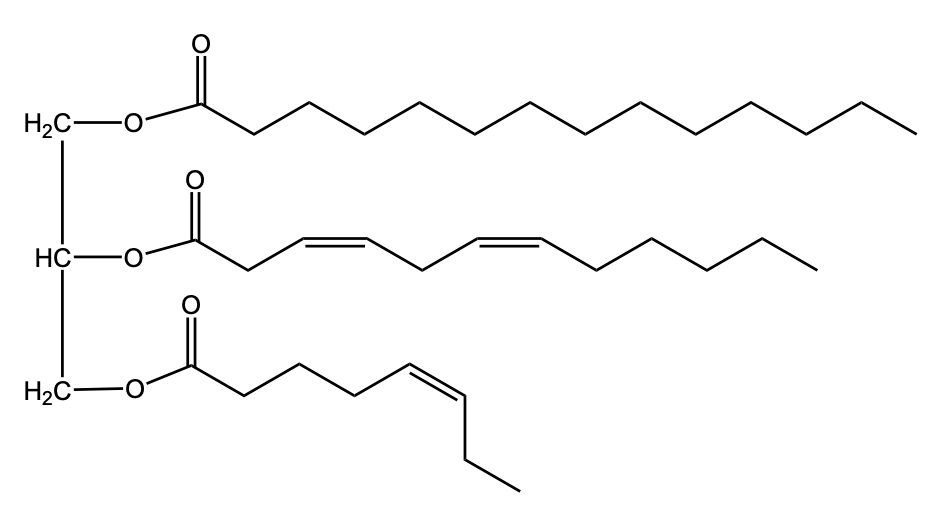
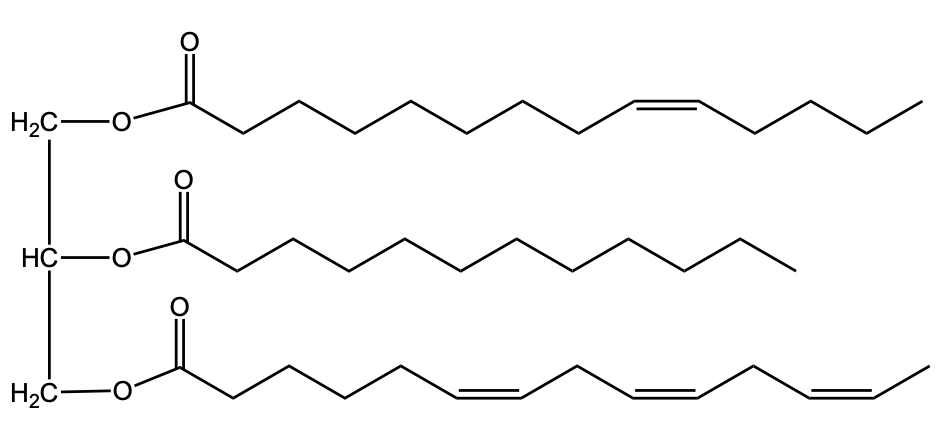
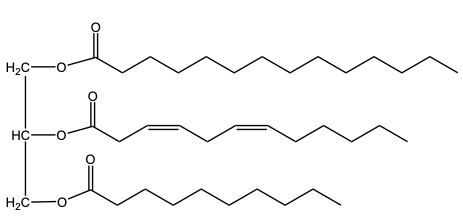
Assuming a complete reaction with hydrogen gas, which of the following molecules would have the greatest increase in melting point?
A
B
C
D
0 Comments
Verified step by step guidance
1
Identify the type of reaction: The problem involves a complete reaction with hydrogen gas, which suggests a hydrogenation reaction. This reaction typically converts carbon-carbon double bonds (C=C) into single bonds (C-C) by adding hydrogen (H2).
Analyze the structures: Examine each molecule to identify the number of carbon-carbon double bonds present. The more double bonds a molecule has, the more hydrogen it can potentially add during hydrogenation.
Consider the effect on melting point: Hydrogenation of double bonds increases the saturation of the fatty acid chains, making them more linear and able to pack closely together. This generally increases the melting point.
Compare the molecules: Determine which molecule has the most double bonds, as this molecule will undergo the greatest change in structure and, consequently, the greatest increase in melting point upon complete hydrogenation.
Select the molecule with the greatest increase: The molecule with the highest number of double bonds will have the greatest increase in melting point after hydrogenation, as it will become the most saturated and linear.




 Verified step by step guidance

