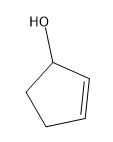
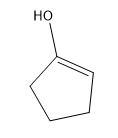
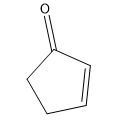
In organic chemistry, understanding the reactivity of different carbon atoms is crucial, particularly the concept of alpha carbons and tautomerization. Alpha carbons are the carbon atoms adjacent to a carbonyl group, and they exhibit unique reactivity compared to typical carbon atoms found in alkanes.
To illustrate this, consider the acidity of various carbon-hydrogen (C-H) bonds. The pKa of a typical sp3 hybridized C-H bond, such as those found in alkanes, is approximately 50. This high pKa indicates that alkanes are very weak acids. In contrast, alpha carbons have a significantly lower pKa of around 20, making them about 1030 times more acidic than alkanes. This substantial difference in acidity can be attributed to the phenomenon of tautomerization.
Tautomerization involves the transfer of a proton and the rearrangement of bonds, leading to the formation of a more stable structure. This process enhances the acidity of the alpha hydrogen, allowing for greater reactivity in reactions involving carbonyl compounds. Understanding these concepts is essential for predicting the behavior of molecules in various chemical reactions.