a. Identify two alkenes that react with HBr to form 1-bromo-1-methylcyclohexane without undergoing a carbocation rearrangement. b. Would both alkenes form the same alkyl halide if DBr were used instead of HBr? (D is an isotope of H, so D+ reacts like H+.)
Verified step by step guidance
1
Step 1: Analyze the target product, 1-bromo-1-methylcyclohexane. This product indicates that the bromine atom is attached to the carbon bearing the methyl group, and the reaction follows Markovnikov's rule, where the electrophile (H⁺ or D⁺) adds to the less substituted carbon of the double bond.
Step 2: Identify two alkenes that can form 1-bromo-1-methylcyclohexane without carbocation rearrangement. The alkenes must have a double bond positioned such that the addition of HBr leads directly to the target product. For example, cyclohexene with a methyl group at the 1-position and 1-methylcyclohexene are potential candidates.
Step 3: Explain why carbocation rearrangement does not occur. In both alkenes, the carbocation formed during the reaction is already at the most stable position (tertiary carbon), so no rearrangement is necessary.
Step 4: Address part b of the problem. If DBr is used instead of HBr, the reaction mechanism remains the same because D⁺ behaves chemically like H⁺. The isotope substitution does not affect the regioselectivity of the reaction, so both alkenes would still form the same alkyl halide, 1-bromo-1-methylcyclohexane.
Step 5: Summarize the reasoning. The two alkenes identified (cyclohexene with a methyl group at the 1-position and 1-methylcyclohexene) react with HBr or DBr to form the same product due to Markovnikov addition and the chemical equivalence of H⁺ and D⁺ in this context.
Verified video answer for a similar problem:
This video solution was recommended by our tutors as helpful for the problem above
Video duration:
10m
Play a video:
0 Comments
Key Concepts
Here are the essential concepts you must grasp in order to answer the question correctly.
Alkene Reactivity
Alkenes are hydrocarbons that contain at least one carbon-carbon double bond. Their reactivity is primarily due to the presence of this double bond, which can undergo electrophilic addition reactions. In the case of HBr addition, the alkene reacts with the hydrogen halide, leading to the formation of a bromoalkane. Understanding the stability of the resulting carbocation is crucial, as it influences whether rearrangements occur during the reaction.
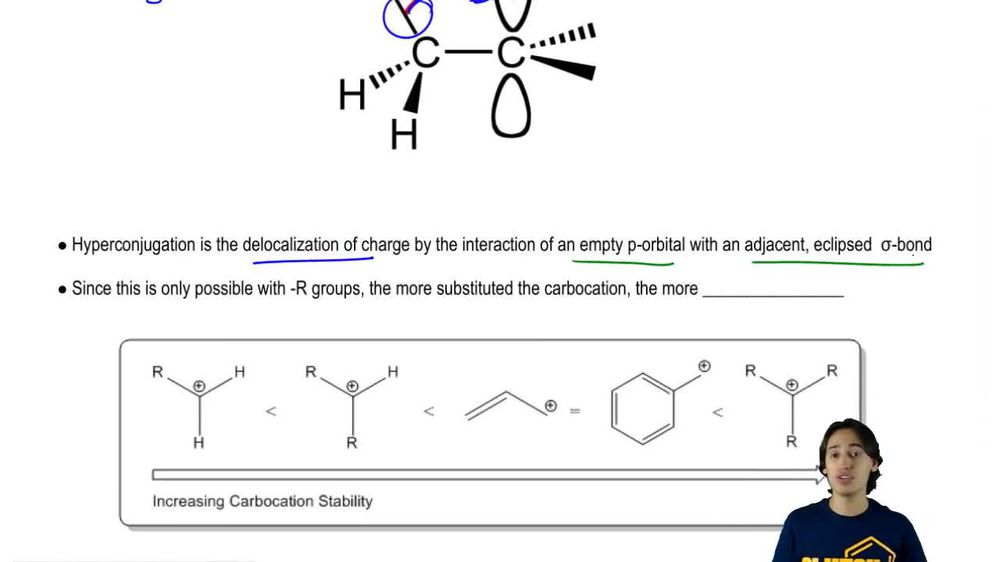
Carbocations are positively charged carbon species that can form during electrophilic addition reactions. Their stability is determined by the degree of substitution: tertiary carbocations are more stable than secondary, which are more stable than primary. In the context of the question, identifying alkenes that do not lead to carbocation rearrangement means selecting those that form stable carbocations without the possibility of shifting to a more stable form.
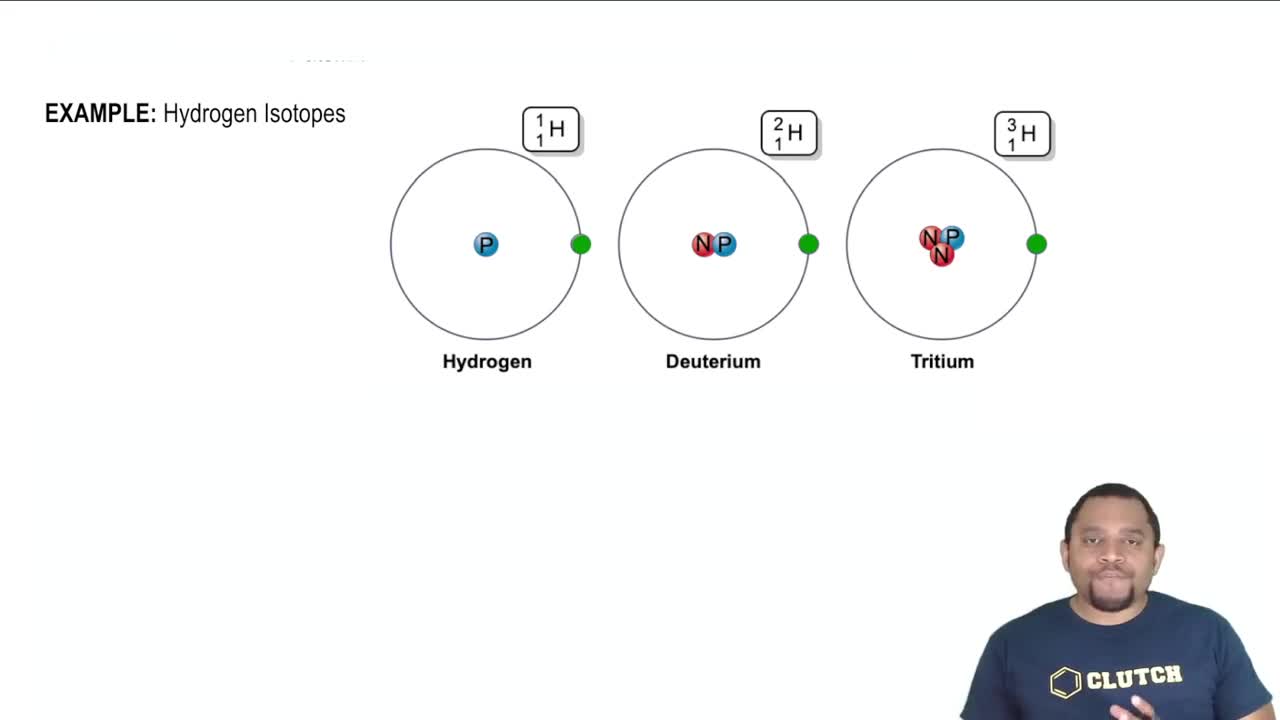
Isotopes, such as deuterium (D), can influence reaction kinetics and mechanisms. In the context of the question, DBr behaves similarly to HBr in terms of reactivity, but the presence of the heavier isotope can lead to slight differences in reaction rates and product distributions. Understanding how isotopes affect the reaction can help predict whether the same alkyl halide will be formed when using DBr instead of HBr.

 10:23 minutes
 Verified step by step guidance
 2:09
2:09