A laboratory student added 1-bromobutane to a flask containing dry ether and magnesium turnings. An exothermic reaction resulted, and the ether boiled vigorously for several minutes. Then she added acetone to the reaction mixture and the ether boiled even more vigorously. She added dilute acid to the mixture and separated the layers. She evaporated the ether layer, and distilled a liquid that boiled at 143 °C. GC–MS analysis of the distillate showed one major product with a few minor impurities. The mass spectrum of the major product is shown here. (a) Draw out the reactions that took place and show the product that was formed. <IMAGE>
Verified step by step guidance
1
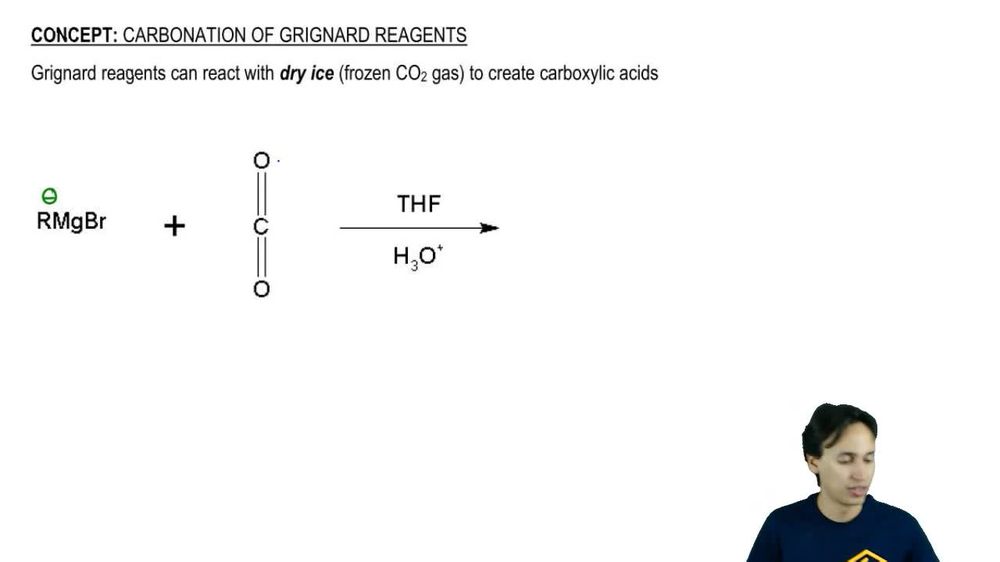
Step 1: Recognize that the reaction involves the preparation of a Grignard reagent. When 1-bromobutane (C4H9Br) reacts with magnesium (Mg) in the presence of dry ether, it forms butylmagnesium bromide (C4H9MgBr). This is a key step in organometallic chemistry.
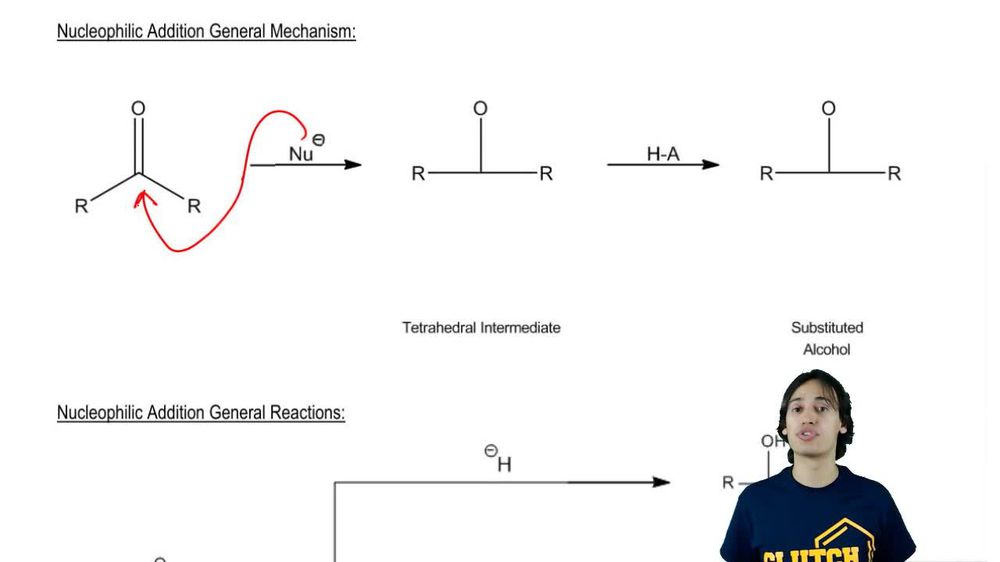
Step 2: Understand that the Grignard reagent (C4H9MgBr) reacts with acetone (CH3COCH3). The Grignard reagent acts as a nucleophile, attacking the electrophilic carbonyl carbon of acetone. This forms a magnesium alkoxide intermediate.
Step 3: Recognize that the magnesium alkoxide intermediate is then treated with dilute acid (H3O+). This step protonates the alkoxide, converting it into the corresponding alcohol. The product formed is 2-methyl-2-hexanol, a secondary alcohol.
Step 4: Note that the ether layer was evaporated, and the product was distilled. The boiling point of 143 °C suggests that the major product is 2-methyl-2-hexanol, which matches the expected boiling point of this compound.
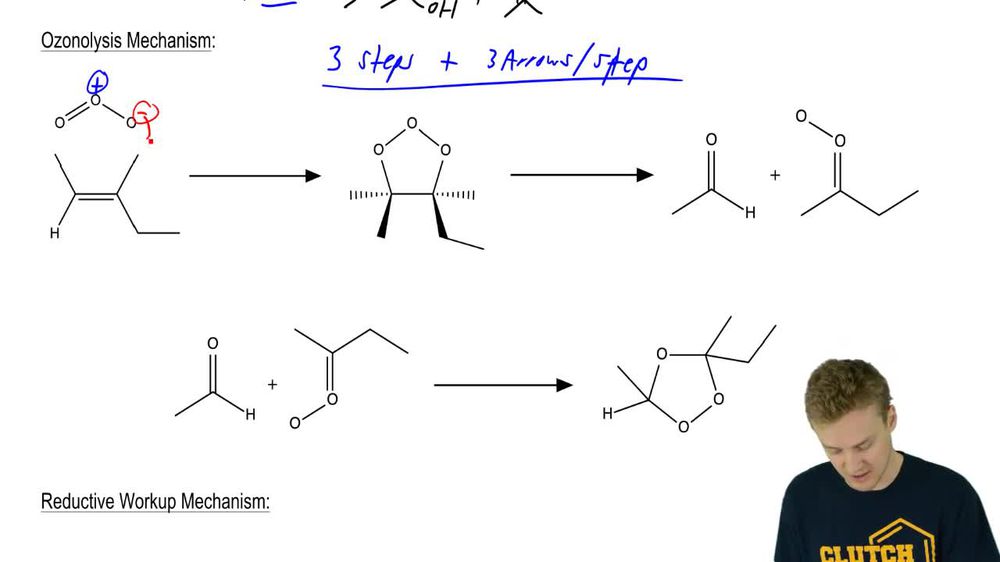
Step 5: To confirm the product, the mass spectrum analysis shows a major peak corresponding to the molecular ion of 2-methyl-2-hexanol. The fragmentation pattern in the spectrum would also support the structure of this alcohol. Draw the reaction sequence: (1) Formation of C4H9MgBr, (2) Reaction with CH3COCH3, and (3) Protonation to yield 2-methyl-2-hexanol.
Verified video answer for a similar problem:
This video solution was recommended by our tutors as helpful for the problem above
Video duration:
3m
Play a video:
0 Comments
Key Concepts
Here are the essential concepts you must grasp in order to answer the question correctly.
Grignard Reagents
Grignard reagents are organomagnesium compounds formed by the reaction of alkyl or aryl halides with magnesium in dry ether. In this case, 1-bromobutane reacts with magnesium to form butylmagnesium bromide, a highly reactive nucleophile. This reagent can then react with carbonyl compounds, such as acetone, to form alcohols after subsequent acid workup.
Nucleophilic addition is a fundamental reaction mechanism in organic chemistry where a nucleophile attacks an electrophilic carbon atom, typically in carbonyl compounds. In this scenario, the butylmagnesium bromide acts as the nucleophile, attacking the carbonyl carbon of acetone, leading to the formation of a tertiary alcohol after protonation with dilute acid.
Distillation is a separation technique used to purify liquids based on differences in boiling points. In this experiment, the ether layer is evaporated, and the distillate is analyzed using Gas Chromatography-Mass Spectrometry (GC-MS), which provides information about the composition and structure of the major product and any impurities present. The boiling point of the distillate at 143 °C suggests the formation of a specific tertiary alcohol from the reaction.