Draw condensed and skeletal structures for each of the following amines: c. 5-methyl-1-hexanamine
Verified step by step guidance
1
Identify the parent chain: The parent chain is a hexane molecule (6 carbon atoms in a straight chain) because the name includes 'hexanamine'. The '1-' indicates that the amine group (-NH₂) is attached to the first carbon of the chain.
Locate the substituent: The '5-methyl' indicates that a methyl group (-CH₃) is attached to the fifth carbon of the hexane chain.
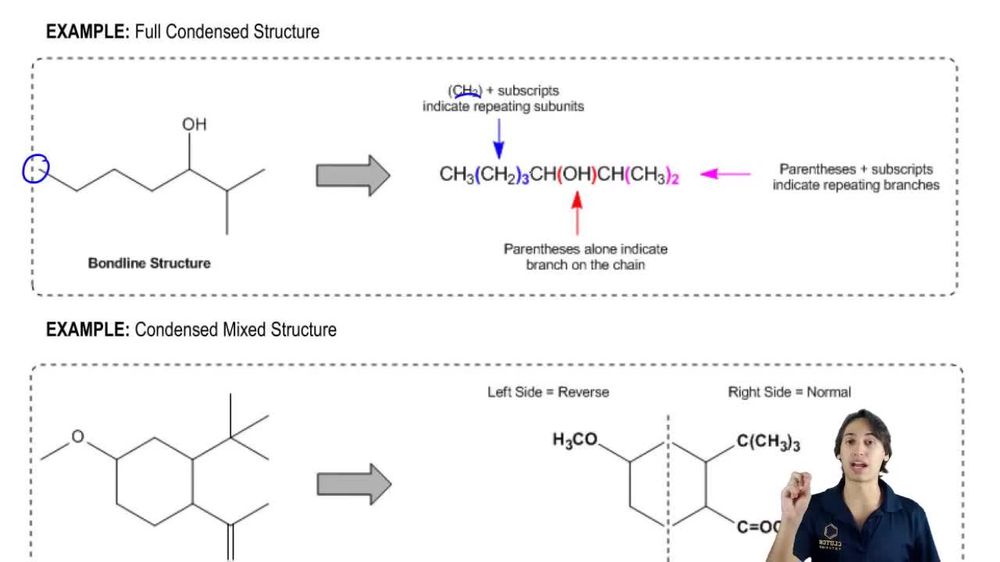
Draw the condensed structure: Start with the hexane chain, add the -NH₂ group to the first carbon, and place the -CH₃ group on the fifth carbon. The condensed structure will look like CH₃-CH₂-CH₂-CH₂-CH(CH₃)-CH₂-NH₂.
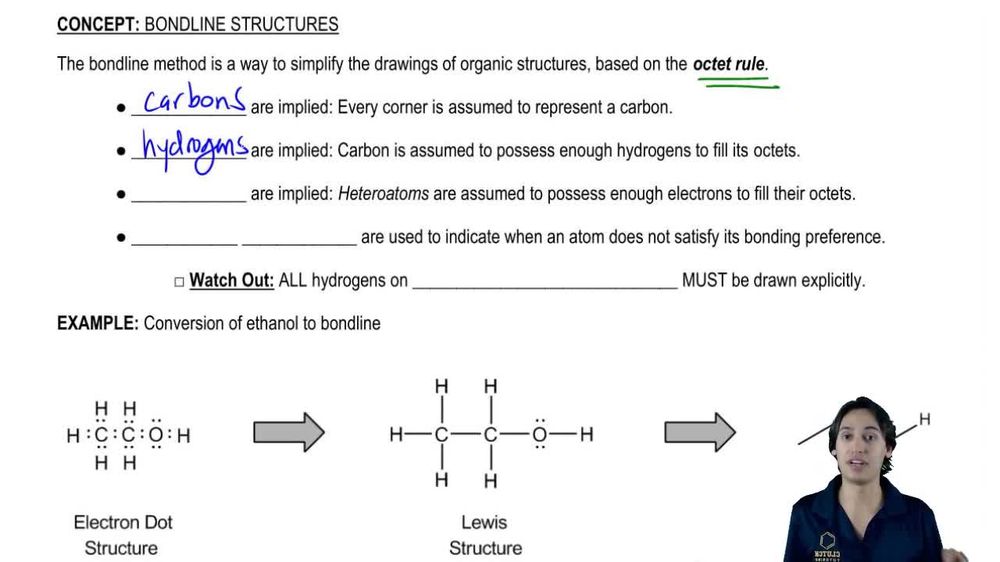
Draw the skeletal structure: Represent the hexane chain as a zigzag line with six vertices (each vertex represents a carbon atom). Add the -NH₂ group to the first vertex and a branch (representing the -CH₃ group) to the fifth vertex.
Double-check the structure: Ensure that all carbons have four bonds, the amine group is correctly placed on the first carbon, and the methyl group is correctly placed on the fifth carbon. Verify that the structure matches the IUPAC name.
Verified video answer for a similar problem:
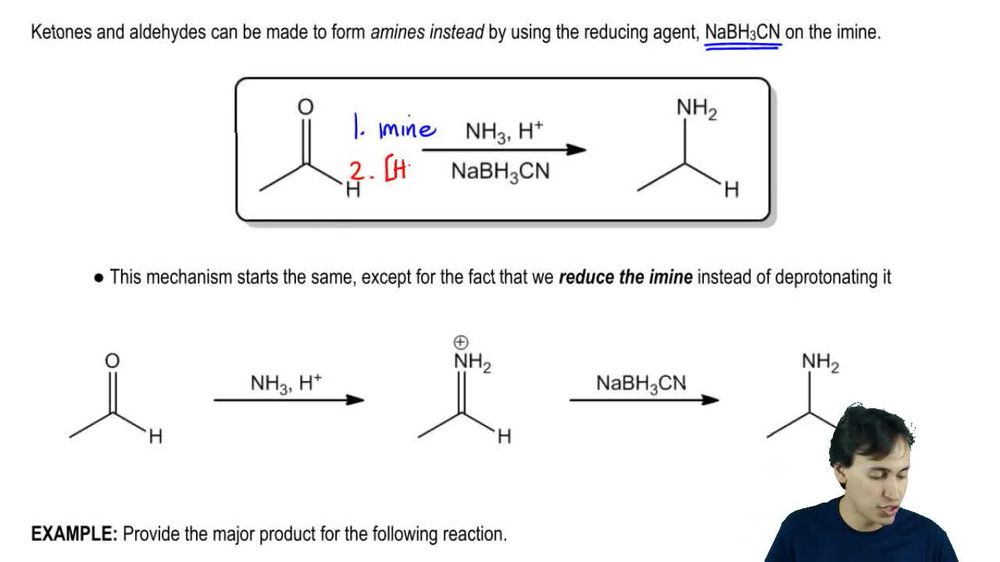
This video solution was recommended by our tutors as helpful for the problem above
Video duration:
5m
Play a video:
0 Comments
Key Concepts
Here are the essential concepts you must grasp in order to answer the question correctly.
Amines
Amines are organic compounds derived from ammonia (NH3) by replacing one or more hydrogen atoms with alkyl or aryl groups. They can be classified as primary, secondary, or tertiary based on the number of carbon-containing groups attached to the nitrogen atom. Understanding the structure and classification of amines is essential for drawing their condensed and skeletal forms.
Condensed structures provide a simplified representation of a molecule, showing the connectivity of atoms without depicting all the bonds explicitly. In the case of amines, the condensed structure will indicate the arrangement of carbon chains and the presence of the amine functional group (-NH2) in a compact format. This format is useful for quickly conveying molecular information.
Skeletal structures, or line-angle structures, are a way of representing organic molecules where carbon atoms are implied at the ends of lines and at intersections. Hydrogen atoms attached to carbons are usually omitted for clarity. This representation is particularly useful for visualizing larger organic molecules, such as amines, as it simplifies the drawing and emphasizes the functional groups.