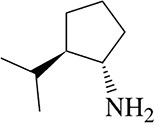
Step 1: Identify the parent chain. In this case, the parent chain is a cyclohexane ring, as it is the largest continuous ring structure in the molecule.
Step 2: Determine the substituents attached to the parent chain. There is a methyl group attached to the cyclohexane ring and an amine group (-NH2) attached to the ring.
Step 3: Assign the lowest possible locants to the substituents. The amine group takes priority in numbering because it is a functional group. Assign the amine group to position 1 and the methyl group to the lowest possible number.
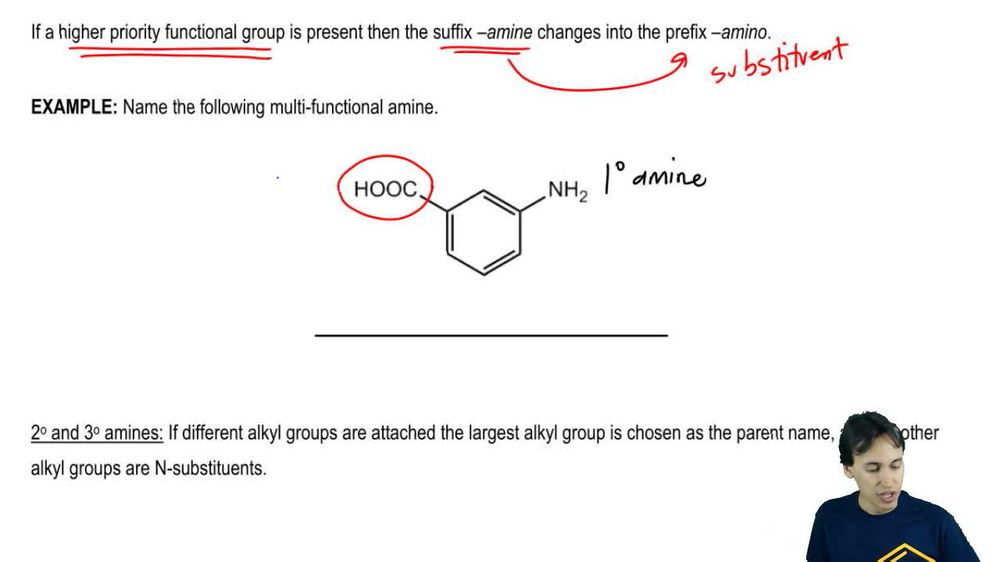
Step 4: Name the substituents and combine them with the parent chain name. The methyl group is named as 'methyl,' and the amine group is indicated by the suffix '-amine' or the prefix 'amino-' depending on the naming convention.
Step 5: Combine the locants, substituents, and parent chain name to form the complete name. Ensure the name follows IUPAC nomenclature rules and includes stereochemical descriptors if necessary (e.g., wedge and dash bonds indicate stereochemistry).
Verified video answer for a similar problem:
This video solution was recommended by our tutors as helpful for the problem above
Video duration:
10m
Play a video:
0 Comments
Key Concepts
Here are the essential concepts you must grasp in order to answer the question correctly.
Amine Classification
Amines are classified based on the number of carbon groups attached to the nitrogen atom. Primary amines have one carbon group, secondary amines have two, and tertiary amines have three. This classification is essential for naming and understanding the reactivity of amines in organic chemistry.
The IUPAC naming of amines involves identifying the longest carbon chain attached to the nitrogen and using the suffix '-amine.' If the amine is a substituent, the prefix 'amino-' is used. Understanding this nomenclature is crucial for correctly naming the compound shown in the image.
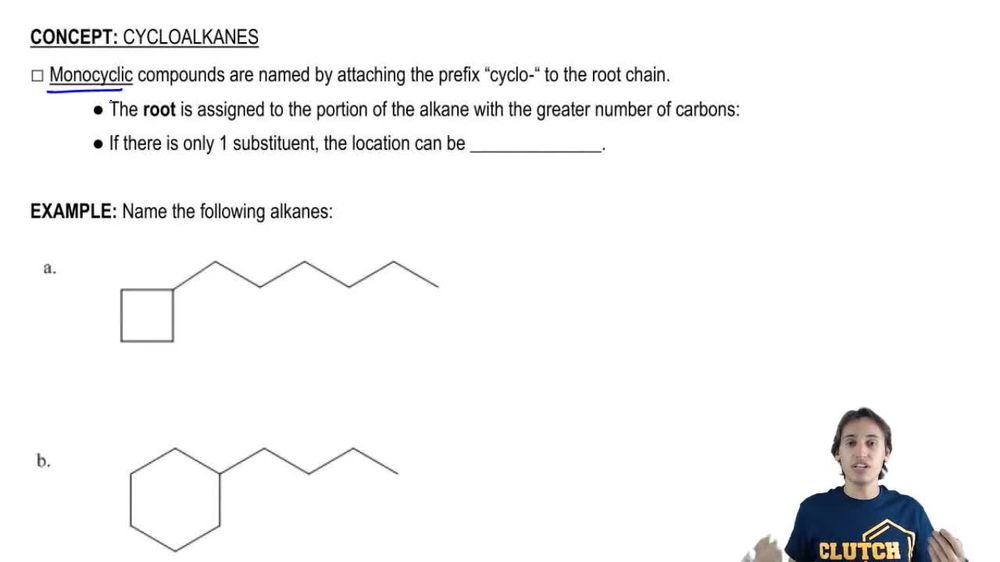
Cycloalkanes are saturated hydrocarbons with carbon atoms arranged in a ring. The structure of cyclohexane, which is depicted in the image, influences the properties and reactivity of the attached amine group. Recognizing the cyclohexane framework is important for accurately naming and understanding the compound's behavior.