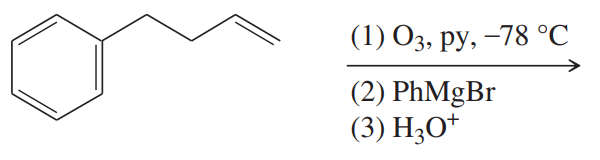
Problem 8-54 describes a new method to perform ozonolysis reactions that used pyridine (py) to generate the final aldehydes and ketones in a non-aqueous reaction medium. In a subsequent publication (J. Org. Chem., 2013, 78, 42), Professor Dussault (U. of Nebraska at Lincoln) described a “tandem” process in which two reactions are performed sequentially without having to isolate the intermediate aldehyde or ketone. Show the final product from each sequence. (Hint: The isolated products were from the larger part of the structure. Ignore stereochemistry.) (a) (b)
Verified step by step guidance
1
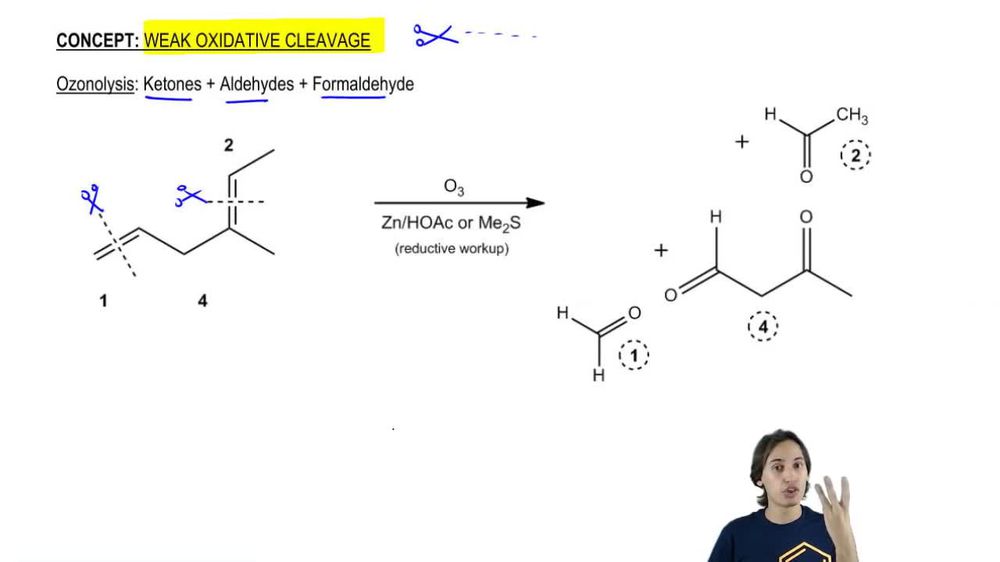
Step 1: Analyze the reaction sequence. The first step involves ozonolysis using ozone (O₃) and pyridine (py) at -78°C. Ozonolysis cleaves the double bond in the alkene, forming two carbonyl compounds (aldehydes or ketones).
Step 2: Identify the cleavage points in the given structures. For the first image, the double bond in the cyclohexene ring will be cleaved, resulting in two carbonyl fragments. For the second image, the double bond in the terminal alkene will be cleaved, forming two carbonyl fragments.
Step 3: In the second step, the reaction with phenylmagnesium bromide (PhMgBr), a Grignard reagent, occurs. Grignard reagents react with aldehydes or ketones to form alcohols. Specifically, the larger fragment (as per the hint) will react with PhMgBr to form a secondary or tertiary alcohol.
Step 4: The third step involves hydrolysis using H₃O⁺. This step ensures the protonation of the alkoxide intermediate formed during the Grignard reaction, yielding the final alcohol product.
Step 5: Combine the transformations to predict the final products. For each structure, the larger fragment after ozonolysis will undergo the Grignard reaction and hydrolysis to form the alcohol, while the smaller fragment remains as a carbonyl compound. Ignore stereochemistry as instructed.
Verified video answer for a similar problem:
This video solution was recommended by our tutors as helpful for the problem above
Video duration:
2m
Play a video:
0 Comments
Key Concepts
Here are the essential concepts you must grasp in order to answer the question correctly.
Ozonolysis
Ozonolysis is a reaction involving the cleavage of alkenes or alkynes using ozone (O3) to form carbonyl compounds, such as aldehydes and ketones. The reaction typically proceeds through the formation of a cyclic ozonide intermediate, which is then reduced to yield the final carbonyl products. Understanding this process is crucial for predicting the outcomes of ozonolysis reactions, especially in the context of the tandem process described.
Tandem reactions, also known as one-pot reactions, involve performing multiple chemical transformations sequentially without isolating intermediates. This approach can enhance efficiency and yield by minimizing the time and resources needed for purification steps. In the context of the problem, recognizing how the tandem ozonolysis and subsequent reactions occur is essential for determining the final products.
Overview of Cross-Coupling General Reactions Example 1
Non-Aqueous Reaction Medium
A non-aqueous reaction medium is a solvent system that does not contain water, which can significantly influence the reactivity and selectivity of chemical reactions. In ozonolysis, using a non-aqueous medium like pyridine can stabilize intermediates and affect the final product distribution. Understanding the role of the solvent is important for predicting the outcomes of the reactions described in the problem.

 2:43 minutes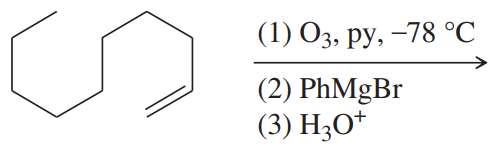
 Verified step by step guidance
 06:30
06:30