Synthesize Novocaine from benzene and any other reagents of four carbons or fewer.
Verified step by step guidance
1
Step 1: Begin with benzene as the starting material. Perform a nitration reaction using concentrated HNO₃ and H₂SO₄ to introduce a nitro group (-NO₂) onto the benzene ring, forming nitrobenzene.
Step 2: Reduce the nitro group in nitrobenzene to an amino group (-NH₂) using a reducing agent such as Sn/HCl or catalytic hydrogenation (H₂/Pd). This will yield aniline.
Step 3: Protect the amino group in aniline by acetylation. React aniline with acetic anhydride (CH₃CO₂O) to form acetanilide, which prevents unwanted side reactions during subsequent steps.
Step 4: Perform a Friedel-Crafts acylation on acetanilide using chloroacetyl chloride (ClCH₂COCl) and AlCl₃ as a catalyst. This introduces a chloroacetyl group onto the benzene ring.
Step 5: React the chloroacetyl derivative with diethylamine (CH₃CH₂NHCH₂CH₃) to replace the chlorine atom with a diethylamino group, forming Novocaine. Finally, hydrolyze the acetanilide group back to the amino group (-NH₂) using acidic or basic conditions.
Verified video answer for a similar problem:
This video solution was recommended by our tutors as helpful for the problem above
Video duration:
8m
Play a video:
0 Comments
Key Concepts
Here are the essential concepts you must grasp in order to answer the question correctly.
Electrophilic Aromatic Substitution
Electrophilic aromatic substitution (EAS) is a fundamental reaction in organic chemistry where an electrophile replaces a hydrogen atom on an aromatic ring, such as benzene. This reaction is crucial for synthesizing complex molecules from simpler aromatic compounds. In the context of synthesizing Novocaine, EAS can be used to introduce functional groups onto the benzene ring, which is essential for further transformations.
The amine functional group, characterized by the presence of a nitrogen atom bonded to one or more alkyl or aryl groups, plays a significant role in organic synthesis. Amines can act as nucleophiles, participating in various reactions, including the formation of amides and the introduction of nitrogen into organic molecules. In the synthesis of Novocaine, the amine group is critical for its anesthetic properties and overall structure.
Understanding the reactivity of carbon chains with four carbons or fewer is essential in organic synthesis. Short carbon chains can serve as building blocks for more complex molecules, influencing the reaction pathways and products formed. In the synthesis of Novocaine, selecting appropriate reagents with the correct carbon chain length is vital to ensure successful reactions and the desired final product.

 8:46 minutes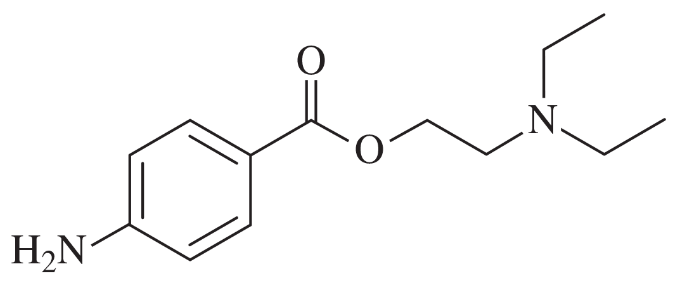
 Verified step by step guidance
 03:07
03:07