Show how you would accomplish the following synthetic conversions. (b) 1-bromo-2-phenylethane → 3-phenylpropan-1-amine
Verified step by step guidance
1
Step 1: Recognize that the starting material, 1-bromo-2-phenylethane, contains a bromine atom that can act as a leaving group. The target molecule, 3-phenylpropan-1-amine, contains an amine group (-NH2) at the terminal position. This suggests a nucleophilic substitution reaction followed by chain elongation.
Step 2: Perform a nucleophilic substitution reaction using cyanide ion (CN⁻) as the nucleophile. Treat 1-bromo-2-phenylethane with potassium cyanide (KCN) in an appropriate solvent like DMSO. This will replace the bromine atom with a nitrile group (-C≡N), forming 2-phenylacetonitrile.
Step 3: Reduce the nitrile group (-C≡N) in 2-phenylacetonitrile to a primary amine (-CH2-NH2). Use a reducing agent such as lithium aluminum hydride (LiAlH4) in anhydrous ether to achieve this transformation, yielding 3-phenylpropan-1-amine.
Step 4: Ensure proper workup after each reaction step. For the reduction step, carefully quench the reaction with water or dilute acid to neutralize excess LiAlH4 and isolate the amine product.
Step 5: Purify the final product, 3-phenylpropan-1-amine, using techniques such as distillation or recrystallization, depending on the physical properties of the compound.
Verified video answer for a similar problem:
This video solution was recommended by our tutors as helpful for the problem above
Video duration:
3m
Play a video:
0 Comments
Key Concepts
Here are the essential concepts you must grasp in order to answer the question correctly.
Nucleophilic Substitution
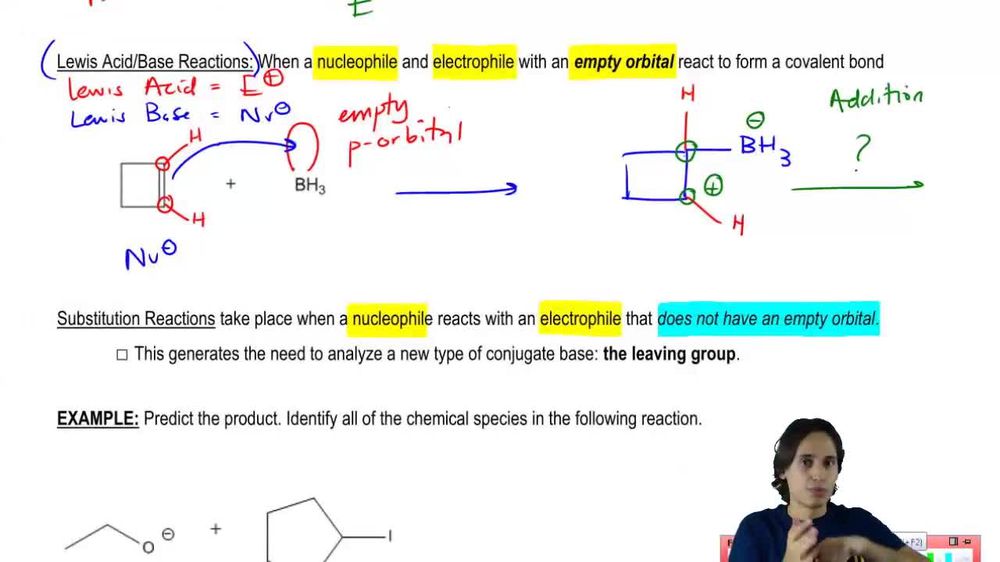
Nucleophilic substitution is a fundamental reaction in organic chemistry where a nucleophile replaces a leaving group in a molecule. In this case, the bromine atom in 1-bromo-2-phenylethane acts as a leaving group, allowing the nucleophile (an amine) to attach to the carbon atom. Understanding the mechanisms of nucleophilic substitution, such as SN1 and SN2, is crucial for predicting the outcome of the reaction.
Nucleophiles and Electrophiles can react in Substitution Reactions.
Amine Synthesis
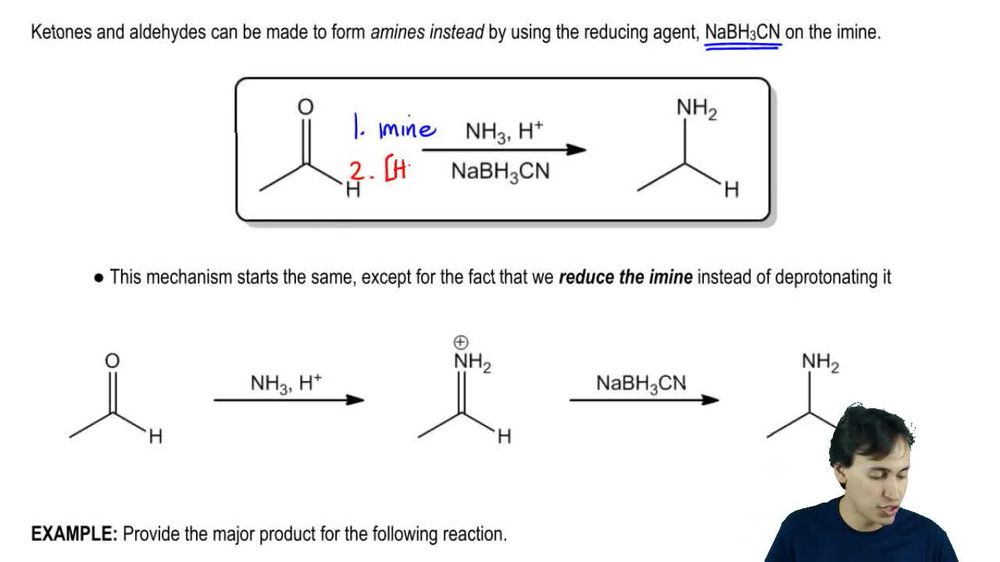
Amine synthesis involves the formation of amines, which are organic compounds derived from ammonia by replacing one or more hydrogen atoms with alkyl or aryl groups. In the conversion from 1-bromo-2-phenylethane to 3-phenylpropan-1-amine, the introduction of an amine group is essential. Familiarity with various methods of amine synthesis, including reductive amination and nucleophilic substitution, is important for successful conversions.
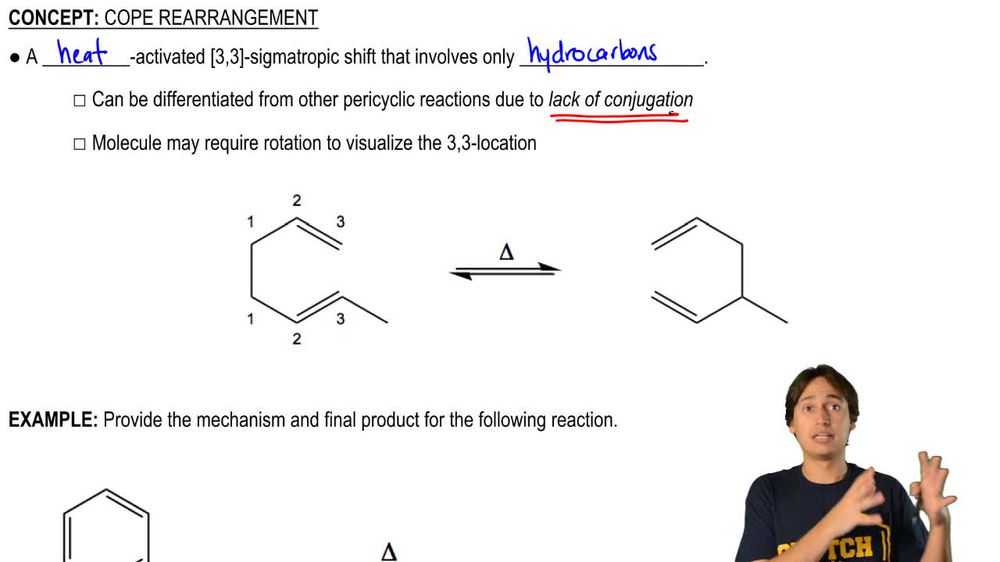
Rearrangement reactions involve the structural reorganization of a molecule, often leading to the formation of more stable or reactive products. In this conversion, the initial carbon skeleton of 1-bromo-2-phenylethane must be rearranged to form 3-phenylpropan-1-amine. Understanding how and why certain rearrangements occur, including the stability of intermediates, is key to predicting the products of synthetic pathways.

 3:50 minutes
 Verified step by step guidance
 01:47
01:47