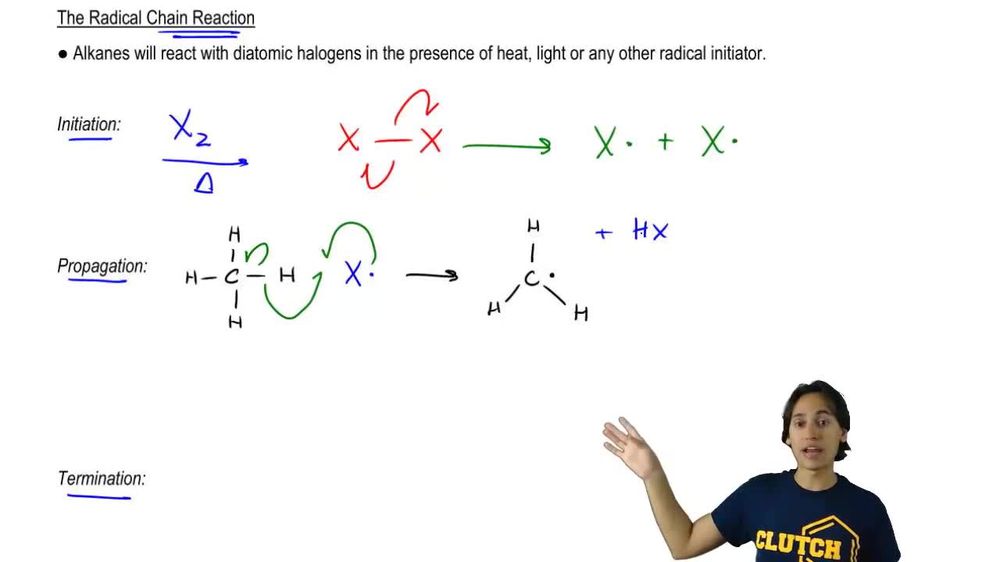
In the following molecules, identify the carbon where the radical is most likely to form in the first propagation step. (d)
Verified step by step guidance
1
Identify the structure of the molecule in question. Look for any functional groups or structural features that might influence radical formation.
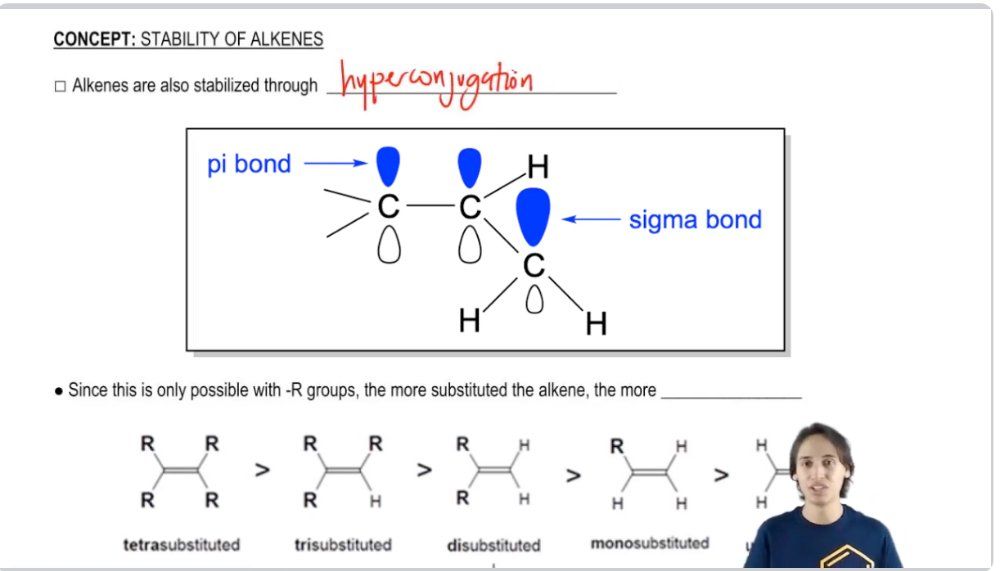
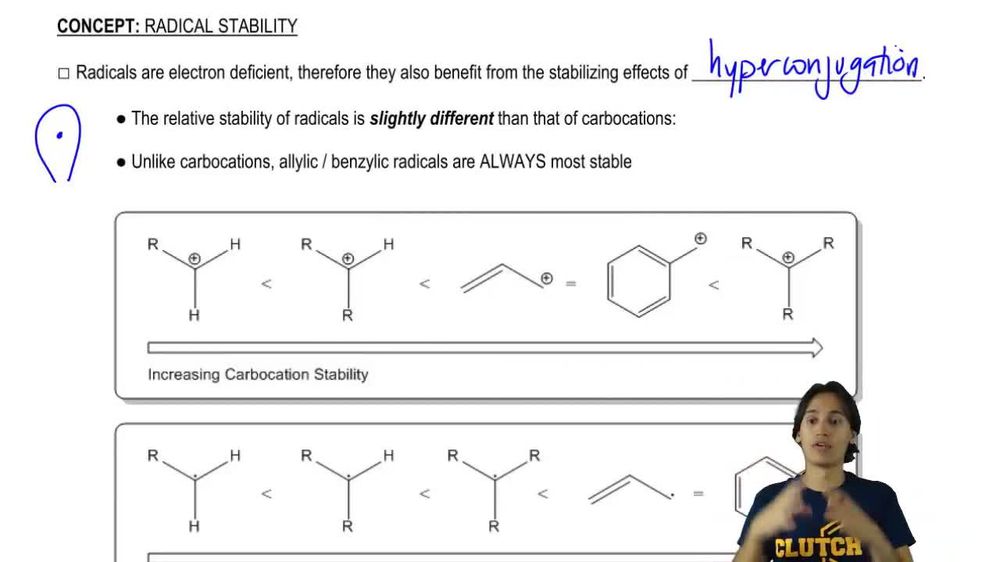
Consider the stability of radicals. Radicals are more stable on tertiary carbons than on secondary or primary carbons due to hyperconjugation and the inductive effect.
Examine the molecule for resonance stabilization. Radicals that can be stabilized by resonance are more likely to form. Look for allylic or benzylic positions where resonance can occur.
Assess the steric hindrance around potential radical sites. Less sterically hindered sites are more accessible for radical formation.
Evaluate the electronic effects such as inductive effects from nearby electronegative atoms or groups that might stabilize or destabilize a radical at a particular carbon.
Verified video answer for a similar problem:
This video solution was recommended by our tutors as helpful for the problem above
Video duration:
2m
Play a video:
0 Comments
Key Concepts
Here are the essential concepts you must grasp in order to answer the question correctly.
Radical Stability
Radical stability is crucial in determining where a radical is most likely to form. Radicals are more stable when they are tertiary, secondary, or allylic due to hyperconjugation and resonance effects. Understanding these stability factors helps predict the most favorable site for radical formation.
The propagation step in radical reactions involves the transfer of a radical from one molecule to another, continuing the chain reaction. Identifying the carbon where the radical forms in this step requires understanding the mechanism and stability of intermediates involved in the reaction.
Hyperconjugation is the delocalization of electrons in sigma bonds (C-H or C-C) that can stabilize radicals. It occurs when adjacent alkyl groups donate electron density to the radical center, enhancing stability. This concept is key in predicting radical formation sites in organic molecules.

 2:32 minutes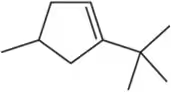
 Verified step by step guidance
 03:43
03:43