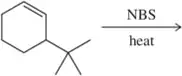
Predict the products of the following allylic halogenation reactions. (c)
Verified step by step guidance
1
Identify the allylic position in the given molecule. The allylic position is the carbon atom adjacent to a carbon-carbon double bond.
Determine the halogen used in the reaction. Allylic halogenation typically involves chlorine (Cl2) or bromine (Br2) in the presence of a radical initiator like N-bromosuccinimide (NBS) for bromination.
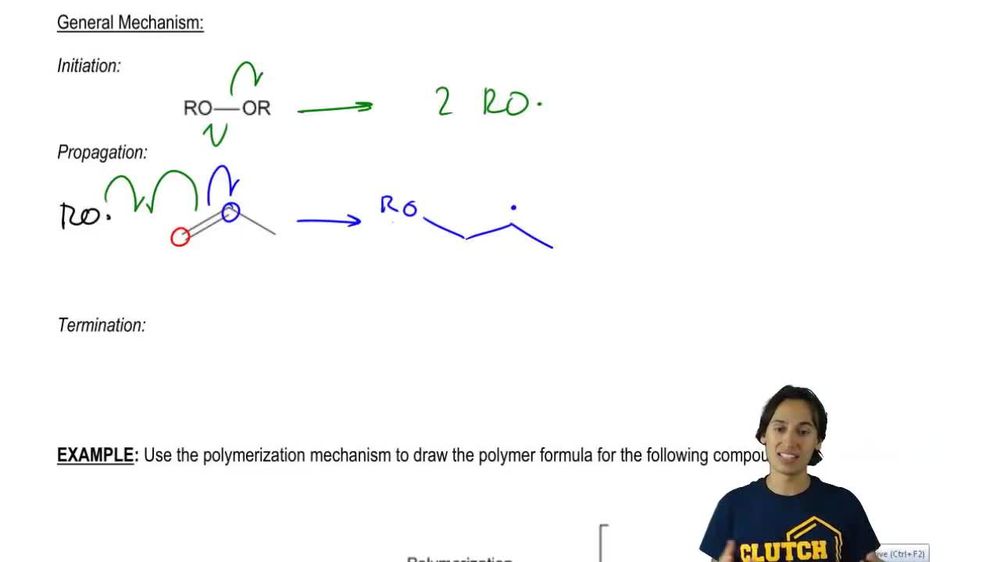
Understand the mechanism: Allylic halogenation proceeds via a radical mechanism. The reaction begins with the formation of a radical at the allylic position.
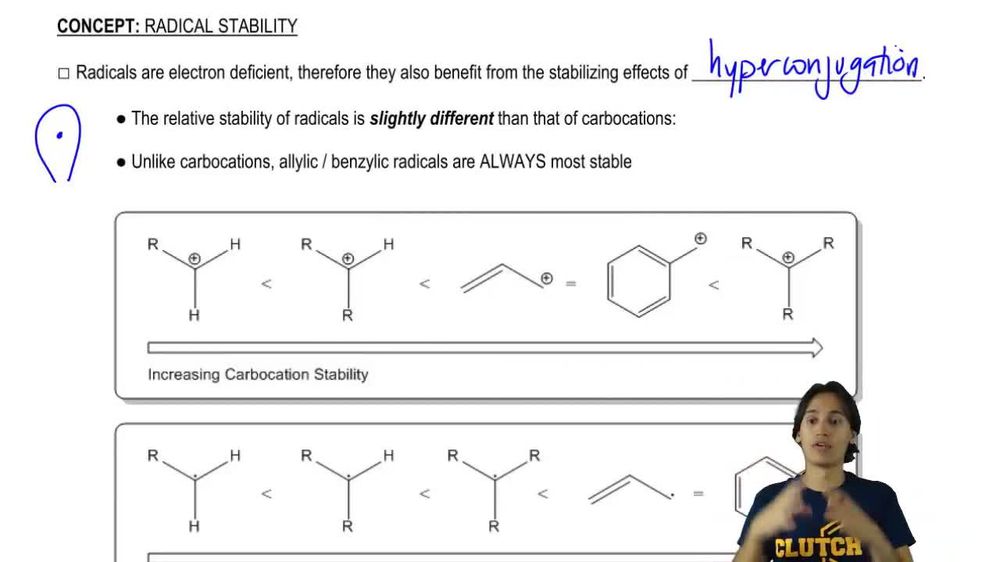
Consider resonance stabilization: The allylic radical can be stabilized by resonance, which means the radical can be delocalized over the π system. Draw all possible resonance structures to identify potential sites for halogenation.
Predict the products: The halogen will add to the allylic position, and due to resonance, multiple products may form. Identify all possible products by considering each resonance structure and where the halogen can add.
Verified video answer for a similar problem:
This video solution was recommended by our tutors as helpful for the problem above
Video duration:
5m
Play a video:
0 Comments
Key Concepts
Here are the essential concepts you must grasp in order to answer the question correctly.
Allylic Halogenation
Allylic halogenation is a reaction where a halogen atom is introduced at the allylic position of an alkene. This position is adjacent to the double bond, and the reaction typically involves the use of N-bromosuccinimide (NBS) in the presence of light or heat to generate radicals. The process is selective for the allylic position due to the stability of the allylic radical intermediate.
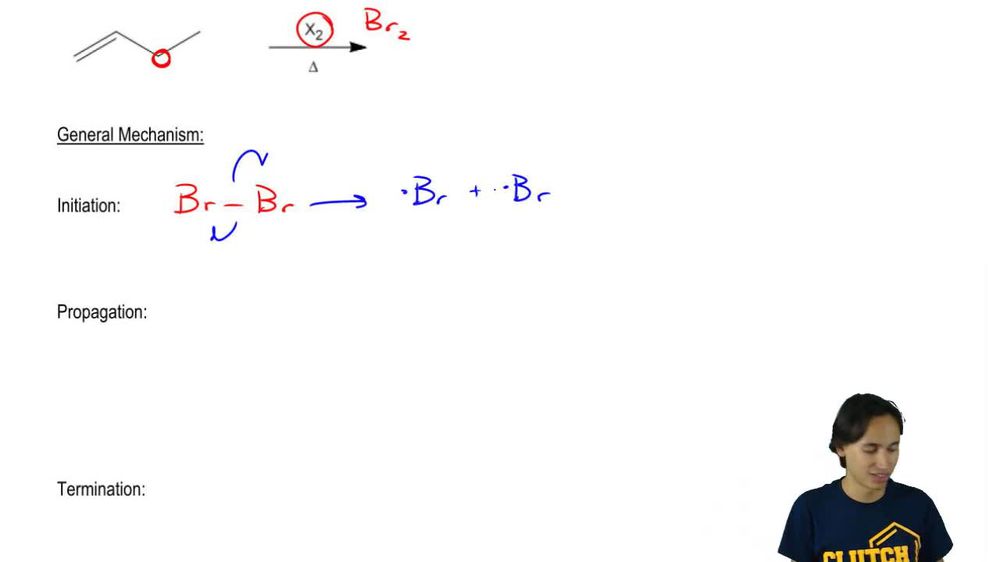
The radical mechanism is a chain reaction involving initiation, propagation, and termination steps. In allylic halogenation, the initiation step generates radicals, often through the homolytic cleavage of a halogen molecule. Propagation involves the abstraction of a hydrogen atom from the allylic position, forming a stable allylic radical, which then reacts with a halogen molecule to form the halogenated product and regenerate the radical.
Allylic radicals are more stable than typical alkyl radicals due to resonance stabilization. The unpaired electron in an allylic radical can be delocalized over the π system of the adjacent double bond, distributing the radical character over multiple atoms. This delocalization lowers the energy of the radical, making allylic positions more reactive in radical halogenation reactions.