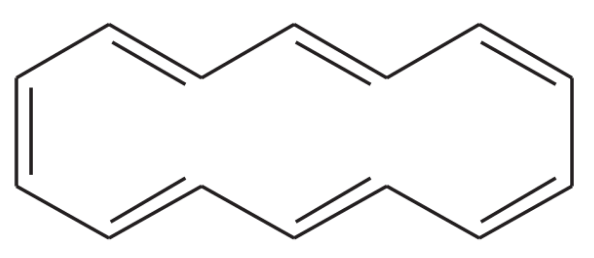
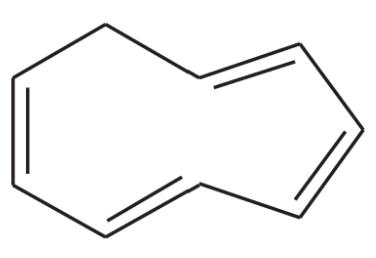
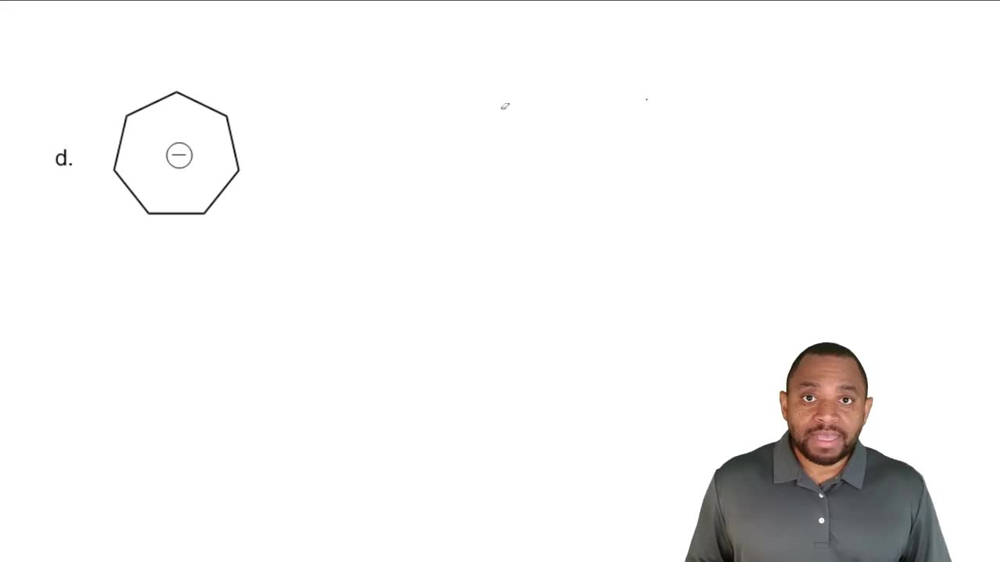
Classify the following compounds as aromatic, antiaromatic, or nonaromatic. (a) (b)
Verified step by step guidance
1
Step 1: Recall the criteria for aromaticity. A compound is aromatic if it satisfies the following conditions: (a) It is cyclic, (b) It is planar, (c) It has a conjugated π-electron system, and (d) It follows Huckel's rule, which states that the molecule must have (4n + 2) π-electrons, where n is a non-negative integer.
Step 2: Analyze compound (a). Count the number of π-electrons in the conjugated system. Determine if the compound is cyclic and planar, and check if it satisfies Huckel's rule. If it fails any of these criteria, classify it as antiaromatic or nonaromatic.
Step 3: Analyze compound (b). Similarly, count the number of π-electrons in the conjugated system. Determine if the compound is cyclic and planar, and check if it satisfies Huckel's rule. If it fails any of these criteria, classify it as antiaromatic or nonaromatic.
Step 4: For both compounds, consider steric hindrance or structural features that might prevent planarity. If the molecule is not planar, it cannot be aromatic or antiaromatic and should be classified as nonaromatic.
Step 5: Summarize the classification for each compound based on the analysis. Compound (a) and compound (b) will be classified as aromatic, antiaromatic, or nonaromatic depending on whether they meet the criteria outlined in Steps 1-4.
Verified video answer for a similar problem:
This video solution was recommended by our tutors as helpful for the problem above
Video duration:
7m
Play a video:
0 Comments
Key Concepts
Here are the essential concepts you must grasp in order to answer the question correctly.
Aromaticity
Aromatic compounds are cyclic, planar molecules with a ring of resonance bonds that follow Hückel's rule, which states they must have 4n + 2 π electrons (where n is a non-negative integer). This unique electron configuration leads to increased stability and distinct chemical properties, such as lower reactivity compared to aliphatic compounds.
Antiaromatic compounds are also cyclic and planar but contain 4n π electrons, which leads to instability due to the presence of electron delocalization that does not confer the same stability as aromatic compounds. This instability often results in higher reactivity and unique chemical behavior, making them less common in nature.
Nonaromatic compounds do not meet the criteria for aromaticity or antiaromaticity. They may be acyclic, lack planarity, or have an insufficient number of π electrons. These compounds typically exhibit standard reactivity patterns and do not benefit from the stabilization associated with aromatic or antiaromatic systems.