When the following substituted cycloheptanol undergoes dehydration, one of the minor products has undergone a ring contraction. Propose a mechanism to show how this ring contraction occurs.
Verified step by step guidance
1
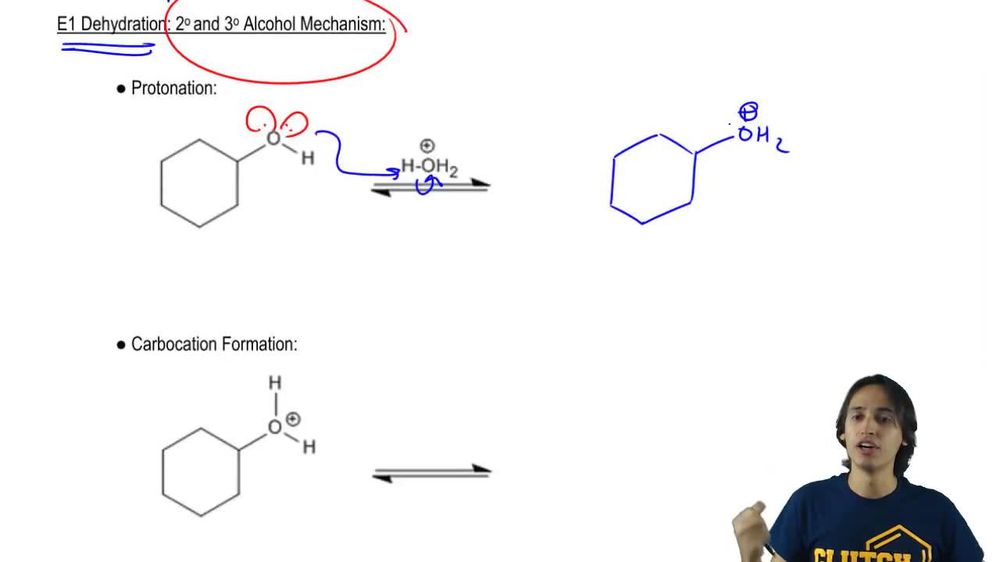
Step 1: Protonation of the hydroxyl group - In the presence of H₂SO₄ (a strong acid), the hydroxyl group (-OH) on the cycloheptanol is protonated to form water, which is a good leaving group. This step increases the likelihood of dehydration.
Step 2: Formation of a carbocation - The water molecule leaves, resulting in the formation of a carbocation at the carbon where the hydroxyl group was originally attached. This carbocation is stabilized by hyperconjugation and inductive effects from the adjacent alkyl groups.
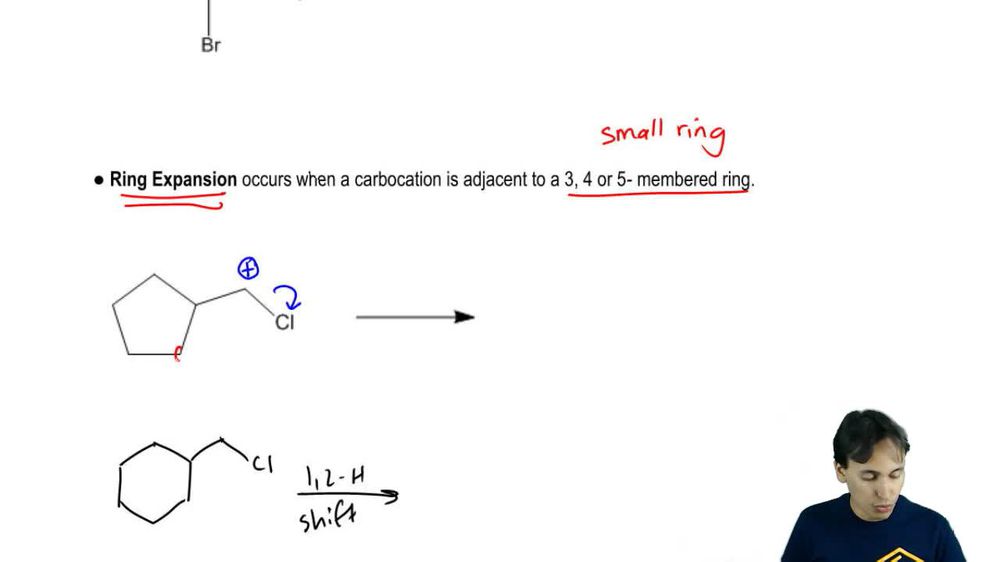
Step 3: Ring contraction via a hydride shift - A hydride shift occurs from one of the adjacent carbons to the carbocation center. This shift leads to the formation of a new carbocation, which is now located on a six-membered ring due to the contraction of the original seven-membered ring.
Step 4: Formation of the double bond - A proton is eliminated from the carbocation intermediate, resulting in the formation of a double bond. This elimination step produces the minor product, which is a substituted cyclohexene.
Step 5: Explanation of minor product formation - The ring contraction occurs because the six-membered ring is more stable than the seven-membered ring due to reduced ring strain. This stability drives the formation of the minor product during the dehydration process.
Verified video answer for a similar problem:
This video solution was recommended by our tutors as helpful for the problem above
Video duration:
7m
Play a video:
0 Comments
Key Concepts
Here are the essential concepts you must grasp in order to answer the question correctly.
Cycloheptanol Structure
Cycloheptanol is a seven-membered cyclic alcohol with a hydroxyl (-OH) group attached to one of the carbon atoms. Understanding its structure is crucial for analyzing reactions involving this compound, particularly how the hydroxyl group influences reactivity during dehydration and subsequent transformations.
Dehydration is a chemical reaction that involves the removal of water (H2O) from a molecule. In the case of cycloheptanol, dehydration typically leads to the formation of an alkene. Recognizing the steps of this mechanism, including protonation of the alcohol and elimination of water, is essential for predicting the products and any potential ring contractions.
Dehydration of 2° and 3° alcohols:The E1 Mechanism.
Ring Contraction
Ring contraction refers to the process where a cyclic compound undergoes a reduction in the number of atoms in the ring, often resulting in a smaller ring structure. This phenomenon can occur during dehydration reactions, particularly when the stability of the resulting carbocation is enhanced by forming a more stable, smaller ring, which is a key aspect to consider in the proposed mechanism.

 7:44 minutes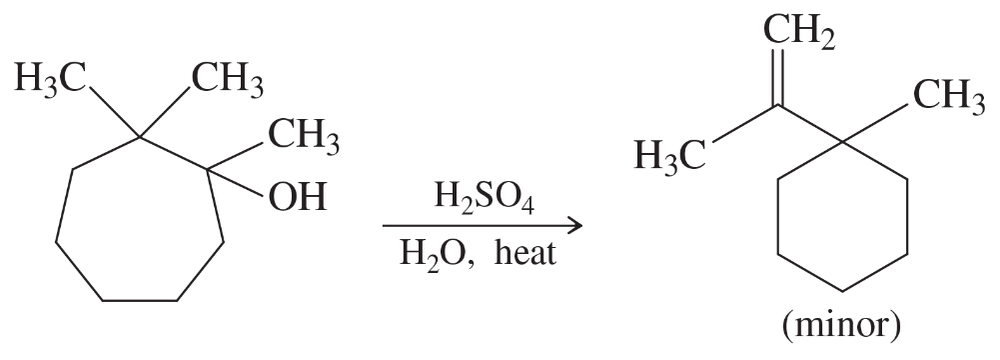
 Verified step by step guidance
 03:04
03:04